
Defining and Quantifying the term “Remote”

Snappy Joe

In process safety circles, the word “remote” is found in several codes/standards. In OSHA’s Process Safety Management standard, we find it used in the Normally Unoccupied and Remote Facility (NURF) exemption (1910.119(a)(2)(iii). OSHA did us a favor by officially defining this phrase; however, they have never QUANTIFIED it.

Normally unoccupied remote facility means a facility which is operated, maintained or serviced by employees who visit the facility only periodically to check its operation and to perform necessary operating or maintenance tasks. No employees are permanently stationed at the facility.

SAFTENG Members can read my article “What is NURF in the PSM World?

In this article, I will discuss “remote” in terms of how it is used in codes/standards related to “Emergency Shutdown” system(s). 

For example, using my favorite HAZMAT code, the IFC, and CGA 2.1 we can see the word used in the following manners… (emphasis by me)

5003.2.2.1 Design and construction. Piping, tubing, valves, fittings and related components used for hazardous materials shall be in accordance with the following:

1. Piping, tubing, valves, fittings and related components shall be designed and fabricated from materials that are compatible with the material to be contained and shall be of adequate strength and durability to withstand the pressure, structural and seismic stress and exposure to which they are subject.

2. Piping and tubing shall be identified in accordance with ASME A13.1 to indicate the material conveyed.

3. Manual valves or automatic remotely activated fail-safe emergency shutoff valves shall be installed on supply piping and tubing and provided with ready access at the following locations:

3.1. The point of use.

3.2. The tank, cylinder, or bulk source.

4. Manual emergency shutoff valves and controls for remotely activated emergency shutoff valves shall be clearly visible, provided with ready access, and identified in an approved manner.

5. Backflow prevention or check valves shall be provided where the backflow of hazardous materials could create a hazardous condition or cause the unauthorized discharge of hazardous materials.


Exceptions:

1. Piping for inlet connections designed to prevent backflow.

2. Piping for pressure relief devices.


I do a fair amount of PSM/RMP work in the Power Generation Sector, where the coal-fired power plants have a SCR that utilizes Anhydrous Ammonia. 

The baseline RAGAGEP for this process is CGA 2.1 (the newer version of ANSI K61).  In this standard, it states…

5.10.8

Approved emergency shutoff valve(s) shall incorporate a reliable actuation system that will close all of the emergency shutoff valve(s) of the piping system on the first attempt from a remote location in the event of emergency or testing.

6.2.2
In addition to the minimum protection, installation of emergency shutoff valves may be considered. This can be accomplished by either actuation of an internal valve or the addition of a separate emergency shutoff valve located within 10 lineal ft (3 lineal m) of the opening side of the manual shutoff valve.

If an emergency shutoff valve is installed. the following requirements shall be met:

  • Approved emergency shutoff valves or internal valves shall incorporate a reliable actuation system (for example, electrical, pressure, or cable) that closes all of the emergency shutoff valves or internal valves of the piping system on the first attempt in the event of an emergency or of testing from a remote location. There shall be a minimum of two remote actuation locations reasonably opposite to each other, and
  • If using a pressure source for activation of the emergency shutoff valves or internal valves, Nitrogen, compressed air, or carbon dioxide is deemed acceptable. If using compressed air as a pressure source, the air shall be clean and kept at a moisture level that does not prevent the system from operating. Propane or other flammable materials shall be prohibited for use to activate an emergency shutoff valve or an Internal valve.


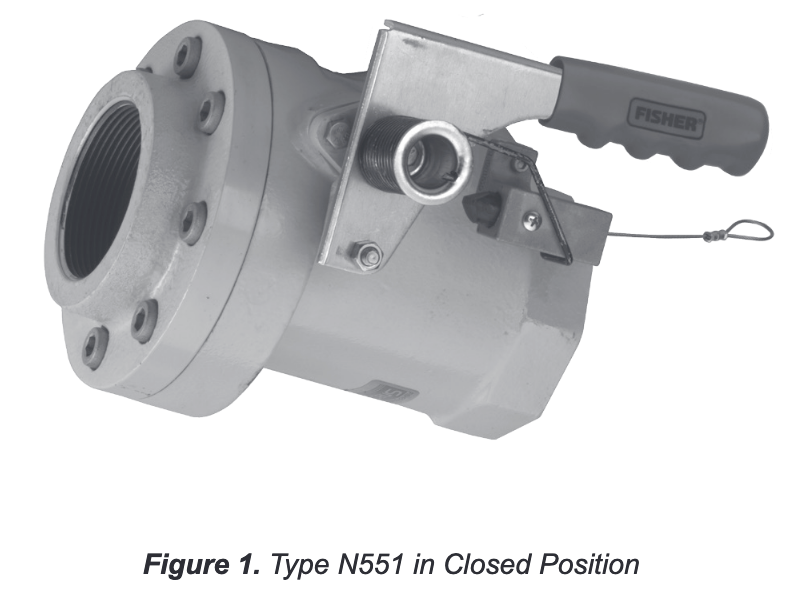
These requirements are often met by installing “Snappy Joe” valves. 

These Emergency Shutoff Valves are Spring-Loaded, Fail-Safe Valves that are usually activated by a simple pull-cord.

But it is the LOCATION of these “activation” devices that seem to cause a lot of questions.

Thus, how we QUANTIFY the term “remote” plays a CRITICAL ROLE in our emergency shutdown systems.

Snappy Joe


For this, I turn to the manufacturer’s “recommendations.”  Here is an image from their installation instructions… (emphasis by me)

Snappy Joe 2


Here is the text from their manual…

Type P164B Cable Installation

To connect a Type P164B remote release assembly, which is supplied with 50 ft. / 15 m of cable:

1. Run the inner cable and housing assembly to the remote release point. Leave enough slack on each end for a smooth, flowing path, without sharp bends in the cable, between the Type N551 latch block and remote release handle.


My designs ALWAYS have TWO remote activation locations opposite each other, as clearly stated in 6.2.2 (as shown above).  This is required based on which side of the hoses the “HAZMAT Attendant” is located when the failure occurs.  The worker simply runs in the safest direction, and as he/she passes by this REMOTE activation system, they pull the handle(s), which will pull the pin(s) and allow the emergency shutoff valves to CLOSE.  The truck driver will run to either the FRONT or BACK of their tanker and pull their ESD cord, which activates the tanker’s ESD.

So, bottom line… If the manufacturer does NOT QUANTIFY “remote” in terms of their product design, as does Fisher with their “Snappy Joes,” it is up to the facility to QUANTIFY their use of the term.  Granted, the distance may be different for different applications on different processes.  But one thing is certain:

we WANT DISTANCE when dealing with a Highly Hazardous Chemical with LOW IDLH and HIGH Vapor Pressures, such as NH3, Cl2, LPG, etc.

This video shows how quickly these types of volatile materials behave.  PLEASE NOTE, in the incident shown in the video below, remotely activated ESO valves would NOT have helped, as this was not a hose or pipe failure.  I am using this video to demonstrate the speed at which these gases, stored as liquids under pressure behave once they go atmopsheric.


Scroll to Top