
Did OSHA miss the opportunity to improve safety around PRCSs?

In OSHA’s LOTO standard, they incorporated a requirement that required businesses to have forethought about the means used to isolate energy.  Specifically, the standard requires:

1910.147(c)(2)(iii) After January 2, 1990, whenever replacement or major repair, renovation or modification of a machine or equipment is performed, and whenever new machines or equipment are installed, energy isolating devices for such machine or equipment shall be designed to accept a lockout device.


This was in response to OSHA knowing that this new standard would require design changes on a lot of equipment in use in the USA.  Having started my career in Industrial safety in 1993, I can still remember having discussions on capital spending to modify existing equipment so lockout devices could be used to isolate them and the battles we had with equipment manufacturers from who we were buying new equipment. 
I was employed by Westvaco Corp at the time, and we had some serious purchasing power, and we still had significant struggles to meet this requirement.  Equipment manufacturers were actually doubling their prices if a company requested a modification to their equipment for LOTO compliance.  It took them years to modify their designs and manufacturing processes to comply with this new OSHA mandate.  But this single requirement in the standard set the stage for progress in LOTO, as today it is almost unheard of to get equipment made in the USA that can not be properly isolated.  We still run into isolation issues with foreign manufacturers, but to be honest, even those are getting less and less each year.

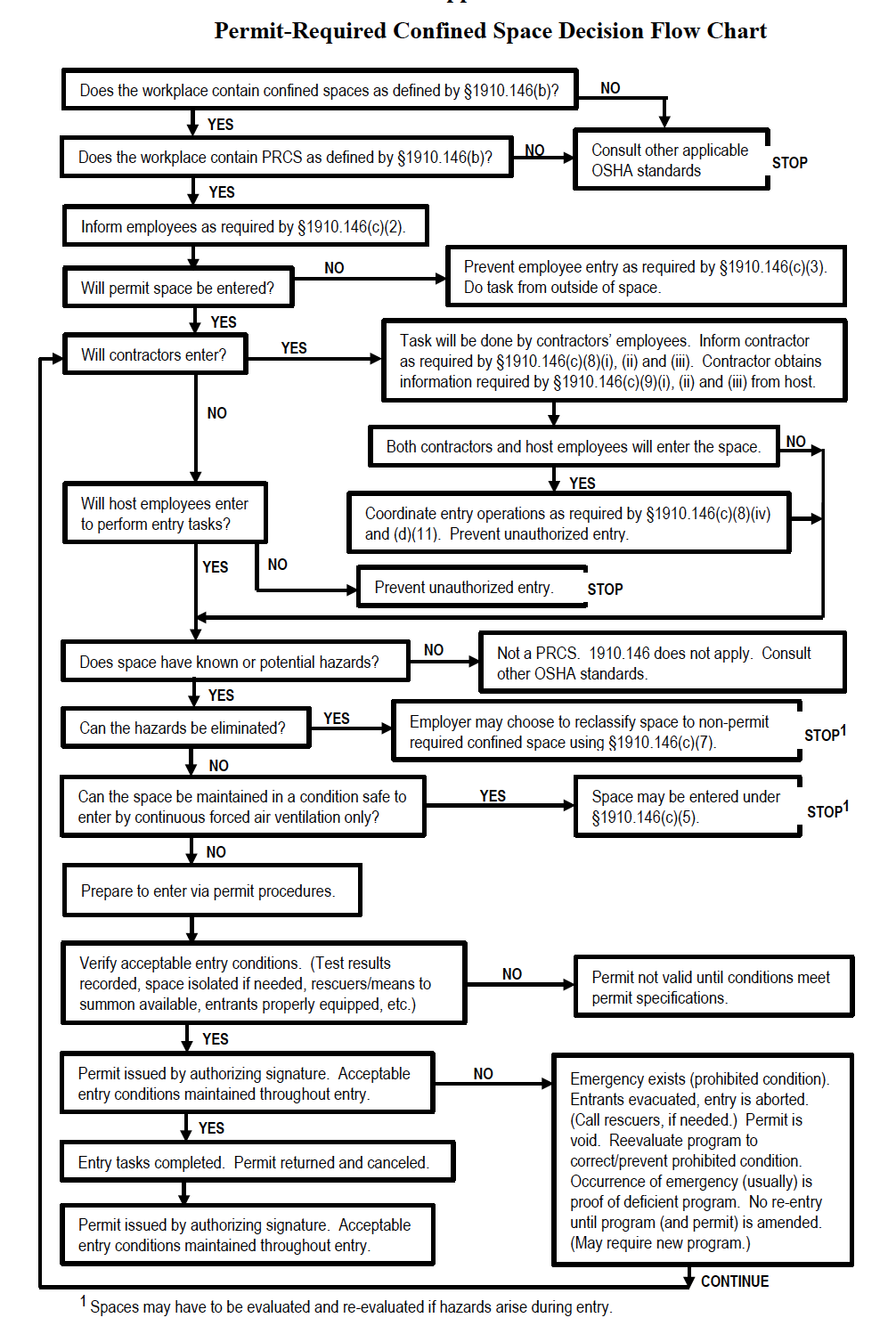
But in OSHA’s Permit-Required Confined Space Standard, April of 1993, there is no such forward-thinking requirement that requires proper isolation of the space. 

As I have written about before, many organizations with world-class safety efforts have taken actions to make the isolation of PRCSs they enter regularly, easier and more efficiently isolated by installing double block and bleed arrangements on the piping/ductwork attached to the space(s).  But imagine if OSHA had a requirement in 1910.146 that required PRCS(s) installed after April 4, 1998 (5 years after the standard was promulgated) to have the means to be isolated by 1 of the 3 recognized means of isolation:

  1. Double Block and Bleed
  2. Blinding/Blanking
  3. Disconnect & Misalignment

This would have driven the Reclassification entry option, which is FAR SAFER (when done correctly) than entry into a space with hazards/potential hazards.  Not all entries can be done using (c)(7) option; however, a large percentage of entries will qualify in most industrial sectors.  The problem lies in the fact that these spaces were not designed to have one of those three means of isolating the space.  We can NOT reclassify a PRCS to a non-PRCS using single valve isolation!  I know it is done daily – but that does NOT make it right or SAFE!


Scroll to Top