
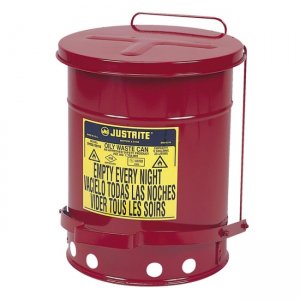
Oily waste safety cans are an essential safety device where ever cloths and wiping rags are used with oils and solvents. Rags and cloths soaked with solvents, thinners, linseed oil, combustible adhesives and other flammable liquids present a serious fire risk if they are improperly discarded. These safety cans are specially designed to isolate it’s contents from fire sources and limiting oxygen so spontaneous combustion risk is reduced. A couple of important facts that many do not know about these safety cans:
Oily waste safety cans are an essential safety device where ever cloths and wiping rags are used with oils and solvents. Rags and cloths soaked with solvents, thinners, linseed oil, combustible adhesives and other flammable liquids present a serious fire risk if they are improperly discarded. These safety cans are specially designed to isolate it’s contents from fire sources and limiting oxygen so spontaneous combustion risk is reduced. A couple of important facts that many do not know about these safety cans:
1) As stated on the UL or FM label, the cans MUST BE EMPTIED DAILY! This daily action limits the time for combustion to occur and reduces fuel load within the can. (Members can read how this spontaneous combustion occurs in the Flammable Liquids Section)
2) Do NOT use a trash bag liner in the can. This is a fairly common practice we have observed across all types of businesses. In most cases the liners are put in place by the cleaning crews to make emptying the cans easier and some businesses have implemented their use to reduce chemical exposures to the contract cleaning crew. But these trash bag liners will act as a fuse and allow the fire that is intended to stay within the can, burn outside the can, thus rendering the safety can useless. The same principle would apply with a fire outside the can would be able to reach the flammable contents within the can.
3) NEVER overfill the can or do anything to prevent the lid from FULLY CLOSING. The lid is designed to ONLY open 75° from horizontal for a reason and MUST FULLY CLOSE by gravity.
4) The bottom of the can MUST BE RAISED AT LEAST 3” and THOROUGHLY VENTILATED to allow air flow all around the can.
5) The can MUST BE LIMITED to 40 gallons in size and be LIQUID TIGHT up to the 6” mark.
6) To achieve the coveted FM certification:
- the can will be filled with 1 pint of Heptane floating on 6” of water
- the cover is held open for 15 minutes and then allowed to close by gravity
- the cover will be opened 1 minute later and there cannot be any fire inside the can
- the can will then be subjected to a 5 lb ball being dropped from a height of 3’ onto it’s top, sides, and bottom at temperatures between -40°F and 130°F. It must remain intact.
Would your safety cans pass these tests? Damaged lids that do not fully close is the most common physical issue found with these cans and not emptying them each day is the most common error made with these cans. PLEASE NOTE these cans can NOT be dumped into trash compactors or dumpsters. PLEASE seek assistance from your safety and environmental leaders for assistance.
Click Here to see the FM Global Approval Standard for Oily Waste Cans