
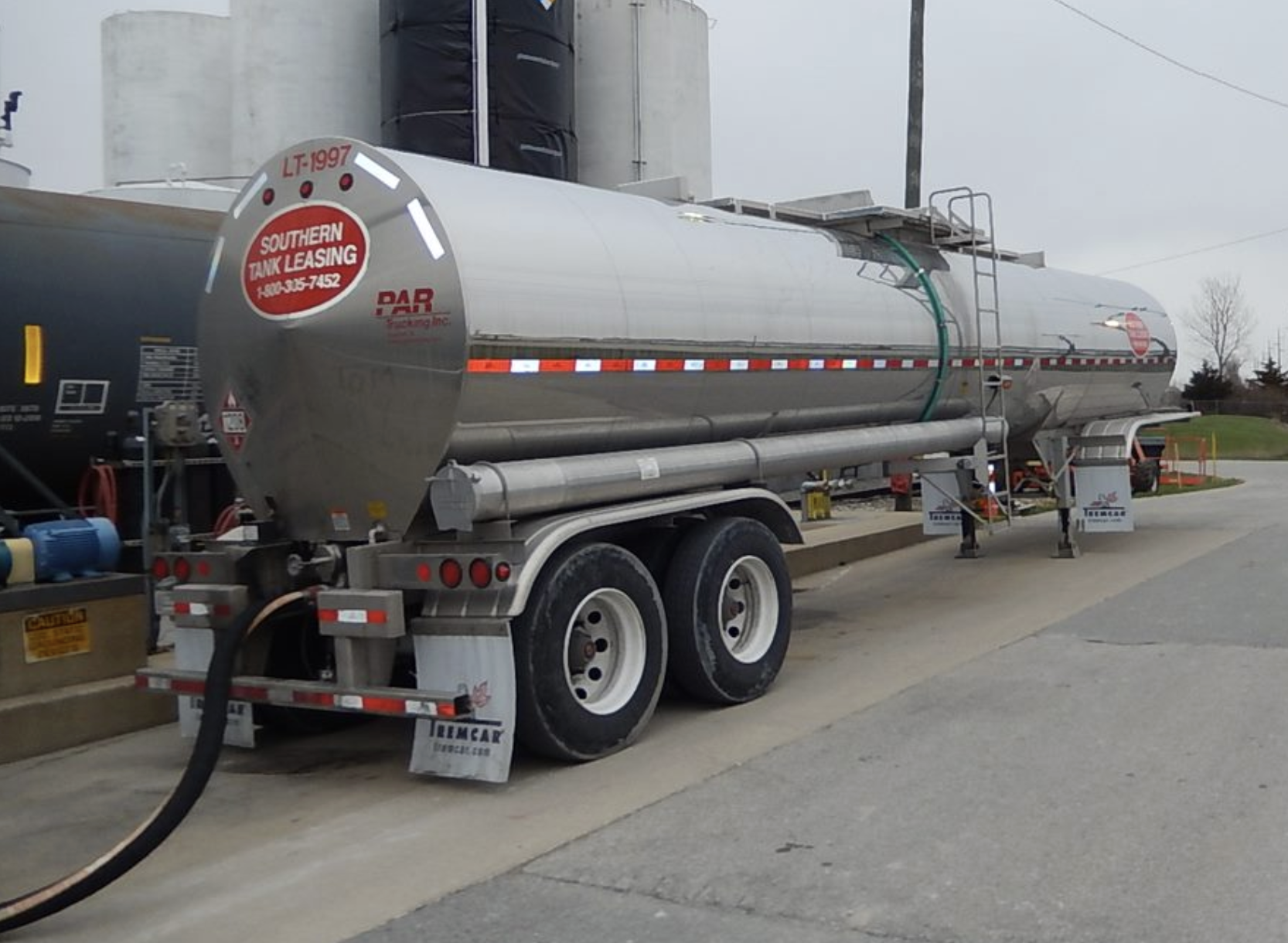
DOT tank vehicles and tank cars are NOT allowed to be used as flammable liquid storage tanks

DOT tank vehicles and tank cars are NOT allowed to be used as flammable liquid storage tanks

Although it is done often, most state Fire Codes PROHIBIT the use of DOT tank vehicles and tank cars as “Flammable Liquid Storage Tanks.”  We call this “dropping trailers,” and my 2014 Article “Dropping Trailers of Flammable Liquids” got quite the debate going.  But trust me, there are sound engineering reasons why we can not and should not use DOT shipping containers as “flammable liquid” storage tanks. In this article, I provide those sound engineering reasons. Hint: Materials of Construction!

NOTE: this unsafe practice can also have an impact on PSM/RMP coverage!

Here is the OH Fire Code language (mimics the IFC)

(emphasis by me)


5704.2.2 Use of tank vehicles and tank cars as storage tanks.

Tank cars and tank vehicles shall NOT be used as storage tanks.

The use of tank cars or tank vehicles for permanent storage of flammable or combustible liquids is prohibited by this section because, in many cases, these “tanks” do not comply with the requirements of NFPA 30. The majority of tank vehicles and tank cars are designed to comply with US Department of Transportation (DOTn) regulations that allow motor carriers to transport flammable and combustible liquids in tank vehicles constructed of aluminum. Section 5704.2.7 requires tanks to be constructed in accordance with Section 21.4 of NFPA 30. All of the standards adopted in NFPA 30 for shop-fabricated and field-erected above-ground storage tanks prohibit the use of aluminum as a material of construction because of its low melting point. Similarly, this requirement prohibits conversion of other tank vehicles or cars for use as flammable and combustible liquid storage. Note that this section does not include the demountable intermediate bulk containers frequently seen in transport secured on flatbed trucks. These portable tanks are regulated by Section 5704.3.

Even if the wheels were removed and the tank supported on adequate foundations, the use of tank cars or tank vehicles for permanent storage of flammable or combustible liquids is prohibited by this section because, in many cases, these “tanks” do not comply with the requirements of the referenced standard, NFPA 30.

The US Department of Transportation (DOT) allows motor carriers to transport flammable and combustible liquids in tank vehicles constructed of ALUMINUM.

Section 5704.2.7 requires that tanks be constructed per Section 21.4 of NFPA 30, which, in turn, requires that they be built in accordance with good engineering practices.

ALL of the standards adopted in NFPA 30 for shop-fabricated and field-erected above-ground storage tanks PROHIBIT THE USE OF ALUMINUM as a material of construction for storage tanks because of its low melting point.

In addition, it is possible, for example, that someone could attempt to convert a milk tanker into an above-ground storage tank for flammable or combustible liquids. Such a tank would not have an emergency vent, which is required by Section 5704.2.7.4 of the code. Note that this section does NOT include the demountable intermediate bulk containers frequently seen in transport secured on flatbed trucks. These portable tanks are regulated by Section 5704.3.

Scroll to Top