
The act of draining/venting a highly hazardous chemical (HHC)/extremely hazardous substance (EHS) from a process can be one of the most hazardous tasks a worker can undertake, but there are some easy and cheap actions/designs we can consider to reduce these hazards. Some of the best guidance I have come across is the IIAR’s “Oil Draining” set up and the requirement for the use of a “deadman valve”; but IIAR only requires when “draining oil”. How about when we are bleeding/venting/draining a section of pipe for maintenance? Should we be using a deadman?
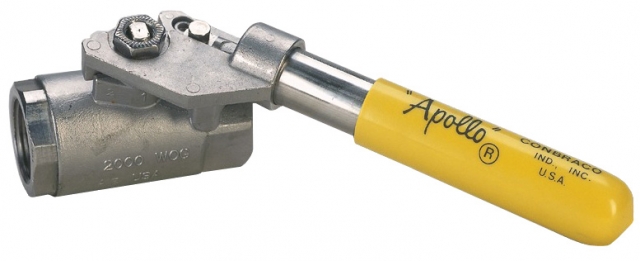
So what is a “deadman valve”? In simple terms, it is a spring-loaded FAIL SAFE CLOSED valve, meaning that a worker is required to hold OPEN the valve and should they let go of the valve handle, the internal spring will CLOSE the valve. The use of the deadman valve is a big part of hazard control, but there are other things we can do to reduce our risks…
In the chemical industry, the practice of draining/venting an HHC/EHS from piping and vessels in preparation for maintenance work is a daily basis. And this is rarely done using anything other than a deadman valve. I can say that it would NEVER be done with a 1/4 turn ball valve; maybe a gate valve, but never a lone 1/4 turn valve. The reasoning behind this prohibition of using a 1/4 turn valve AND the desire to always use a “deadman valve” is for that time that something goes wrong and the worker(s) need to remove themselves quickly from the hazardous area.
But we also wanted to keep the worker away (out of the line of fire) while they were draining/venting; so we would make up some small diameter pipe assemblies with a built-in deadman valve and either threaded connection(s) or flanged connection(s).
Using our Line Break/Process Opening Permit, we would remove the pipe plug or blank (depends on whether we are dealing with a screwed connection or flanged). We would then attach our drain/vent assembly piping. With the deadman valve closed, we would just barely crack open the isolation valve before our assembly to do a rudimentary pressure/leak check. Once we have some validation that our drain/vent piping assembly and the connection to the process are solid, we will open the isolation valve 50%.
Now we will use the deadman valve to control flow into our scrubbing media, which can be as small as a five-gallon bucket up to a 330-gallon tote. As part of the permitting process, an estimate was received from engineering or supervision as to how much water, acid, caustic we needed to scrub the anticipated amount of liquid/vapor from our process. One thing we did was to use closed top containers with both bungs open. We used closed top but vented, containers to aid in the protection against splashing and splatters, but we did have a potential to overpressure a container – so we always had both bungs open. On larger openings like totes, we would drape a towel/tarp over the larger opening so as to aid in the prevention of splash/splatter.
Some chemicals and/or location of the work, our environmental group would require us to use a secondary containment around our scrubbing container just in case we overflowed the container.
While working at Great Lakes chemical I had an engineering manager who had a spec for these drain/vent assemblies such that he required them to be at least 3′ long and no larger than 1/2″ diameter and schedule 80. It was thought that 3′ would keep the worker at a safe distance from where the HHC/EHS was discharging into the scrubbing container while they operated the deadman valve, but the assembly would not be so long as to place a strain on the piping and the assembly connection point. I should point out again that these assemblies are TEMPORARY connections and are NEVER intended to be left in place after the job is completed.
These assemblies are DOCUMENTED in our PSI and are listed in our MI inspection program as well. They were managed just like a section of fixed/permanent pipe.
Sometimes the job would require a hose be used along with these assemblies, but these hoses were 1-shift use ONLY and were discarded at the end of the shift REGARDLESS of how many times they were used. Depending on the chemical involved, the hose connections would vary and for the life of me I can not remember all the variable connections and which ones were required for which class of chemical.
Bottom line… a deadman valve was REQUIRED anytime we had to drain/vent a section of the process. This was true even AFTER we had taken measures to evacuate the process piping/vessel using “process techniques” such as closing an upstream valve and allowing the process to use up the remaining contents of the piping. We may even have a pressure indicator (PI) telling us the pipe is empty, but these deadman drain/vent assemblies were still a requirement for us as a “best practice”. Each of my five facilitirs had plenty of war storied of draining/venting that went horribly wrong in a very short period of time. So over the years, the industry had put a lot of thought into making these process openings as safe as possible and we determined that included a “deadman valve” (please excuse the pun)!