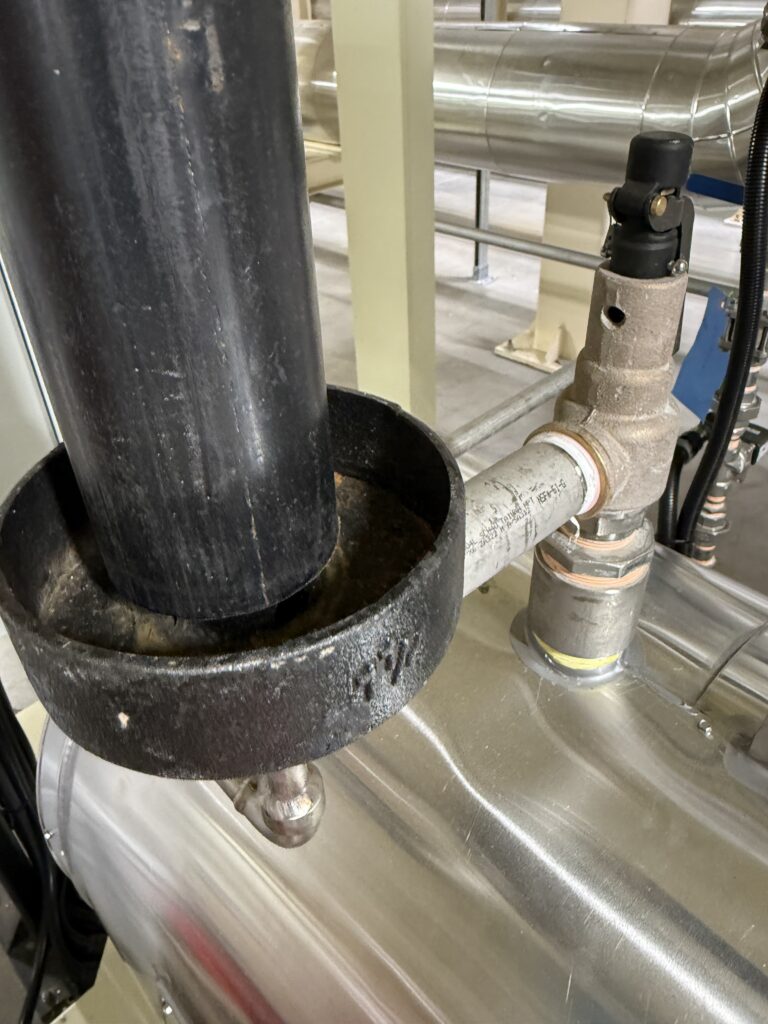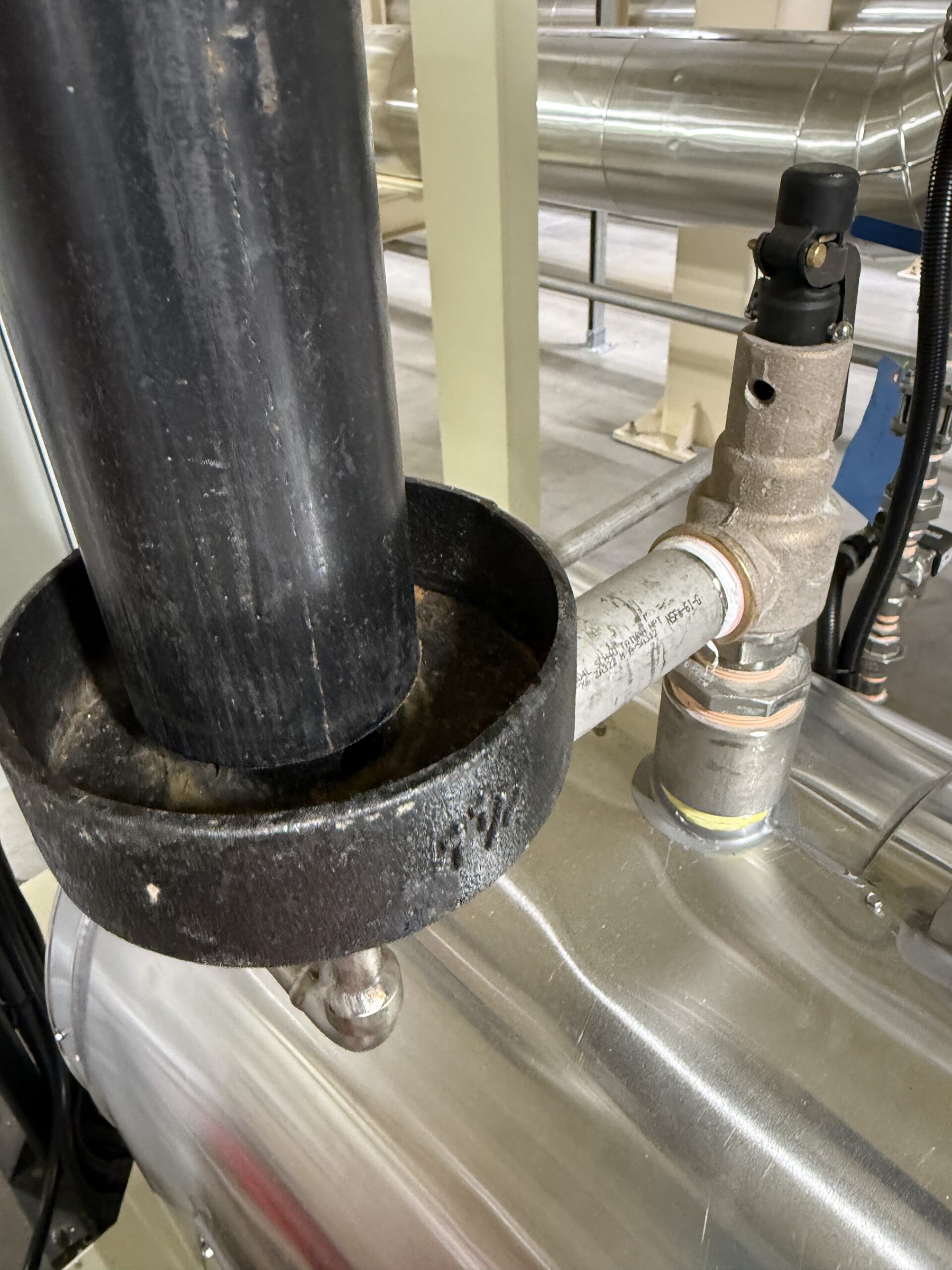
It is designed to collect and remove condensate while isolating the relief valve from the mechanical stresses of the discharge piping.
Here is a breakdown of its primary functions and operational mechanics:
- Thermal Expansion Isolation: When a steam relief valve actuates, the sudden introduction of high-temperature steam causes the discharge piping to undergo rapid thermal expansion. The drip pan elbow provides a physical air gap between the valve outlet and the main vent pipe. This prevents the expanding vent pipe from transmitting mechanical loads or weight back onto the relief valve, which could otherwise distort the valve body, alter the set pressure, or damage the valve seat.
- Condensate Drainage: Steam systems naturally generate condensation. The “pan” portion of the elbow catches any rain, snow, or internal steam condensate that runs down the inside of the vertical vent stack. The smaller tubing connected to the bottom of the pan safely routes this water to a drain. This prevents a hydrostatic head of water from accumulating directly on top of the valve disc, which would increase the effective lifting pressure and potentially cause catastrophic corrosion or water hammer during a relief event.
- Safe Venting: While maintaining the necessary physical gap, the geometry of the elbow is engineered to safely direct the high-velocity steam blast upward into the vent stack without blowing back into the immediate work area.
In the context of industrial equipment standards and ASME codes, ensuring the discharge piping is independently supported and properly drained via components like this is a fundamental requirement to guarantee the relief system functions exactly as designed during an overpressure scenario.