
 A natural gas processing plant is a facility designed to clean raw natural gas by separating impurities and various non-methane hydrocarbons and fluids to produce dry natural gas.
Processing raw natural gas begins at the inlet gas piping or gas stream of a natural gas processing plant. This piping delivers the raw natural gas to each processing vessel. Two of these processing vessels are an inlet gas-liquid separator and an inlet filter. As the raw natural gas enters the inlet gas-liquid separator the design of the vessel separates most of the liquids from the gases. Separating the liquids from the gases reduces the likelihood of liquid slug or ice and hydrating dams downstream.
As the gas continues downstream of the gas-liquid separator, it enters the first in a series of two inlet filters. After the first inlet filter vessel, additional gas is introduced from two other sources into the gas stream, and then the gas stream enters the second inlet filter vessel. As gas flows through each inlet filter vessel, gas passes through filters that remove solids from the gas and allow liquids to be drained away.
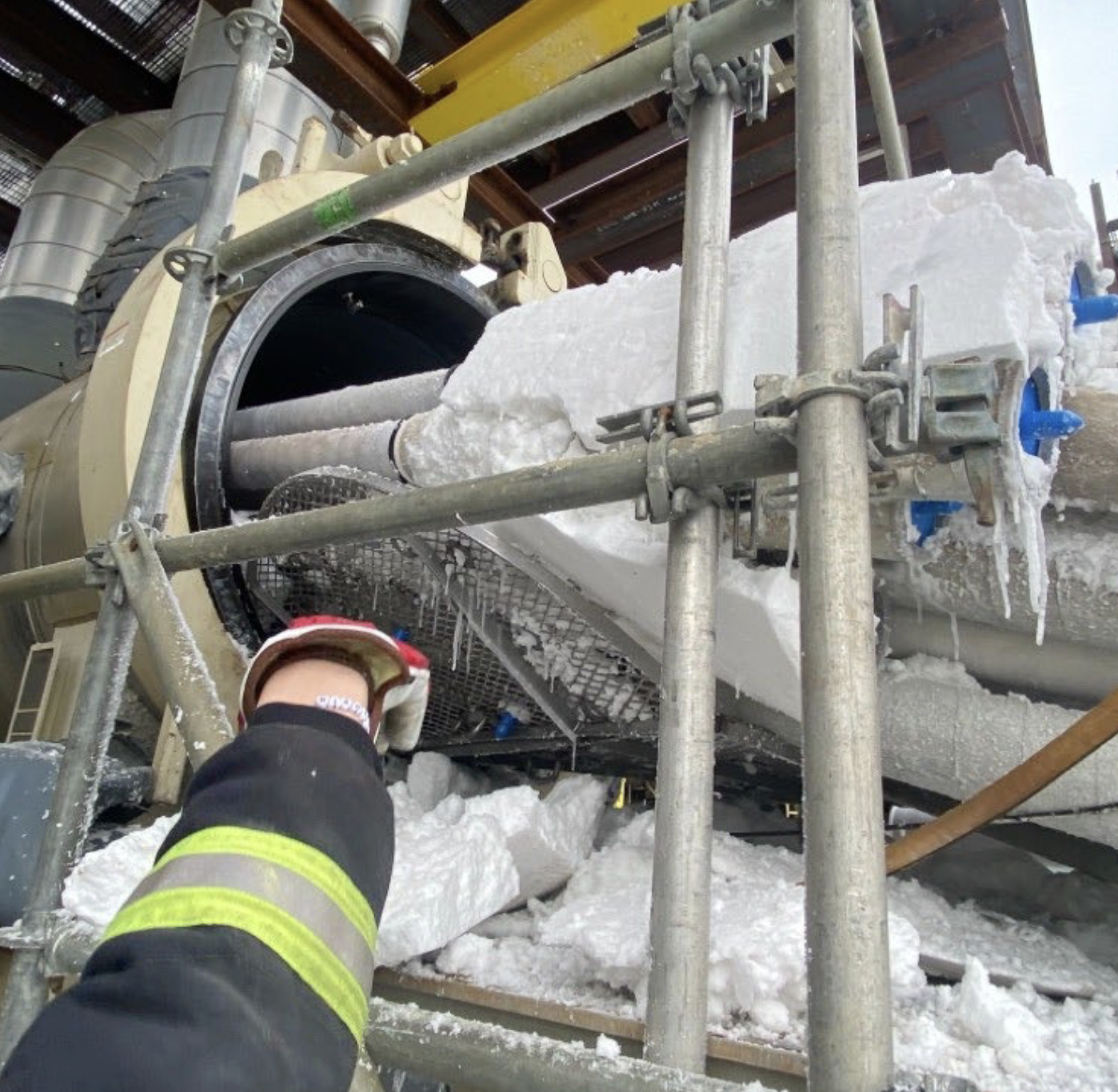
Each inlet filter vessel has a primary pressure vessel with a 54” access hatch at one end to remove filters, a 24” gas inlet and outlet, and a secondary collection vessel underneath to collect liquids. This vessel also has other outlets that allow operators to vent the vessel and verify pressure within the vessel. See the pressure vessel diagram.