
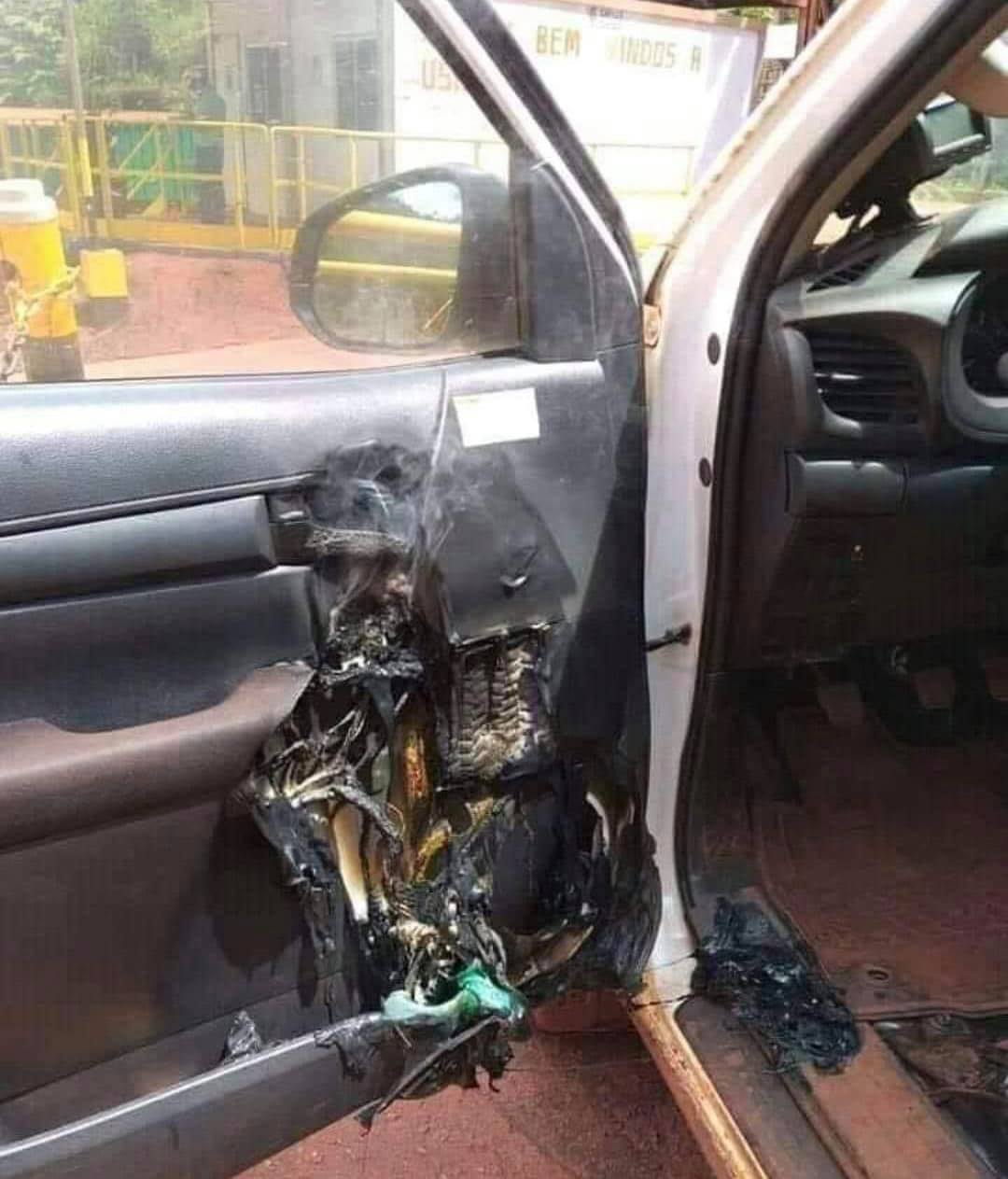
Have you seen this yet? If not, you most likely will either via your social media activity or by e-mail. This week this picture and various stories about what happened have gone “viral” after a Wisconsin Fire District posted it on their FB Account as an attempt to educate their followers. The “shares” are over 6K as of this morning and it is now being circulated by the national media – referencing the Fire District’s post as factual.
NOTE: the Fire District has admitted it was not their fire nor their picture, they were just trying to raise awareness of the hazards of hand sanitizers and they are working to post a clarification.
I have written three articles about the hazards of hand sanitizer since this COVID19 pandemic trying to help people understand the hazards, I just did not use this photo and the various stories that accompany it. There are two videos I encourage you to watch to better understand how these urban myths are not quite as easy as their stories proclaim.
I first saw this picture in early March from a fellow safety professional who was skeptical and wanted my opinion on if it could happen. This was about the time when the hand sanitizer shortage was front and center in the national news. So could this event happen as stated?
First, I have learned in my nearly 30 years working with flammable liquids and humans that I never say never. LOL Is it possible that a bottle of hand sanitizer did this as stated in the various stories that accompany this picture? Possible, but I am 99.9% sure it did not happen in any of the ways stated in the stories.
But I could squirt the gel on the door and let it run down the door and then use a lighter to ignite the gel and it will burn and could easily do this type of localized damage.
But that is not how the stories go! The claim, with variations I will discuss, is that a bottle of hand sanitizer was left inside a “hot car” and somehow ignited on its own when the bottle burst from too much pressure. And this was the damage. This version of the story I will declare BS and I am 99.9999% sure it did not happen in that manner.
But there was one version that I was referred to on Reddit (use the link at your OWN RISK!) stated that the bottle burst and when the driver got into the car she smelled the alcohol vapors and thought she needed to roll down the window and as soon as she used the button to roll down the window the fire ignited. Luckily she escaped with minor injuries. No word on how the fire was extinguished. This version made me pause and consider it, but I eventually ruled this version out based on how alcohols behave based on their physical properties (link to random SDS for IPA) and the damage shown in the picture. I will bet a steak and a beer that this was an electrical fire caused by the switches in the door and that a hand sanitizer in a 1-gallon commercial-sized container would not do this. Why – do you say?
Let’s say for example the hand sanitizer got really hot and the container failed, spilling the gel. A hot gel, so it is a bit more runny than normal. The gel spreads to fill up the door tray as shown in the picture. And it sits there in a hot car and the 70% Isopropyl Alcohol begins to flash off (this is much harder to do than if it were pure alcohol). These alcohol vapors are 2 X’s heavier than the air so if they are able to rise higher than the top fo the door tray, they will quickly fall to the floorboard of the vehicle and spread across this surface of the car. To envision the vapor that has a density 2X’s that of air going up like a chimney in a concentration that is above it’s Lower Explosive Limit (2% for IPA) to reach the inside of the door where the window switch presents an ignition hazard is darn near impossible for me to imagine. Heck, just opening the door of the car would introduce so much fresh air into the car that I am not sure we even have a flammable atmosphere anywhere in the car, much less 12-14″ about the surface of the spilled alcohol. Remember, 2% is equal to 20,000 ppm!
If the bottle had failed and the gel-filled the door tray AND the vapors were ignited, we would have seen more widespread damage to the door panel, not the localized damage we see around the switch, as well as we see no damage on the dashboard right next to the spot where the window switch is located. I would even bet, based on the damage pattern in the picture, that the door was open when this fire began or was immediately opened after ignition. So again, we can see from the picture that the fire starting on its own in a closed car is NOT what happened.
But, the window switch would most likely be able to ignite the alcohol vapors, since the MIE of most alcohols is well below 1.0 mJ. Just how low is 1 mJ? When we get that shocked in the wintertime by static, that is around 10-15 mJ. So 1 mJ is so low that humans can not see or feel it! So an electrical switch in a car I am assuming has enough energy to pose as an ignition source to alcohol vapors. But that is about the ONLY fact I can declare from any of these stories. And for the switch to pose a hazard we have to have a flammable atmosphere around the window switch and with a bottle of hand sanitizer, even a bottle of 100% IPA for that matter, it would be almost impossible to achieve a flammable atmosphere in such a localized way that high above its surface area to catch on fire and cause that localized damage.
The WI Fire District who made this picture famous added a new twist to the story… the bottle was ignited by sunlight shining through the car windows and heating up the gel and causing it to ignite inside its container and burn. They reference the stories about sunlight being refracted through water bottles and starting fires (much like can be done using a magnifying glass). When I inquired with them how the sunlight rays were bent or reflected in order for them to hit the bottle which was said to be inside the door tray they had no response. But for curiosity, let’s say the bottle was sitting on the dash, a black dash at that. Can sunlight shine down on a plastic bottle of hand sanitizer and by light refraction create enough heat to cause the sanitizer inside the bottle to ignite and then burn the bottle causing localized vertical damage? I do not know for certain so I will leave this one up to someone who understands light refraction better than I do, but I will say this did not happen with the bottle in the door tray.
I am declaring this picture and its stories and Urban Myth. If anyone has more information you would like to through into the mix for consideration, let me know.