
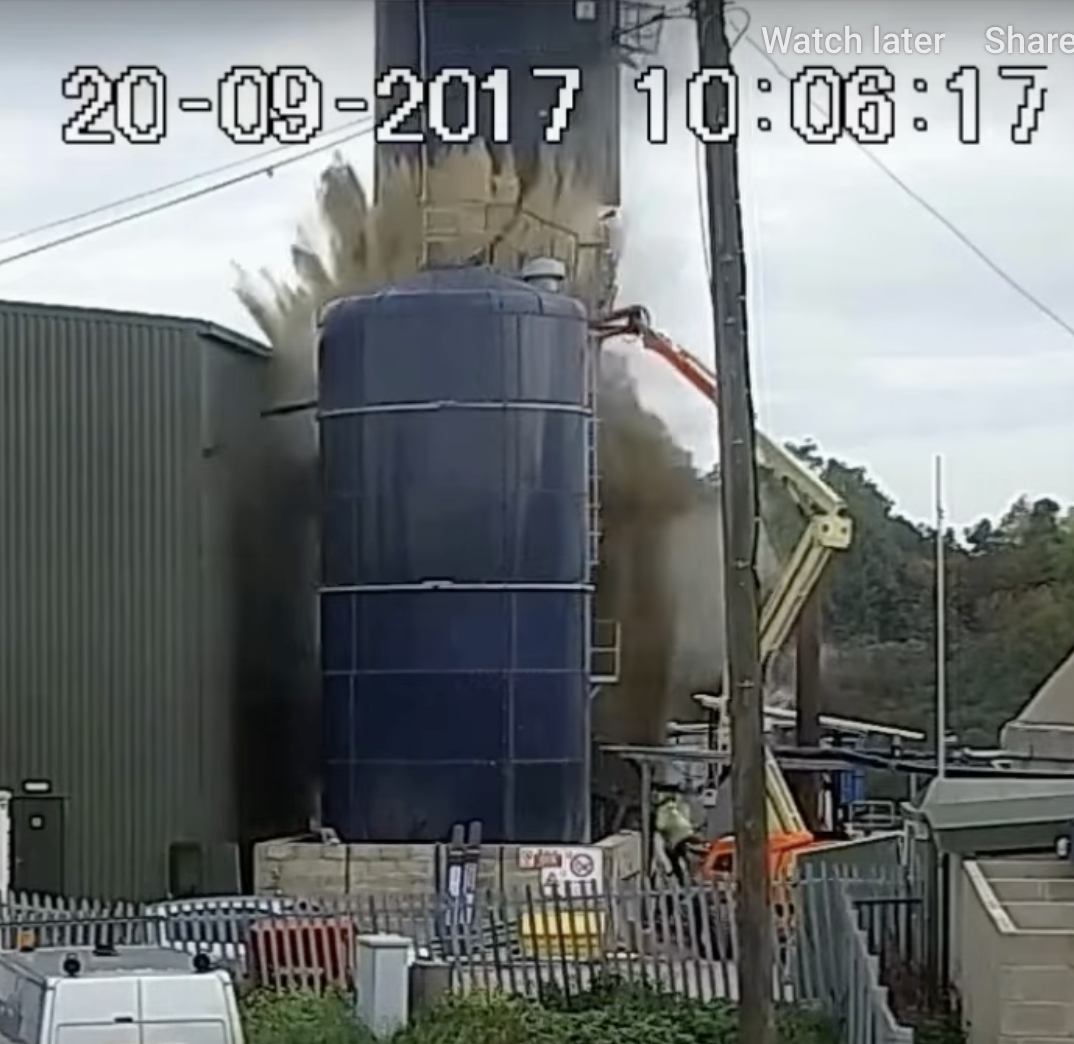
Hot Work on flammable and combustible liquid storage tanks

In light of the recent HSE video showing a 30′ silo exploding and going airborne for 9 seconds, I thought it might be fitting to offer some guidance on how to SAFELY perform HW on these “used containers.” OSHA’s 1910.252 standard provides no advice other than to say that we must be “absolutely certain” that the container is vapor/gas free.

But the IFC, 3510.2, offers some requirements (for those who wish to follow it) for when Hot Work is performed on the interior or exterior of tanks that hold or have held flammable or combustible liquids.

First, here are the OSHA requirements from 1910.252(a)(3)

Welding or cutting containers

1910.252(a)(3)(i)

Used containers. No welding, cutting, or other hot work shall be performed on used drums, barrels, tanks or other containers until they have been cleaned so thoroughly as to make absolutely certain that there are no flammable materials present or any substances such as greases, tars, acids, or other materials which when subjected to heat, might produce flammable or toxic vapors. Any pipe lines or connections to the drum or vessel shall be disconnected or blanked.

1910.252(a)(3)(ii)

Venting and purging. All hollow spaces, cavities or containers shall be vented to permit the escape of air or gases before preheating, cutting or welding. Purging with inert gas is recommended.

Hot work performed on the interior or exterior of tanks that hold or have held flammable or combustible liquids shall be in accordance with Section 3510.2 and Chapters 4, 5, 6, 7, and 10 of NFPA 326 (This standard outlines procedures to safeguard tanks or containers operating at nominal atmospheric pressure that contain or have contained flammable and combustible liquids or other hazardous substances before entry, cleaning, repair, or other activities can be performed.)

3510.2 Prevention
The following steps shall be taken to minimize hazards where hot work must be performed on a flammable or combustible liquid storage container:

  1. Use alternative methods to avoid hot work where possible.
  2. Analyze the hazards prior to performing hot work, identify the potential hazards and the methods of hazard control.
  3. Hot work shall conform to the requirements of the code or standard to which the container was originally fabricated.
  4. Test the immediate and surrounding work area with a combustible gas detector and provide for a means of continuing monitoring while conducting the hot work.
  5. Qualified employees and contractors performing hot work shall use an industry-approved hot work permit system to control the work.
  6. Personnel shall be properly trained on hot work policies and procedures regarding equipment, safety, hazard controls and job-specific requirements.
  7. On-site safety supervision shall be present where hot work is in progress to protect the personnel conducting the hot work and provide additional overview of site specific hazards.
Scroll to Top