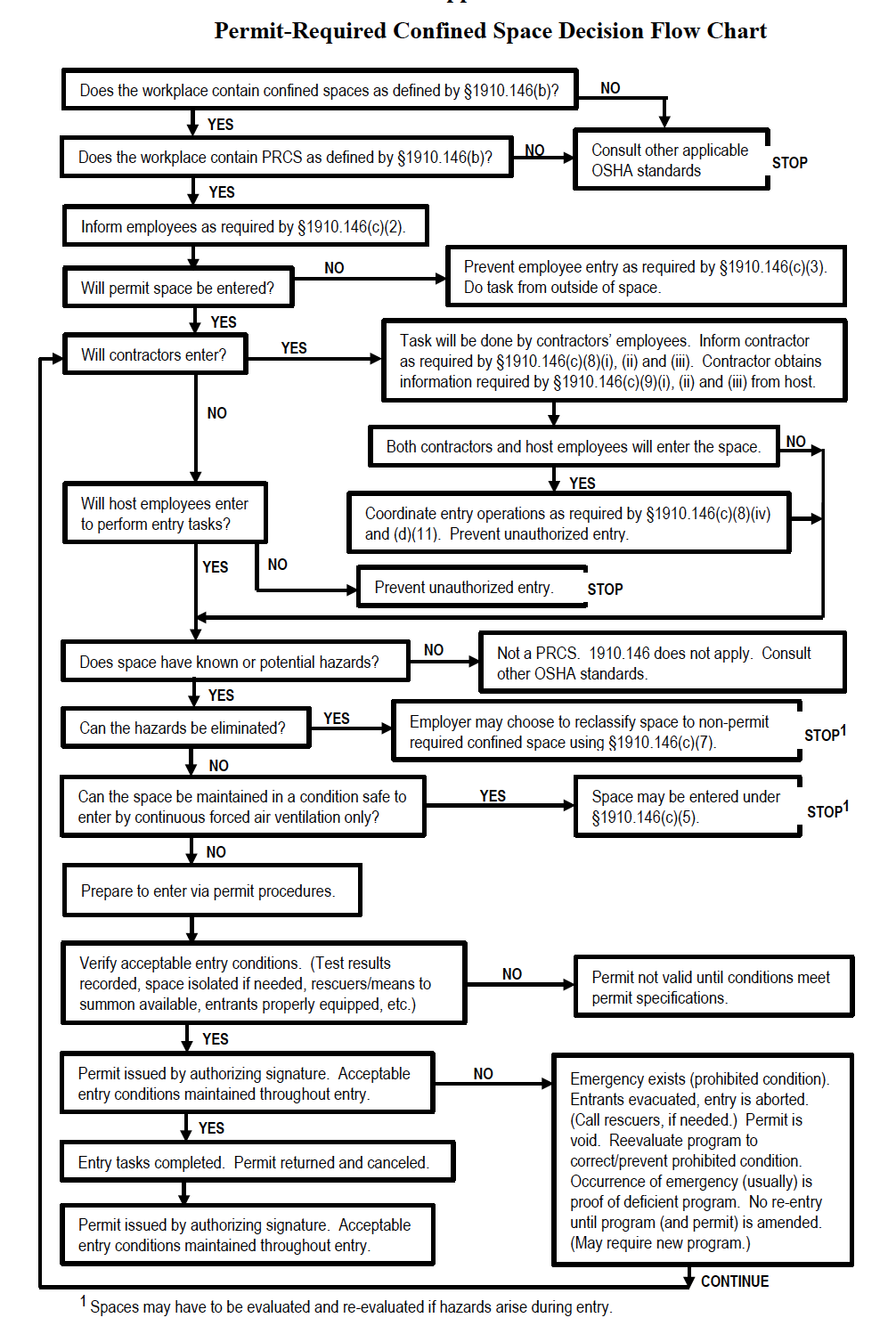
 This is a hot debate, sadly enough! Here we are going on nearly 20 years of having OSHA’s Permit Required Confined Space standard (1910.146) in place, and we are still debating what is and what is not a CS and PRCS. Granted, there will always be questionable spaces – that is what safety professionals are for! But damn it, these roll-off trash compactor containers are WITHOUT A DOUBT a PRCS. And just because “our employees never enter it/them” is not an excuse to not classify it properly and label it properly to PREVENT unauthorized entry. Let’s examine the characteristics of these containers and what makes them a PRCS…
OSHA defines a Confined Space (CS) in the following manner:
A CS has three (3) characteristics, and ALL three (3) MUST BE true regarding the space for the space to be called a CS. Here are the three (3) characteristics the space MUST have to be a CS:
- It is large enough and so configured that an employee can bodily enter and perform assigned work; AND
- It has limited or restricted means for entry or exit (for example, tanks, vessels, silos, storage bins, hoppers, vaults, and pits are spaces that may have limited means of entry.); AND
- It is not designed for continuous employee occupancy.
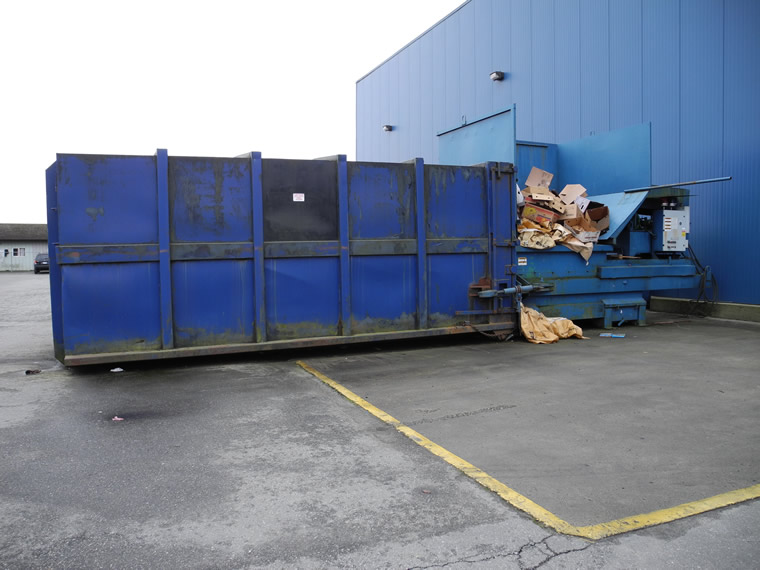
Now looking at the photo below (Source: WorkSafe BC- http://www2.worksafebc.com/i/agriculture/processed/berry/compactor1_berries_lrg.jpg), how can we argue that this space is not at least a CS. Of course, I will show how it is also a Permit-Required Confined Space (PRCS), but for now, let’s agree that it is a CS.
Now we have to ask ourselves, is this CS a space in which a hazard is present or potentially present that would raise the level of risks such that we would need a permit system to enter the space. OSHA list four (4) such hazards – but don’t be fooled because these are merely hazard GROUPS, and several groups can have multiple hazards associated with them:
- Contains or has a potential to contain a hazardous atmosphere; OR
- Contains a material that has the potential for engulfing an entrant; OR
- Has an internal configuration such that an entrant could be trapped or asphyxiated by inwardly converging walls or by a floor which slopes downward and tapers to a smaller cross-section; OR
- Contains any other recognized serious safety or health hazard.
First, take notice that the word “and” used in the definition of a CS has been replaced with the word “or”. This is a HUGE difference and way too many overlook this as only a grammatical difference – WRONG! The use of “or” vs. “and” means that ONLY one (1) of the four (4) characteristics need be true for the CS to become a PRCS. And as I said before, several of the four hazard groups will have MULTIPLE types of hazards, so we are dealing with more than four (4) hazards!
But let’s move on and focus on the hazard that makes these containers a PRCS. I think this is where we lose so many in the discussion as when dealing with #4 on the list of hazard groups (i.e., “Contains any other recognized serious safety or health hazard”), it is not crystal clear as to what specific hazards would fall into this hazard group. In our situation, the hazard is the compacting ram that travels through the space. This type of hazard is in-part specifically what OSHA was trying to include in PRCS hazards when they included #4 – “Contains any other recognized serious safety or health hazard”.
Now I will admit this space is a candidate for “reclassification” to a “non-permit” status, but that is an entirely different discussion (and one I have written extensively on for many years). Bottom line, these containers are WITHOUT a DOUBT a PRCS! And it matters not to me and any safety professional with a soul as to who posts the space as such so that it gets posted to prevent unauthorized entry. And trust me when I say these spaces are RIPE for unauthorized entry! On several occasions, we have found contractors hired by the owner of the compactor – yet on our property, to make repairs to “their compactor”! In this day and age, I hope that most companies have some type of site control to prevent anyone from just driving onto the property and starting work without any contact with a “responsible person on-site”. But it happens, and in some cases, the risk(s) may be relatively low; but in the case of working around and inside a PRCS the risk is too great to permit this type of lackadaisical safety practices. So we need to decide UP FRONT as to who is responsible for posting this space and permitting the entry or reclassifying the space for purposes of entry. But let’s stop arguing that these spaces contain no hazards and thus are not PRCS – they are PRCS!
In the next article, I will review a container in which the SAFTENG found an atmosphere that was not quite “hazardous” but was certainly NOT normal. Well on its way to being a hazardous atmosphere, and NO ONE would have ever been the wiser!