
Today, OSHA issued their revised policy on their “retail exemption” and this change in OSHA enforcement will actually impact thousands of businesses who have submitted a Risk Management Plan. It all comes down to how EPA instituted their “Program Levels” when they implemented their RMP Rule. EPA has always said that if your process was already covered by OSHA’s PSM standard you automatically fall into Program 3. But if your process was not covered by PSM, then your program was eligible to be in Program 1 or 2; which require MUCH LESS than the full blown Program 3. Here is how EPA lays out their Program Levels…
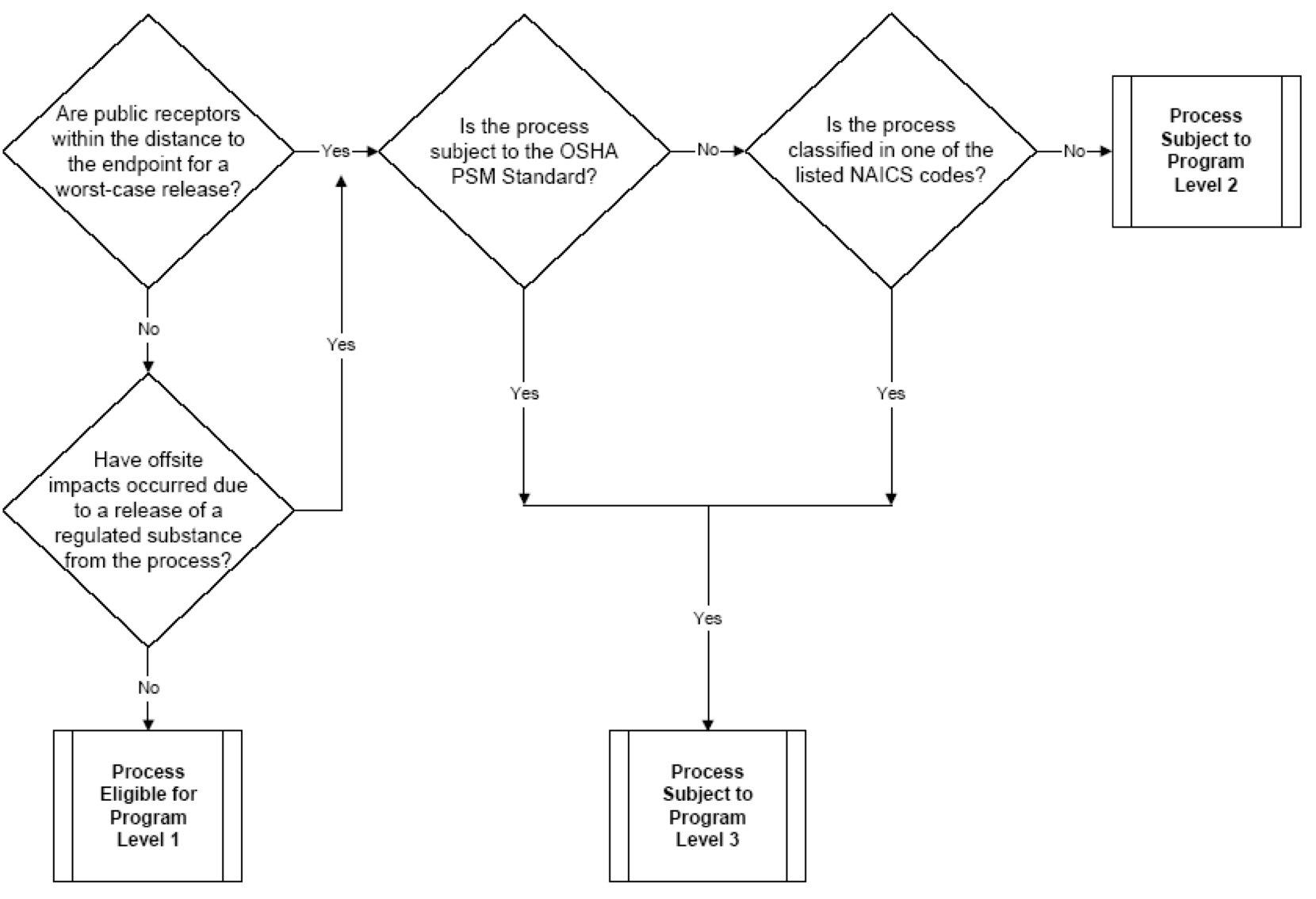
Program 1: Processes which would NOT affect the public in the case of a worst-case release (in the language of Part 68, processes “with NO public receptors within the distance to an endpoint from a worst-case release”) and with NO accidents with specific offsite consequences within the past five (5) years are eligible for Program 1, which imposes limited hazard assessment requirements and minimal prevention and emergency response requirements.
Program 2: Processes not eligible for Program 1 OR subject to Program 3 are placed in Program 2, which imposes streamlined prevention program requirements, as well as additional hazard assessment, management, and emergency response requirements.
Program 3: Processes NOT eligible for Program 1 and either subject to OSHA’s PSM standard under federal or state OSHA programs or classified in one of ten specified North American Industrial Classification System (NAICS) codes are placed in Program 3, which imposes OSHA’s PSM standard as the prevention program as well as additional hazard assessment, management, and emergency response requirements.
So the big change comes from those businesses who were in either Program 1 or 2 and now with OSHA’s change in their “retail exemption” enforcement, some of these businesses will NOW have a PSM-covered process, which will ALSO change their RMP Program Level to “Program 3”. Here is a nice EPA Flow Chart showing how the Program Levels work:
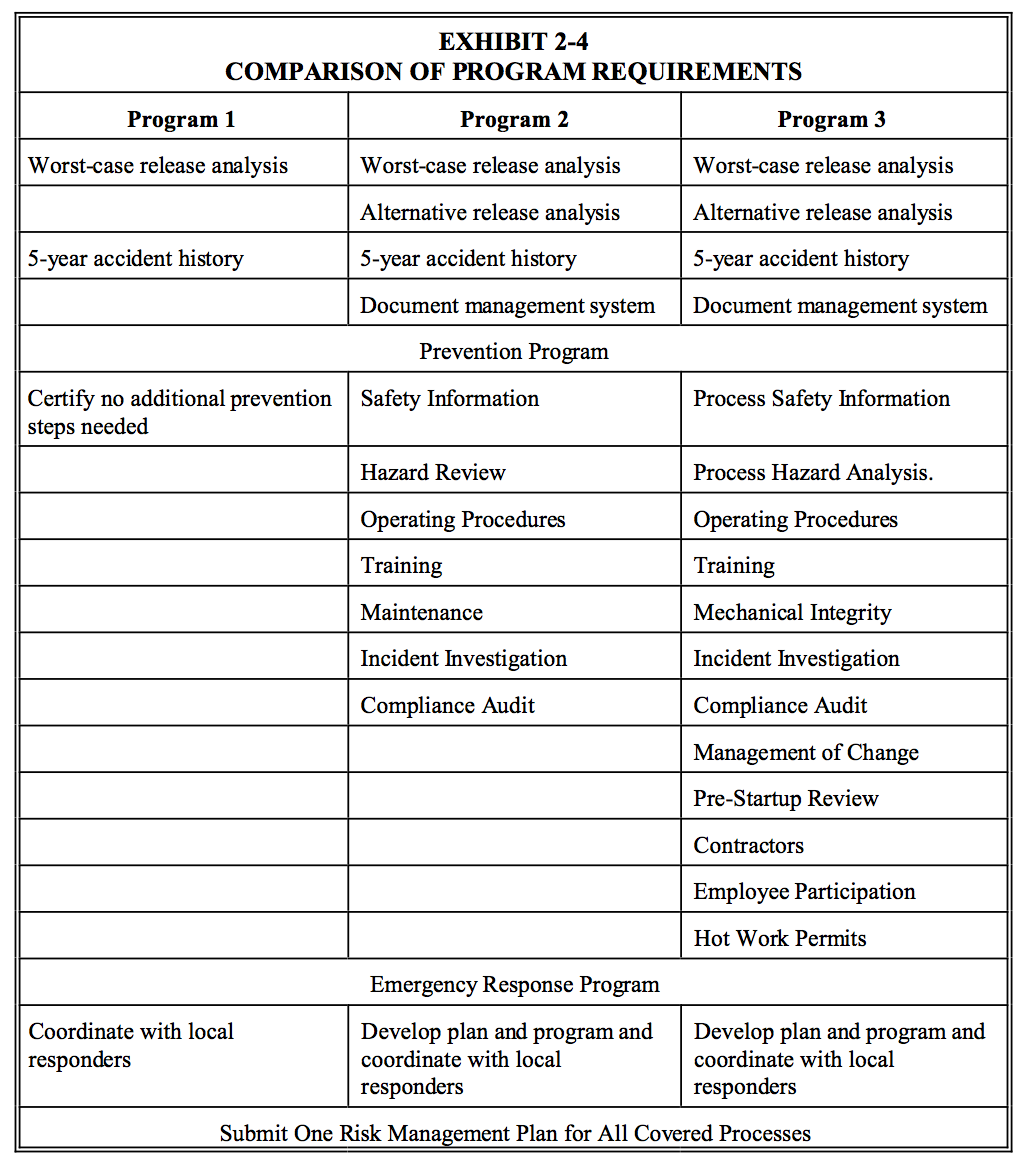
And here is a chart from EPA showing what the requirements are for the different levels:
So once again we have a situation where overnight some businesses compliance obligations changed in a significant way. OSHA stated in their Revised Retail Policy Enforcement that they were giving these businesses six (6) months to get their affairs in order before they begin to enforce this new position. But OSHA also said that if they come across situations where OSHA determines that the employer has not made a reasonable good faith effort to eliminate or substantially control the hazard. In this rare circumstance, the agency may consider enforcement action to address the immediate and severe danger. Any enforcement action in this situation must be approved by OSHA’s National Office.
I am a supporter of OSHA’s change in the retail exemption! The West, TX accident was a perfect example of how a business with over 200,000 pounds of anhydrous ammonia on-site did not have to do PSM and was a Program 2 RMP. Now the anhydrous ammonia was NOT involved in the tragic accident, but it was sitting right next to the building that exploded. Had those storage tanks been damaged, it would have added another hazard layer to an already hazardous situation. I just wish they would have given businesses more than 6 months to get everything in line. It may only be a single digit change from “2” to “3”, but the change brings into play five (5) new elements that really change the way process safety is managed on a day-to-day basis (e.g. MOC, PSSR, Contractors, Employee Participation, and HW Permits).