- CHEMICAL DANGERS:
- Over time hydrogen fluoride/hydrofluoric acid corrodes metals, releasing flammable hydrogen.
- Hydrogen fluoride/hydrofluoric acid reacts with water or steam creating toxic and corrosive fumes.
- Hydrogen fluoride/hydrofluoric acid attacks glass, ceramics, concrete, some forms of plastic, rubber, and coatings.
- Hydrogen fluoride/hydrofluoric acid is very reactive with most bases, acids, and oxidants and should not be stored with them.
- EXPLOSION HAZARDS:
- Upper and lower explosion limits are not applicable to hydrogen fluoride/hydrofluoric acid because it is a nonflammable gas.
- Hydrogen fluoride/hydrofluoric acid forms explosive gases when mixed with methanesulfonic acid, or polymerizing cyanogens.
- Containers may explode when heated or if contaminated with water.
- Ruptured cylinders may rocket.
- FIRE FIGHTING INFORMATION:
- UN 1052, anhydrous hydrogen (HF), may burn, but it does not ignite readily.
- Fire will produce irritating, corrosive, and/or toxic gases.
- For small fires involving UN 1052, use dry chemical or carbon dioxide.
- For large fires involving UN 1052, use water spray, fog, or regular foam. Move containers from the fire area if it is possible to do so without risk to personnel. Do not get water inside containers. Damaged cylinders should be handled only by specialists.
- For fire involving tanks of UN 1052, fight the fire from maximum distance or use unmanned hose holders or monitor nozzles. Cool containers with flooding quantities of water until well after the fire is out. Do not direct water at the source of the leak or at safety devices; icing may occur. Withdraw immediately in case of rising sound from venting safety devices or discoloration of tanks. Always stay away from tanks engulfed in fire.
- Note: Most foams will react with UN 1790 and release corrosive/toxic gases.
- For small fires involving UN 1790, hydrofluoric acid (HF), use carbon dioxide, dry chemical, dry sand, or alcohol-resistant foam.
- For large fires involving UN 1790, use water spray, fog, or alcohol-resistant foam. Move containers from the fire area if it is possible to do so without risk to personnel. Use water spray or fog; do not use straight streams. Dike fire control water for later disposal; do not scatter the material.
- For fire involving tanks or car/trailer loads of UN 1790, fight the fire from maximum distance or use unmanned hose holders or monitor nozzles. Do not get water inside containers. Cool containers with flooding quantities of water until well after the fire is out. Withdraw immediately in case of rising sound from venting safety devices or discoloration of tanks. Always stay away from tanks engulfed in fire.
- Run-off from fire control or dilution water may be corrosive and/or toxic, and it may cause pollution.
- If the situation allows, control and properly dispose of run-off (effluent).
- INITIAL ISOLATION AND PROTECTIVE ACTION DISTANCES:
- If a tank, rail car, or tank truck is involved in a fire, isolate it for 1 mi (1600 m) in all directions; also consider initial evacuation for 1 mi (1600 m) in all directions.
- This agent is not included in the DOT ERG 2004 Table of Initial Isolation and Protective Action Distances.
- In the DOT ERG 2004 orange-bordered section of the guidebook, there are public safety recommendations to isolate a hydrofluoric acid (Guide 125) spill or leak area immediately for at least 300 ft (100 m) in all directions.
- PHYSICAL DANGERS:
- Hydrogen fluoride/hydrofluoric acid vapors may collect and stay in poorly-ventilated, low-lying, or confined areas (e.g., sewers, basements, and tanks).
- Hazardous concentrations may develop quickly in enclosed, poorly-ventilated, or low-lying areas. Keep out of these areas. Stay upwind.
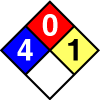
- NFPA 704 Signal:
- Health: 4
- Flammability: 0
- Reactivity: 1
- Special:
|
|
|