
Hydrostatic Pressure Test gone bad (49-year-old pipefitter killed)

I have written a lot about the hazards of “pressure testing” piping, and in all of those posts I have stated how much “safer” Hydrostatic Testing is, compared to pneumatic testing. But this fatal accident shows us that even hydrostatic testing comes with fatal risks.

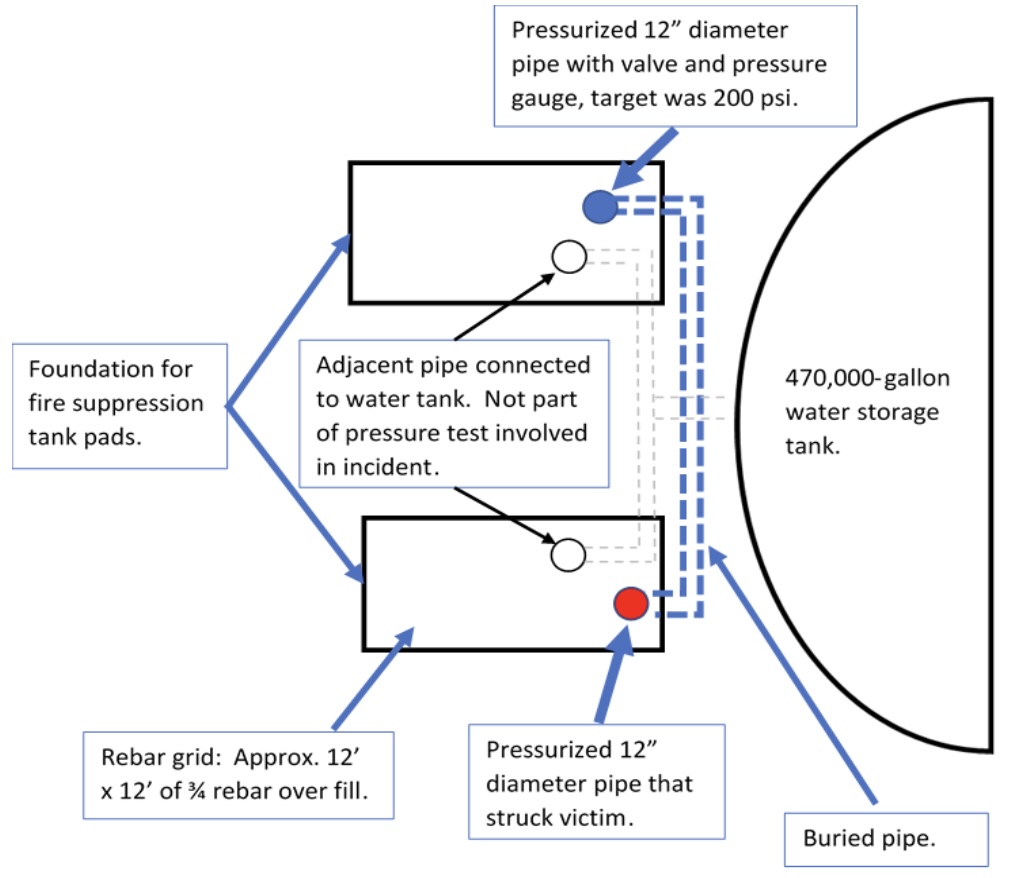
During a hydrostatic pressure test of a fire suppression system, a subcontracting pipefitter, 49, was struck by a 64-inch-long, 12-inch-diameter vertical section of a pressurized PVC pipe. The pipe thrust upward approximately ten inches toward the decedent’s chest, striking the impact driver he was using to tighten flange bolts on the end cap of the pipe. The pipe came loose under pressure because the torque shear bolts on the mechanical joint restraining gland had not been tightened at all. The gland connected the vertical pipe to the flange of a horizontal pipe running parallel to ground level, about 4 feet deep. The pipefitter was knocked backward and fell onto a rebar grid surrounding the pipe.

Co-workers attempted to render aid. A coworker checked for a pulse and, when no pulse was found, chose not to attempt cardiopulmonary resuscitation (CPR) chest compression, as it was suspected the decedent’s ribs were broken.

The co-worker continued with rescue breaths, and the site safety supervisor used an automated external defibrillator (AED), but could not revive the decedent. While aid was being rendered, other co-workers called 911 and the prime contractor’s safety coordinator. The pipefitter was pronounced dead at the scene by Emergency Medical Services (EMS).

The failed pipe connection had been backfilled prior to the hydrostatic pressure test. A visual inspection by qualified persons was performed prior to backfilling, but inspection documentation was not available. Workers reported mid-project design changes that led to schedule pressure from the primary contractor as a reason for backfilling the work before the pressure test was performed. There was no record that the decedent had received training on how to perform the hydrostatic pressure test safely, and no record that the employer’s test procedure and checklists were followed on the day of the incident.

The subcontractor was cited and fined for not ensuring workers were properly trained and supervised in the safe operation of tools, equipment, process, or practice.

Screenshot

CLICK HERE for the full report

Leave a Comment

Scroll to Top