
Independent review finds majority of safety incidents with human elements unintentional (NSW Govt)

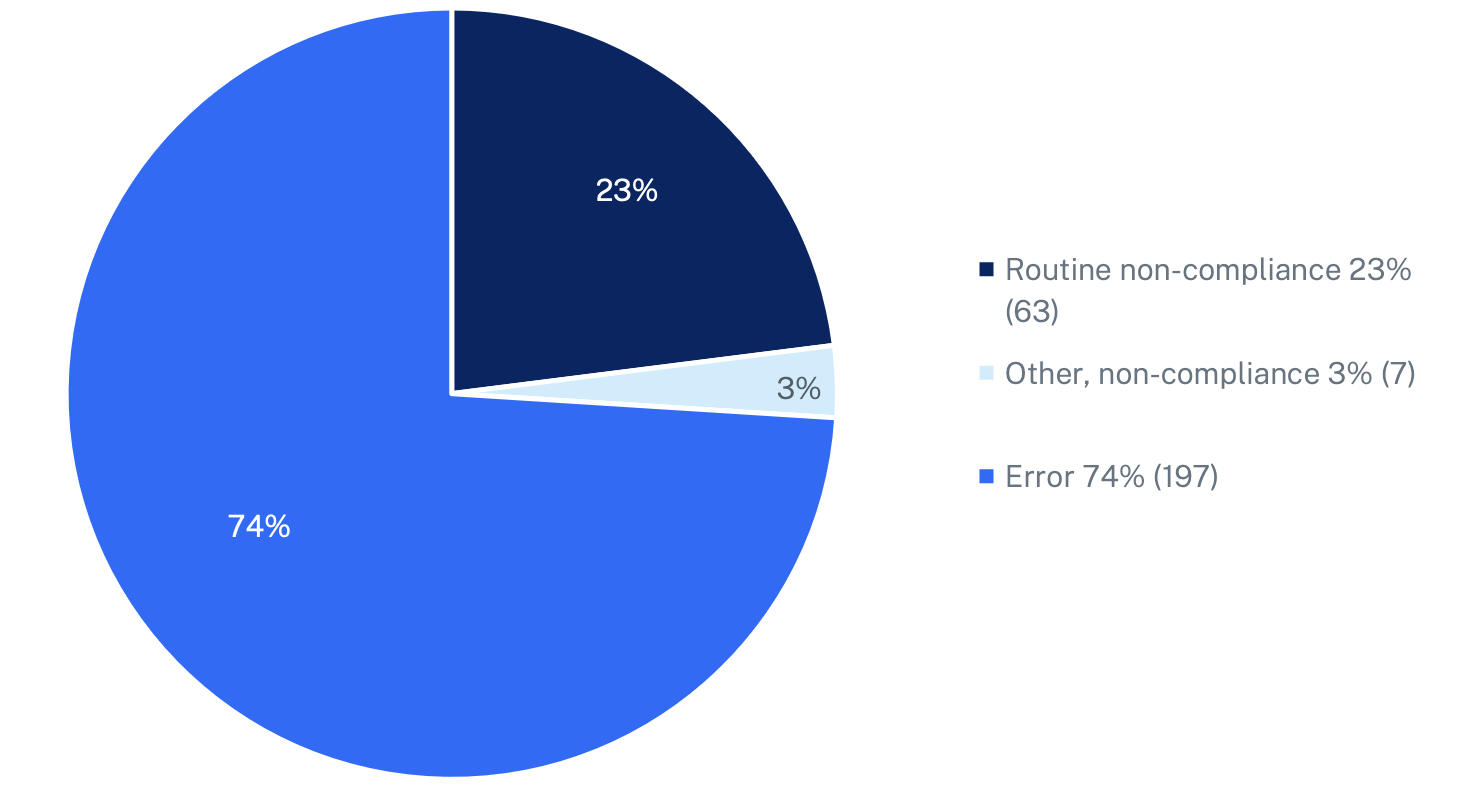
Figure 1. Total analysed behaviours from the S HOF data 2018 2023

The NSW Resources Regulator has published a fact sheet on its human and organizational factors data review.  The Regulator engaged the Keil Centre to independently review its human and organizational factors analyses over the past five (5) years, where HUMAN ERROR and DELIBERATE NON-COMPLIANCE played a role in incidents.  The review looked at 267 incidents at 180 at surface mines and 87 at underground mines, between August 2018 and May 2023.

It considers both intentional and unintentional compliance with rules or established processes and the influence of performance-shaping factors (PSFs) on a personal and organizational level, such as safety management and environmental conditions.

Findings

Behavior types

  • 74% of all analyzed behaviors were assessed as unintentional errors by individual workers
  • 23% were assessed as intentional or routine non-compliances (e.g., deviation from the rule or procedure was the accepted, normal way of getting the job done)
  • The remaining 3% were attributed to a wide range of other factors
  • There were zero behaviors assessed as sabotage, where the adverse outcome was intended

This pattern was consistent across all operation types: surface, underground, large mines, small mines and quarries; and all mining sectors: coal, large mines (metalliferous and quarries), and small mines (metalliferous, quarries and other gemstones).

Figure 1. Total analyzed behaviors from the S-HOF data 2018-2023

Figure 1. Total analysed behaviours from the S HOF data 2018 2023


Performance-Shaping Factors (PSF)

Of all the Performance-Shaping Factors (PSF) identified in the assessed behaviors, the most prominent subcategory was safety management (organizational factors category)1, followed by environmental conditions (work environment category), individual non-technical factors (personal factors category), and task demands (job factors category). See Figure 2 for the full breakdown.

Figure 1. Frequency of performance shaping factors identified during investigations 20182023


When considering performance-shaping factors and error types, the following vital links were identified:

Safety Management

  • Risk management arrangements influenced the incidence of all error types
  • Checking, inspection and monitoring influenced the incidence of all error types
  • Fatigue risk management influenced both sensory errors and action errors
  • Contractor management influenced thinking errors (decisions, judgments)

Environmental Conditions

  • Temperature, humidity and light influence all error types, but particularly sensory errors
  • This pattern is repeated with both time of day and roadway conditions

Individual Non-technical Skills

  • Situation assessment has the biggest impact across all behavior types and is the most identified PSF
  • Situation assessment was noted to be a co-occurring PSF. That is, situation assessment was consistently linked with other PSF and was rarely the sole identified PSF. This is consistent with the understanding that situation assessment can be seen as an outcome of other PSF
  • The PSF most commonly co-occurring with situation assessment was temperature/humidity and light
  • The majority of PSF co-occurring with situation assessment was not individual factors, but rather environmental, organizational, and task-related factors, which negatively affected individuals

Task Demands

  • Task demands impacted all error types as well as routine non-compliances
  • Mental demands of the task influenced all behavior types
  • Time pressure influenced thinking errors, actions-errors and routine non-compliances
  • Workload (high or low) influenced sensory errors and actions errors

Individual Technical Competence

  • Thinking errors (decisions, judgments) were most vulnerable to the influence of individual technical competence.

Note: the level of experience influenced all error types, as well as routine non-compliance, though not to the same degree as individual technical competence.


Key Considerations
This review should include reviewing systems of work and consider human and organizational factors. As such, mine operators should consider the following:

  • Given that most incidents involving human factors are the outcome of unintentional actions (errors), then the default assumption from organizations during an investigation should be that the behaviors involved were probably unintentional. A claim of intentional non-compliance must be supported by strong evidence.
  • Instead of focussing on disciplinary responses to individual non-compliance, attention should be turned to error prevention, detection, and recovery controls as more impactful measures to influence safe behavior.
  • Many behaviors found to have contributed to safety occurrences (both errors and intentional non-compliance) were created by the ways that work was managed and organized, as opposed to individual failings. Therefore, the responsibility for improvement lies mainly with organizations.
  • There are notable performance-shaping factors that were shown to heavily influence performance across many incidents. These represented an opportunity to proactively apply controls within organizations and across industries. Methods such as safety-critical task analysis, which incorporates the assessment of human performance risks and attention to the design of tasks to support workers, can positively influence the reliability of human performance in safety-critical work.
Scroll to Top