
NOTE: this data is a bit dated, but for those interested…An overview of some basic statistics derived from the RMP*Info database is informative and will help place more detailed assessments in context. As of this writing, the RMP*Info database contains information on a total of 14828 facilities containing 20210 chemical processes. Of these processes, 17529 contain at least one toxic chemical and 8107 contain at least one flammable chemical.
Note that the number of RMP processes exceeds the number of facilities, and that the total number of chemicals exceeds the number of processes. These facts highlight an important consideration. For many purposes, grouping RMP data by either chemical process or chemical type may be more accurate than trying to characterize data on a facility basis. While most facilities contain only one RMP process and one RMP chemical, 11% of facilities contain multiple regulated processes, and many individual processes contain multiple regulated chemicals.
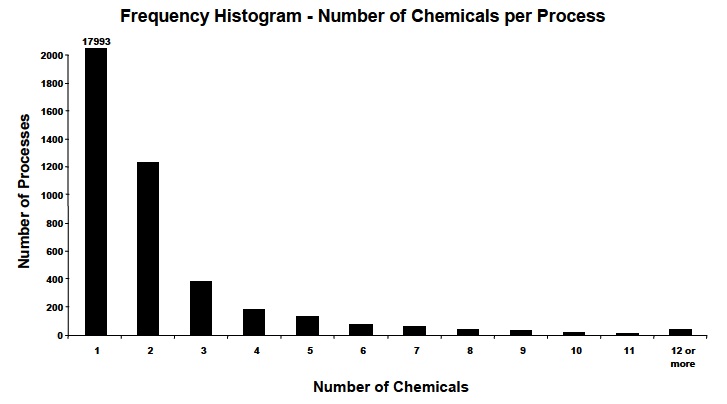
Figure 1 is a histogram of the number of RMP processes containing multiple chemicals.
The RMP*Info database contains information on 70 toxic and 57 flammable substances or mixtures. As Table 1 illustrates, four chemicals – anhydrous ammonia, chlorine, propane, and flammable mixtures – are present in nearly 70 percent of all RMP processes. Anhydrous ammonia is predominant due to its several widespread uses, including fertilizer production, refrigeration, and land application as an agricultural nutrient++. It alone is present in about one third of all RMP chemical processes, and 48% of all toxic chemical processes. The high number of chlorine processes is mainly due to the common use of chlorine for water disinfection. Propane and flammable mixtures are found as products and chemical intermediates in oil refineries, gas extraction plants, propane distribution centers, fuel terminals, and chemical plants.
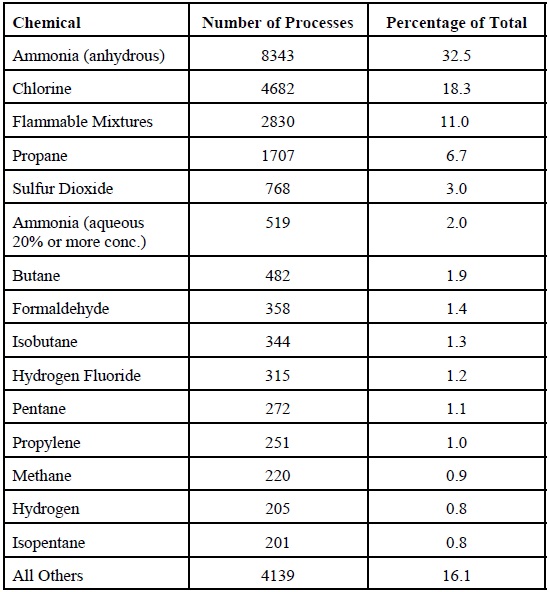
Table 1: Frequency Distribution of RMP Chemicals
While table 1 clearly shows that toxic chemicals (particularly ammonia and chlorine) account for the majority of RMP processes, the opposite is true for chemical quantity. In fact, RMP flammable chemicals far outweigh RMP toxics overall. As table 2 shows, of the top 10 RMP chemicals ranked in order of quantity, eight are flammables, including the top three. Ammonia, which ranks first in number of processes (32.5%), ranks fourth in terms of quantity (13%). Chlorine, which ranks second in number of processes (18.3%), ranks only 13th in quantity (0.9%). While at first glance these results may seem inconsistent, they are easily explained. Many RMP flammable chemical processes are located in refineries, chemical plants, gas extraction plants, fuel terminals and propane distribution centers. These facilities, on average, tend to have extremely large chemical processes. The most prevalent toxic chemical processes, on the other hand, include refrigeration systems, fertilizer storage containers, and water treatment plants, all of which generally contain relatively small chemical quantities.
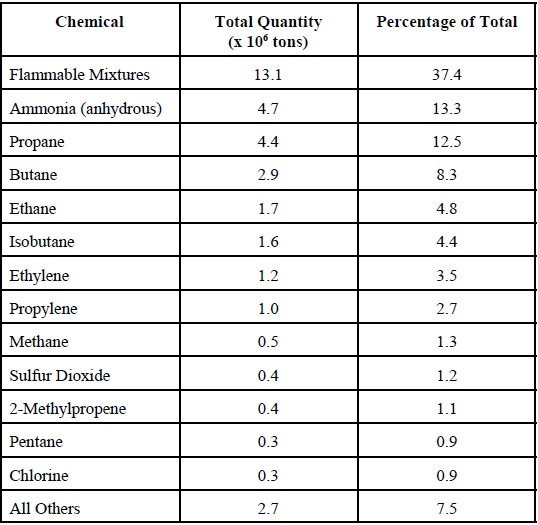
Table 2 – Quantity of Prevalent RMP Chemicals in the United States
Each RMP process is assigned an industrial classification code according to the North American Industrial Classification System (NAICS). This system
assigns businesses descriptive categories that correspond to five- or six-digit codes. The first three digits of the code define a major business sector and the last two or three digits indicate an establishment’s specialty within the major sector. The RMP rule requires facilities to assign NAICS codes that most closely correspond to the function of the individual covered process, rather than the overall facility. Since most facilities have only one process that is closely aligned to the overall facility function, the process NAICS code and facility NAICS code are usually the same. However, facilities with multiple processes, or facilities desiring to identify other aspects of a process not captured by the NAICS code for the primary activity may have multiple NAICS codes. Table 3 indicates the number of RMP processes in the most commonly reported NAICS codes. The most frequent RMP process NAICS codes roughly mirror the results of Table 1, as ammonia, chlorine, flammable mixtures, and propane – the top four chemical in terms of process frequency – are also among the RMP chemicals most commonly associated with the top NAICS codes.
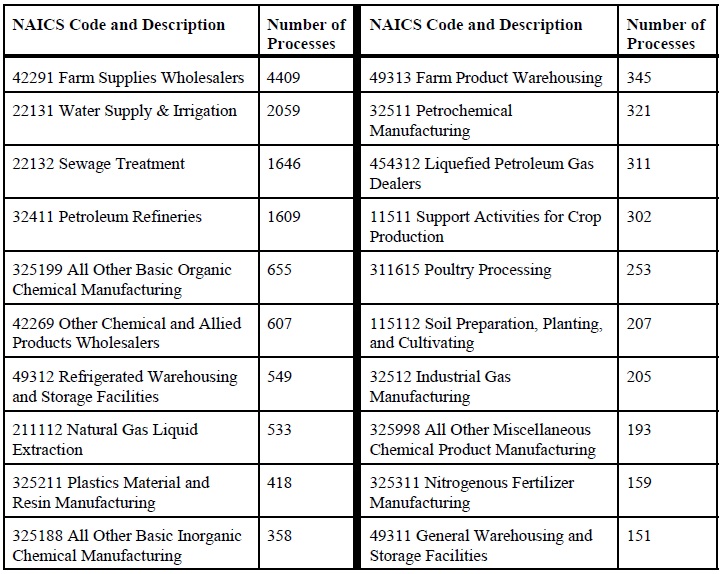
Table 3: Most Frequently Occurring RMP Process NAICS Codes
Click Here (pdf) to download the entire report from the United States Environmental Protection Agency – Chemical Emergency Preparedness and Prevention Office.