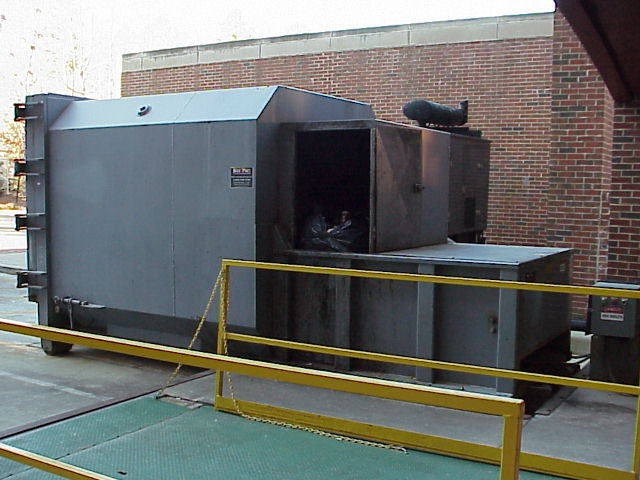
In evaluating these spaces, we first have to determine if they are a Confined Space. Evaluating the compactor shown below, we have to ask ourselves, as it sits there today, does the space meet the definition of a Confined Space?

OSHA defines a confined space as a space that:
- Is large enough and so configured that an employee can bodily enter and perform assigned work; and
- Has limited or restricted means for entry or exit (for example, tanks, vessels, silos, storage bins, hoppers, vaults, and pits are spaces that may have limited means of entry.); and
- Is not designed for continuous employee occupancy
I am not sure how anyone could argue (but I am willing to hear one and debate it) that the space shown in the photo is not a Confined Space. But does this “Confined Space” rise to the level of hazards that it meets one of the four hazards listed in OSHA’s definition of a Permit-Required Confined Space? OSHA states that a “Confined Space” that has one or more of the following hazards is a “Permit-Required Confined Space” (PRCS):
- Contains or has a potential to contain a hazardous atmosphere;
- Contains a material that has the potential for engulfing an entrant;
- Has an internal configuration such that an entrant could be trapped or asphyxiated by inwardly converging walls or by a floor which slopes downward and tapers to a smaller cross-section; or
- Contains any other recognized serious safety or health hazard.
For the sake of this space, let’s say the first three hazards are debatable and are determined not to be present. Please do NOT take that I am saying these spaces can not have hazardous atmospheres, an engulfment hazard, or an internal configuration that makes these spaces PRCS. This is why EACH SPACE and its use must be evaluated for its specific configuration and hazards. But without a doubt, these compactors contain “any other recognized serious safety or health hazard.” What is the “other recognized serious safety or health hazard“? The compactor’s hydraulic ram.
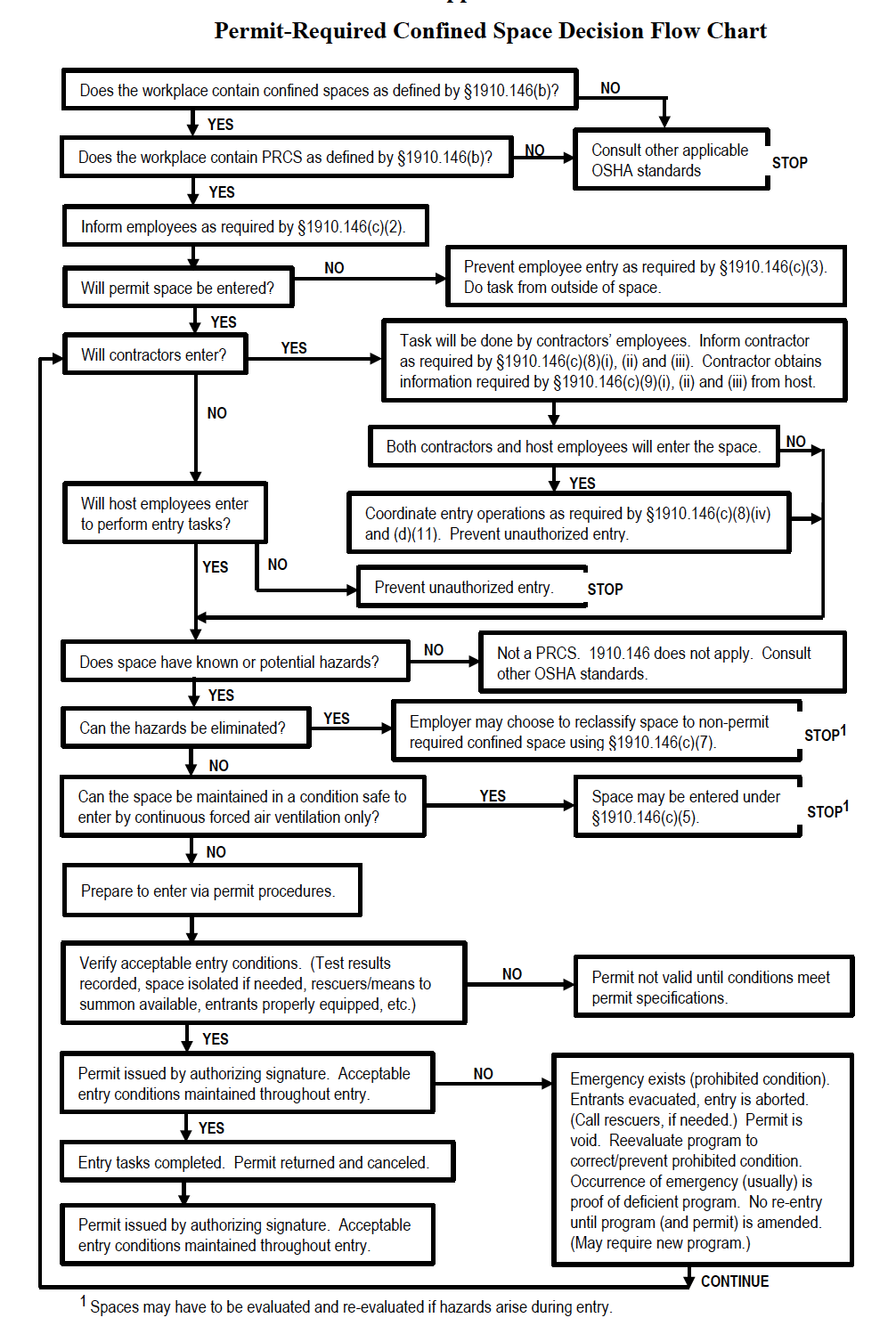
That’s the bad news; the good news is that many of these compactors can be “reclassified” to a non-permit status using 1910.146(c)(7). That is, AS LONG as there is NO KNOWN HAZARDOUS ATMOSPHERE or a POTENTIAL for a hazardous atmosphere to develop. To enter these types of compactors, we MUST LOCKOUT the compacting ram (meaning that EACH entrant must have the ram locked out). I will not go into details about “reclassifying” spaces as I have written dozens of articles on this. Still, I do want to WARN everyone that doing hotwork inside a confined space that is used as a cardboard compactor and the space is NOT PROPERLY PREPARED for hotwork is a recipe for disaster. When we reclassify a space, we MUST DOCUMENT how the non-atmospheric hazards were ELIMINATED, and to do hotwork inside this space, the hotwork permit MUST BE issued FLAWLESSLY (e.g., ALL combustibles REMOVED from the space). Doing hotwork inside a poorly prepared space will result in a significant incident -TRUST ME!
Getting back to the basics… let’s not forget to label these spaces to prevent unauthorized entry into them. If you lease these compactors, I would get with the owner and either require them to label them or if I had to I would label them with their consent. If I ran into any resistance (and I have before), I would play hardball and give the owner(s) an ultimatum to either label them or remove them from the facility. We certainly do not have time to play this kind of games with PRCS and we may even educate a business on the hazards of their equipment.