We came across this space while performing other safety and health work for a client. The client we were working for is not the owner of the equipment, but a recent near-miss occurred and the host and client wanted to ask us about this space and the near-miss. This piece of equipment is very large and fast-moving and this new design has placed all the power transmission devices inside an enclosure for “1-stop shopping”, as stated by the maintenance manager. We were all in agreement that LOTO was certainly applicable to enter the space, but in the near-miss, a manufacturer’s rep was overcome by a cleaning product while working inside. Before we knew of this near-miss, it took me all of 3 seconds to declare this space a Permit-Required Confined Space…
NOTE: use the 36″ barrier height for a comparison of the door size…
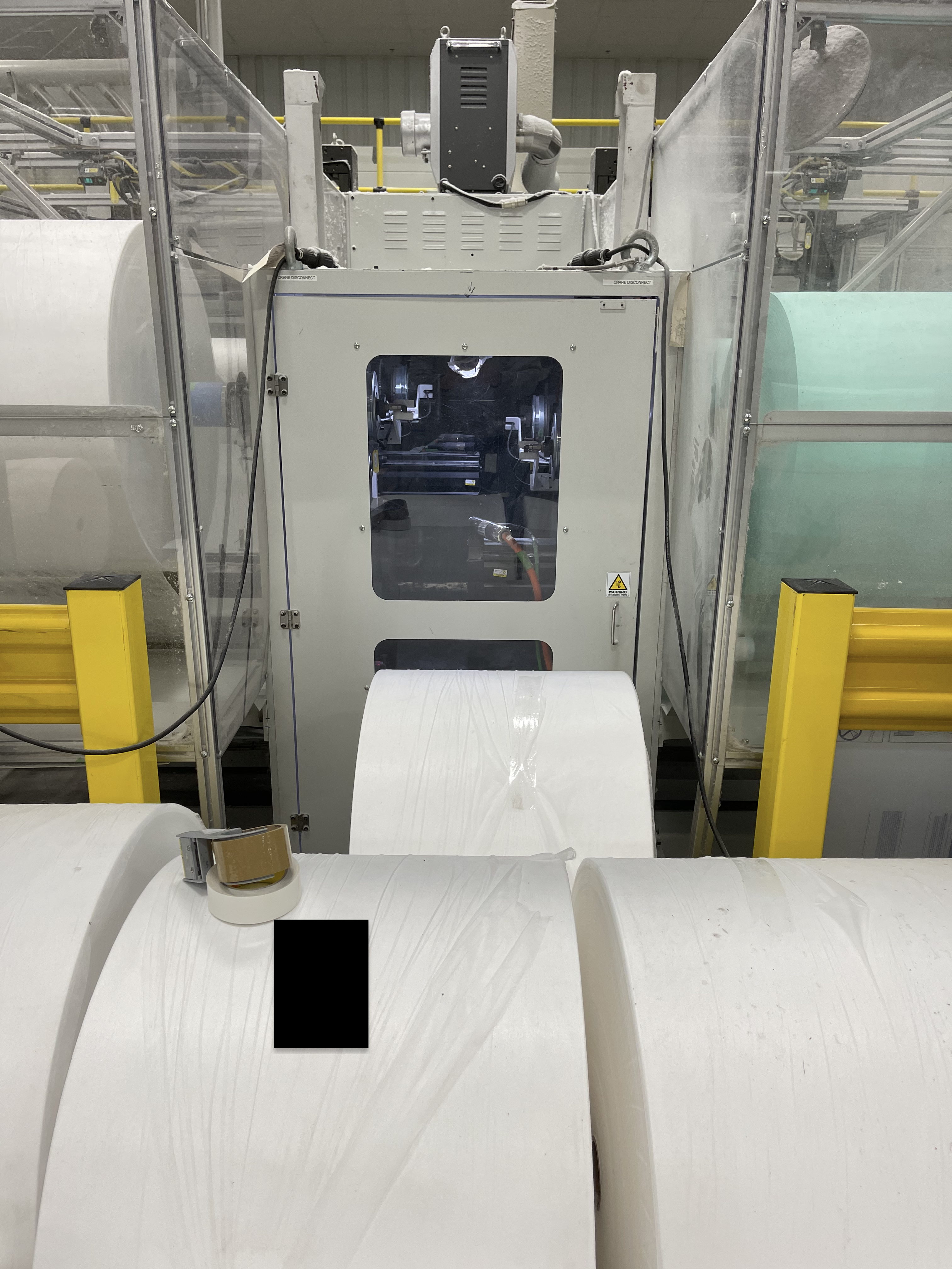
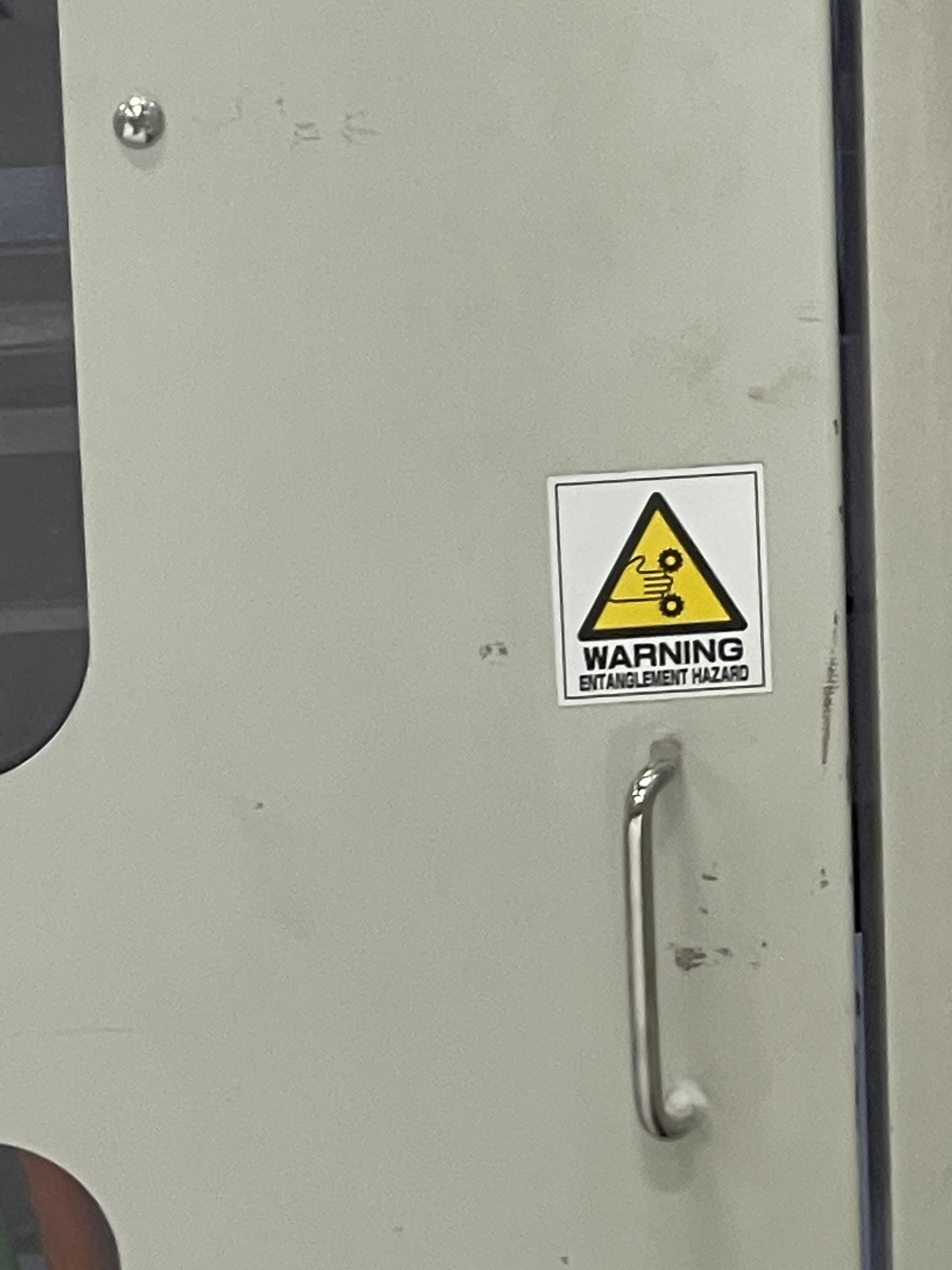
As we can see, the manufacturer clearly has provided a means to access the space AND they have labeled the space with an ‘Entanglement Hazard” placard right next to the door handle (see pic below for a close up of the hazard label). We can also see the railings on both sides of the door – these are the basic 36″ high railings to meet the “bollard” sign criteria. The actual door just over 5-feet tall, but as soon as you enter there is overhead moving equipment that you have to duck to get inside. Nonetheless, the door is certainly not a full-size door and thus it has limited or restricted means for entry or exit.
But the space is large enough and so configured that an employee can bodily enter and perform assigned work. The manufacturer actually created this space for “maintenance” and fully intended workers to enter this space to perform the monthly maintenance on this equipment. But the manufacturer was only concerned with the power transmission devices inside the space, rightfully so as the space is full of power transmission shafts, belts and pulleys, chains and pulleys, and even some open voltages. The enclosure is intended to be the sole guard for all these hazards. The manufacturer did interlock the door and label it as to the hazards inside. The maintenance manual makes it clear that LOTO applies to enter the space, but without a doubt, the space is large enough and so configured that an employee can bodily enter and perform assigned work.
But even though this space is large enough and so configured that an employee can bodily enter and perform assigned work, the space is NOT designed for continuous employee occupancy. In fact, the maintenance manual makes it clear that the door must be fully closed after maintenance and the interlock reset in order to operate the high-speed winder.
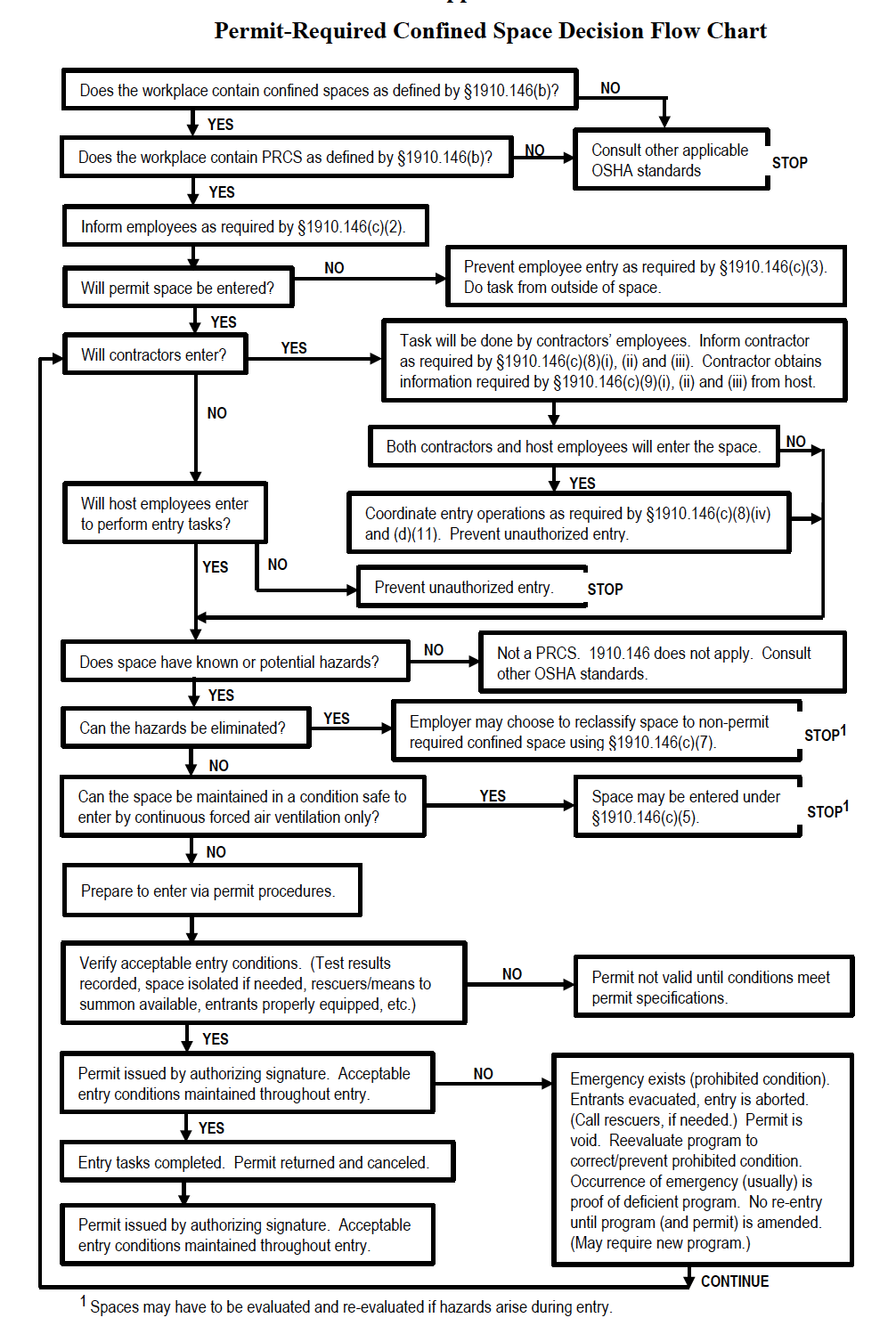
So we have just completed the first three (3) steps on a Confined Space Evaluation and since the space meets ALL three (3) of the CS characteristics, it is in fact a Confined Space. But is it a Permit-Required Confined Space?
As we have discussed many times in these articles, ONLY ONE (1) of the PRCS hazard(s) needs to be present to make the space a PRCS. And in this situation, the employer has actually made our job of assessing the hazards of this space quite easy. The “entanglement hazard” makes this CS a PRCS; albeit one that MAY be reclassified to a non-PRCS status while the entanglement hazard(s) have been ELIMINATED via LOTO.
But we have to FULLY UNDERSTAND what it means to “reclassify” a PRCS to a non-PRCS status… remember the near-miss with the manufacturer’s service tech? He was overcome with a cleaning solvent while working inside this space. The horizontal depth of this space is only 4′-9″ and the worker was all the way in and was cleaning and lubricating some of the power transmission devices. He was using Toluene as his solvent. But here is the kicker, he had locked out the space properly, but the other four lines in the room were running and the noise levels in this room with these machines running is around 99 dBA. So this contractor entered the space and after a few minutes decided to close the door to lessen the level of noise he was being exposed to (e.g. it was interfering with his music!!! – don’t get me started!). This space is normally well ventilated; however, the ventilation is on the same disconnect used to lockout all the energy sources within the space. So while he was working there was no ventilation – not even any natural ventilation, as he had closed the door – trapping the Toulene vapors.
When we want to enter a PRCS using the “reclassification” option we can NOT even have a “potential” for a hazardous atmosphere. So using a solvent inside such a small space is problematic. Now I would feel comfortable letting someone take in and use a very small quantity of solvent inside a space, but it would NOT be enough to create a HAZ ATM. This space is really small and all the contractor had was a squirt bottle of this size (16 oz):
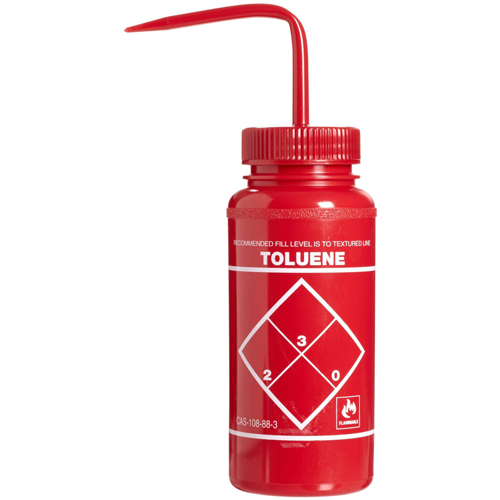
He had used the same bottle but had refilled the bottle twice during the morning; meaning he used three (3) 16-oz bottles inside this very small and non-ventilated space over a 3 hour time period. One of the employees who came to his aid, said his clothes smelled like he had washed them using toluene. NOTE: the worker who run this equipment also use toluene as a cleaner for the rollers so they are very familiar with the chemical.
So clearly, this was indeed a PRCS issue and would be citable by OSHA as such. The business has since labeled the space as such, and now has a written procedure for Locking out the space and PROHIBITING any chemicals from being taken into the space. They are also in the works of putting the ventilation fan on a different electrical circuit so that the fan can be left on while work is taking in place within the space – this also included having to properly guard the fan blades.
Unfortunately, the manufacturer of this equipment is not a USA manufacturer and was not receptive to the host’s inquiries about a change in design for line #5; but the host has “informally” agreed that when it arrives, they will take the same actions to ensure this space is managed properly. The host has also shared this information “industry-wide” as this style of machine is identical to the others used across the USA; however, sadly, the trade group for this industry disagreed with our assessment and laid claim to 20 years of experience with no serious accidents within the space as the reason not to “sound alarms” through the industry.