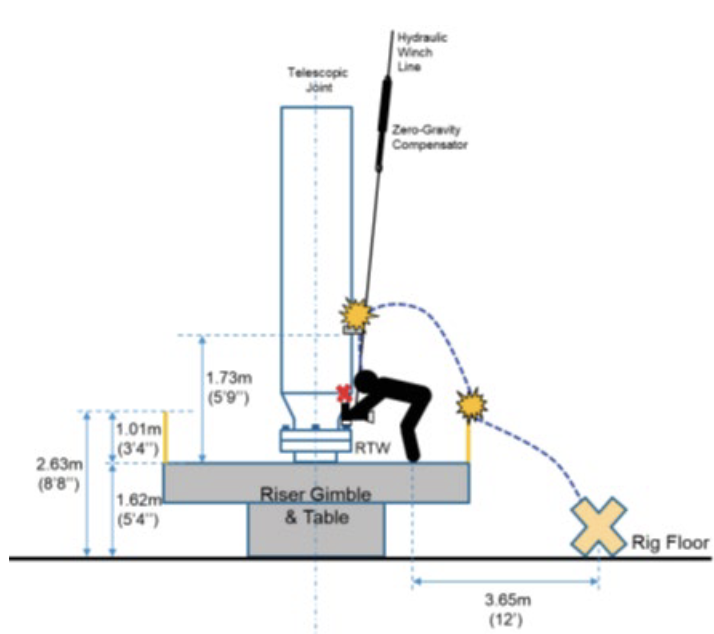
 During well operations, a fatality occurred on a drillship in the Gulf of Mexico. While unlatching the lower Marine Riser Package from the Blowout Preventer in preparation for ship relocation, a crew member was lifted into the air after being struck by a hydraulic torque wrench (HTW), hitting a riser clamp approximately six feet above the elevated work deck before falling to the rig floor. The crew member was given first aid and transported to the drillship’s hospital, where he was later pronounced deceased.
The incident investigation found that the rig crew was using a hydraulic torque wrench to extract the bolts from a telescopic riser joint (TJ) flange. During the operation, the HTW T socket became stuck between the bolt head and the tapered edge of the TJ. After failing to manually dislodge the HTW using physical exertion, the rig crew utilized a Hydraulic Utility Wrench to supply upward force and applied tension to free the tool. After applying the upward force, the torque wrench became unstuck under tension and shot upwards leading to the crewmember being struck.
Contributing Factors included the following:
- Lack of recognizing the stuck-HTW potential on the TJ beveled edge.
- Lack of comprehensive understanding of the Task Risk Assessments associated with the riser pull.
- Failure to effectively communicate all learnings from the previous riser pulls.
- Lack of formalized training for the utilization of the HTW and HUW.
- Adverse designs of the HTW and the HUW.
- Contributing Causes:
- Failure to initiate Stop Work Authority.
- Discrepancies with the Drill Floor Observer roles and responsibilities.
CLICK HERE for the full report