
 Natural gas was released into the basement of the Realty Building and caused an explosion in Youngstown, Ohio, after a member of a scrap removal crew cut into a steel pipeline. Although the cut pipeline had not been marked or otherwise identified as containing natural gas, it did contain gas, pressurized at about 38 psig, which was released into the building and fueled the explosion.
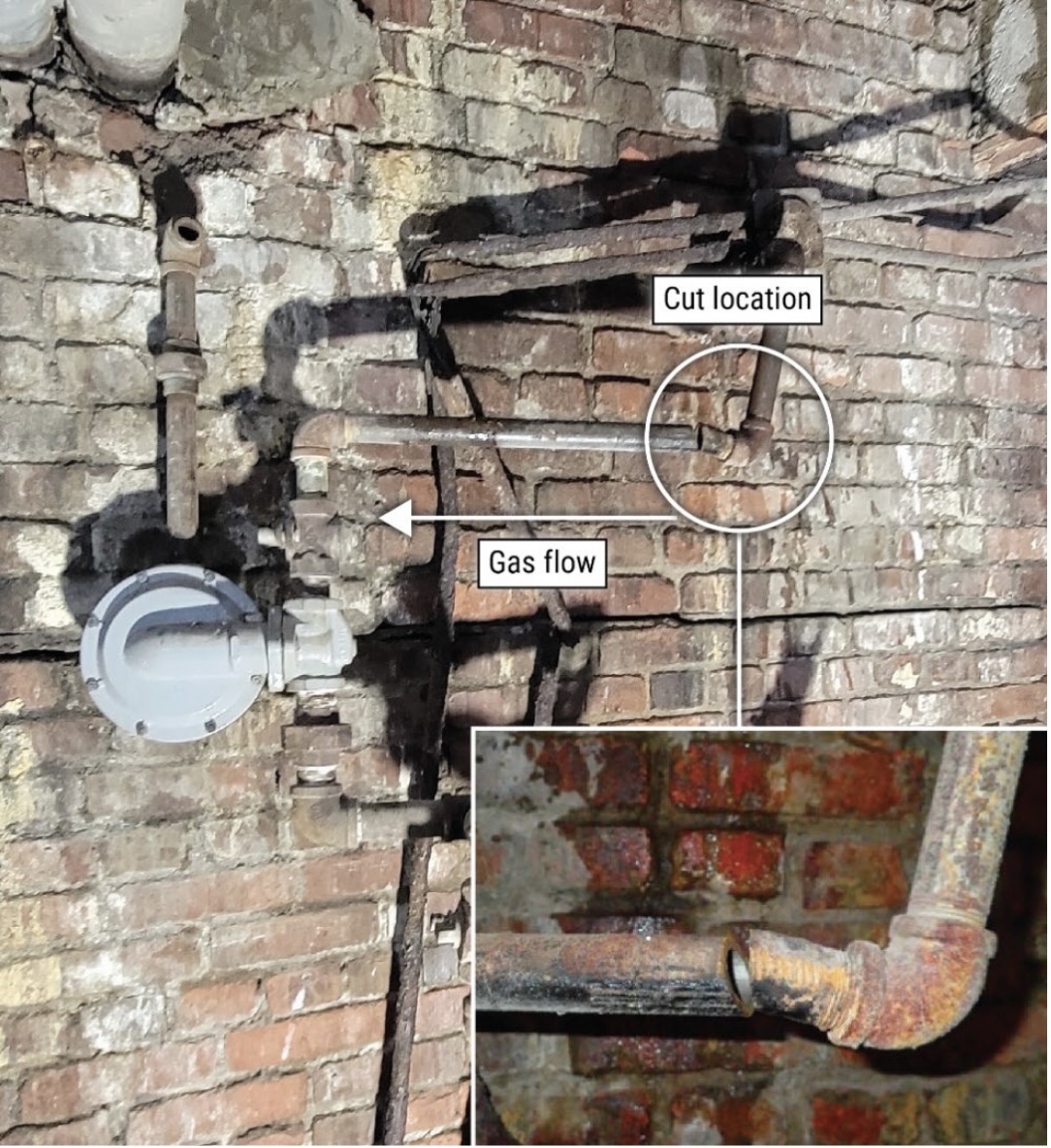
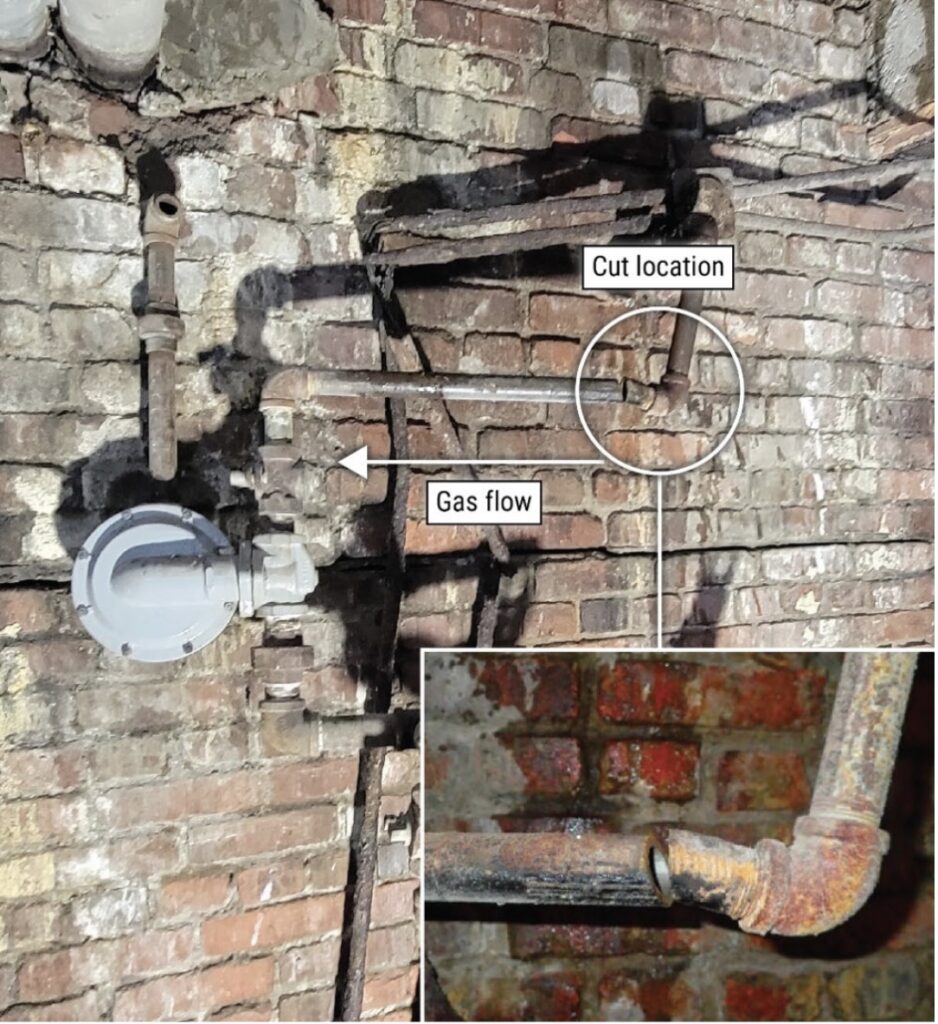
In interviews with the NTSB, [contractor] employees stated that they were not aware that there was natural gas in any of the pipelines in the Realty Building basement, noting that the accident service line appeared old and rusty and did not have a gas meter. (See figure 3.) The scrap-removal crew member stated he used a saw to cut into one of the pipes that his project supervisor had told him was inactive, or “dead,” but partway through the process, the crew member heard a loud whistling sound and felt gas blowing into his face from the cut pipe.
The scrap-removal crew immediately exited the basement area and called 911 to report the gas leak.9 About 2:39 p.m., as they exited, a crew member pulled the fire alarm on the first floor, which alerted building residents of the emergency. The alarm did not sound in the building’s commercial spaces, which included Chase Bank on the first floor. Video footage showed crew members speaking with bank employees and pounding on the windows of the bank to notify employees of the gas leak between 2:42 and 2:43 p.m.
After the accident, on May 28, Enbridge conducted an initial pressure test of the main and service line to the Realty Building. The pipeline failed to hold pressure, and crews heard a hissing noise from the pipeline in the basement that the scrap-removal crew member had cut into just before the accident.
NTSB evaluations indicated that the accident service line was still connected to the main, and the curb valve to the accident service line was in the open position, allowing gas to flow from the main into the service line.12 As part of Enbridge’s response to the design locate request, they located the main and active service lines to the building and marked the ground above the lines in yellow paint. There were no yellow paint markings outside or inside the building indicating that the accident service line was pressurized with gas.
The NTSB reviewed work order records related to the accident service line and noted these records were inaccurate. Enbridge’s work order records from 2015 indicated the curb valve had been closed, but NTSB investigators found the valve in the open position after the accident. Further, although the 2015 records indicated the accident service line had been disconnected from the main, the gas flowing through the pipeline after the scrap-removal crew member cut into it, as well as a postaccident pressure test, indicated that the service line was still connected to the gas system and contained natural gas. Enbridge’s procedures regarding service line abandonment required curb valves to be removed or closed and service lines to be disconnected as close to the main as possible. The procedure did not include a requirement for the work crew to visually confirm the service line was disconnected from the main before processing the service line cut order.
CLICK HERE for the full report