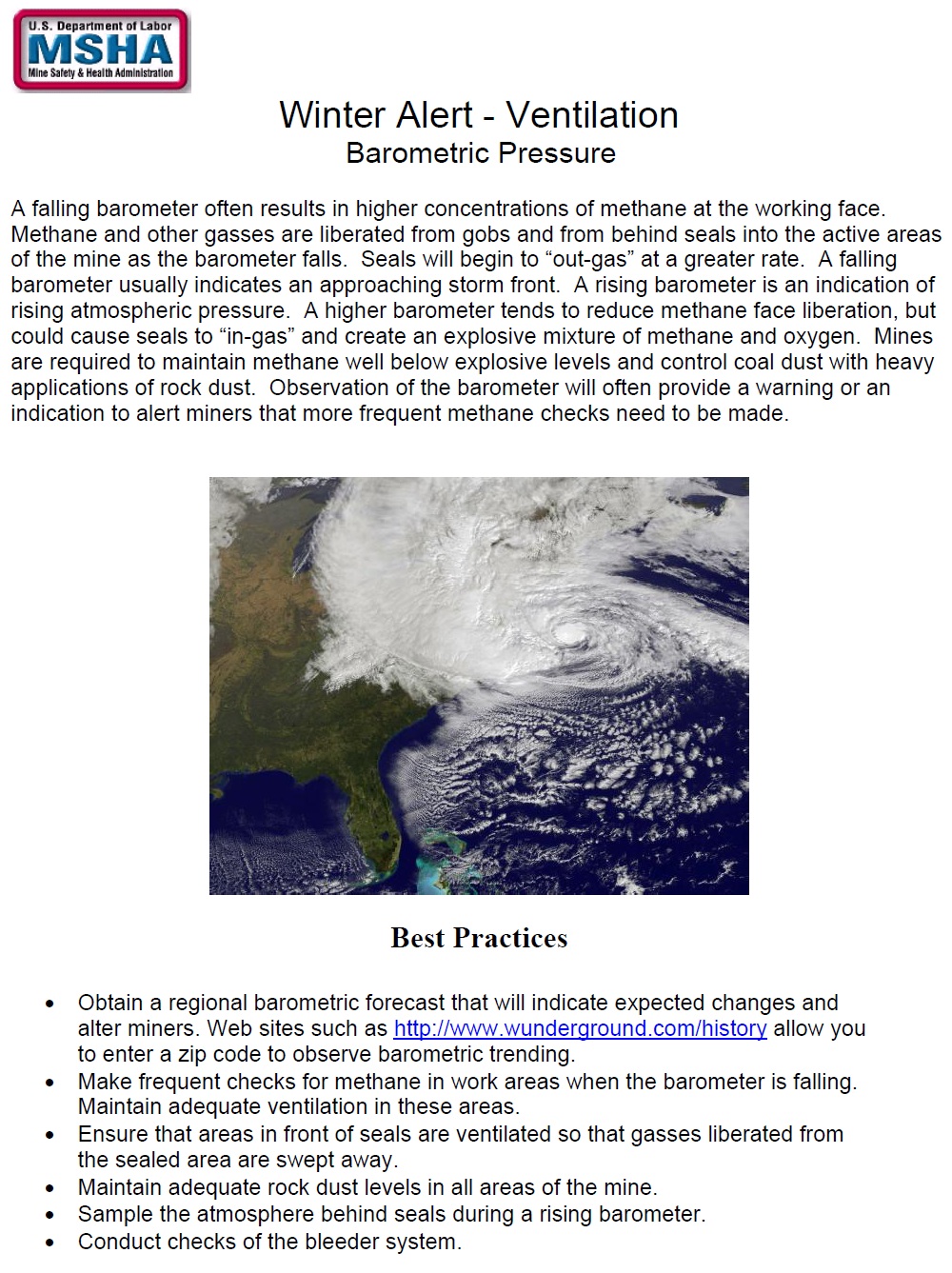
 A falling barometer often results in higher concentrations of methane at the working face. Methane and other gasses are liberated from gobs and from behind seals into the active areas of the mine as the barometer falls. Seals will begin to “out-gas” at a greater rate. A falling barometer usually indicates an approaching storm front. A rising barometer is an indication of rising atmospheric pressure. A higher barometer tends to reduce methane face liberation, but could cause seals to “in-gas” and create an explosive mixture of methane and oxygen. Mines are required to maintain methane well below explosive levels and control coal dust with heavy applications of rock dust. Observation of the barometer will often provide a warning or an indication to alert miners that more frequent methane checks need to be made.
Best Practices
- Obtain a regional barometric forecast that will indicate expected changes and alter miners. http://www.wunderground.com/history allows you to enter a zip code to observe barometric trending.
- Make frequent checks for methane in work areas when the barometer is falling.
- Maintain adequate ventilation in these areas.
- Ensure that areas in front of seals are ventilated so that gasses liberated from the sealed area are swept away.
- Maintain adequate rock dust levels in all areas of the mine.
- Sample the atmosphere behind seals during a rising barometer.
- Conduct checks of the bleeder system.
CLICK HERE (pdf) to download the MSHA Safety Alert.