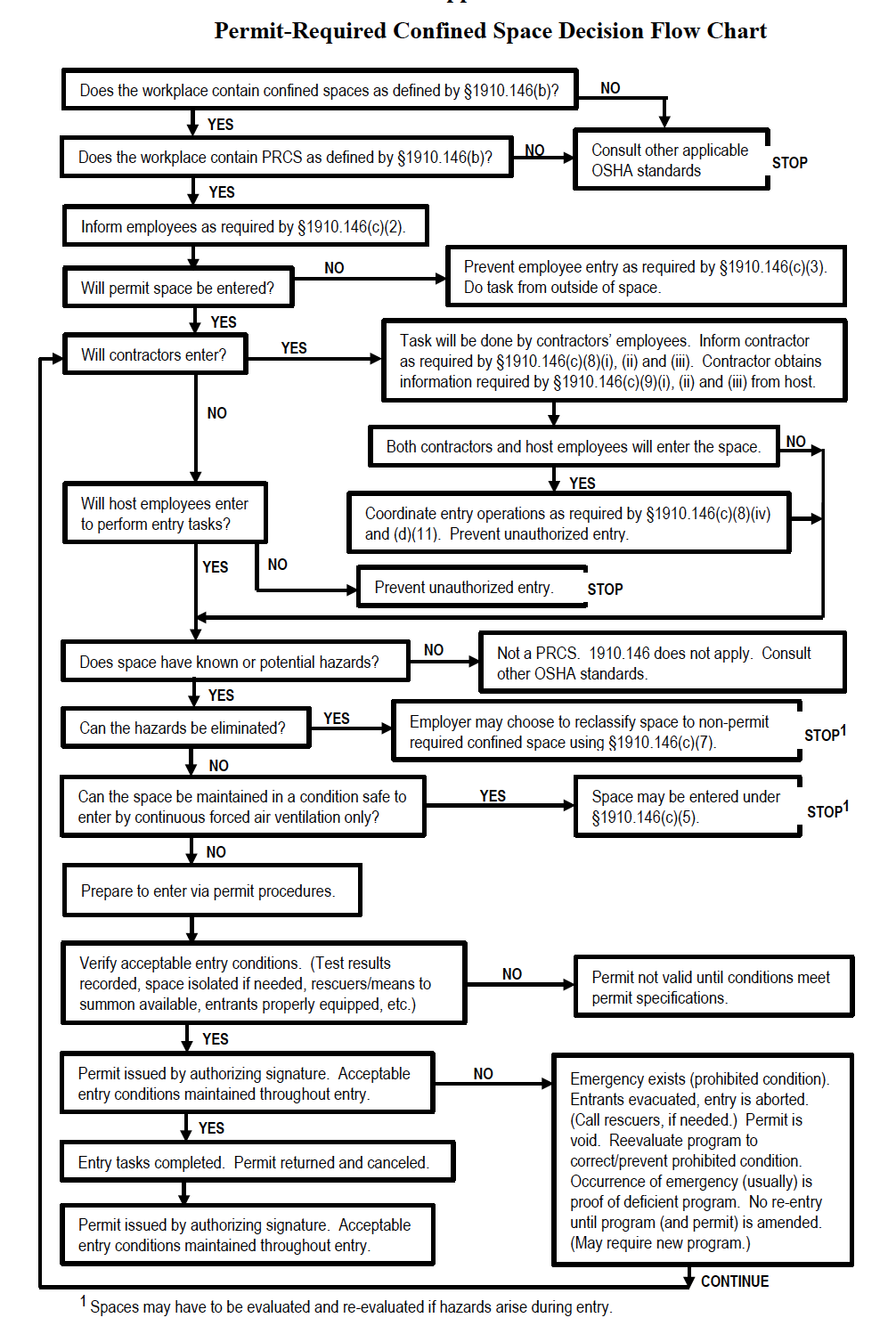
NFPA has published their much anticipated guide on Confined Spaces, NFPA 350: Best Practices Guide for Safe Confined Space Entry and Work, 2016 Edition. It became effective on December 4, 2015. This first edition of NFPA 350, Guide for Safe Confined Space Entry and Work, establishes best practices and “how to” for confined space entry and work, translating what is required in regulations into practical approaches to implement those requirements. Whereas existing regulatory standards provide minimum requirements, NFPA 350 strives to establish work practices that achieve a higher level of safety.
The most significant discussion topic within the Committee centered on the terminology used to describe confined spaces, such as permit-required confined spaces and non-permit spaces. While the Committee did not want to conflict with existing standards, particularly the OSHA standards, the Committee recognized that the differences in terminology continued to create confusion. The Committee ultimately decided to simply use the term “confined space” to describe any space that meets the OSHA 1910.146 definition.
Another simplification provided by NFPA 350 is the default recommendation to perform air monitoring of all confined spaces prior to entry. Such monitoring eliminates the possibility of misjudging a space that is not expected to have an atmospheric hazard. The Committee believes that the few minutes it takes to perform air monitoring of a space — confirming the presence or absence of specific atmospheric hazards — will be time well spent.
NFPA 350 identifies three types of hazards that should be recognized, evaluated, and controlled: inherent hazards, introduced hazards, and adjacent hazards. Identifying those three distinct sources of potential hazards helps Entry Supervisors and workers to think broadly about the myriad of hazards that could occur in and around confined spaces so they can evaluate and control the hazards.
While other standards indicate what needs to be done, NFPA 350 describes how to perform those tasks. For example, NFPA 350 provides information on the selection, calibration, and use of gas monitors as well as information about the types and installation of ventilation devices for different types of confined space configurations and hazards.
The terms confined space, non-permit-required confined space, and permit-required confined space may cause confusion among employers and workers. To minimize such confusion, this guide uses only the term confined space and makes provisions for identifying and evaluating the hazards of all confined spaces, requiring permits for entry if hazards are identified.
CLICK HERE for FREE Access