
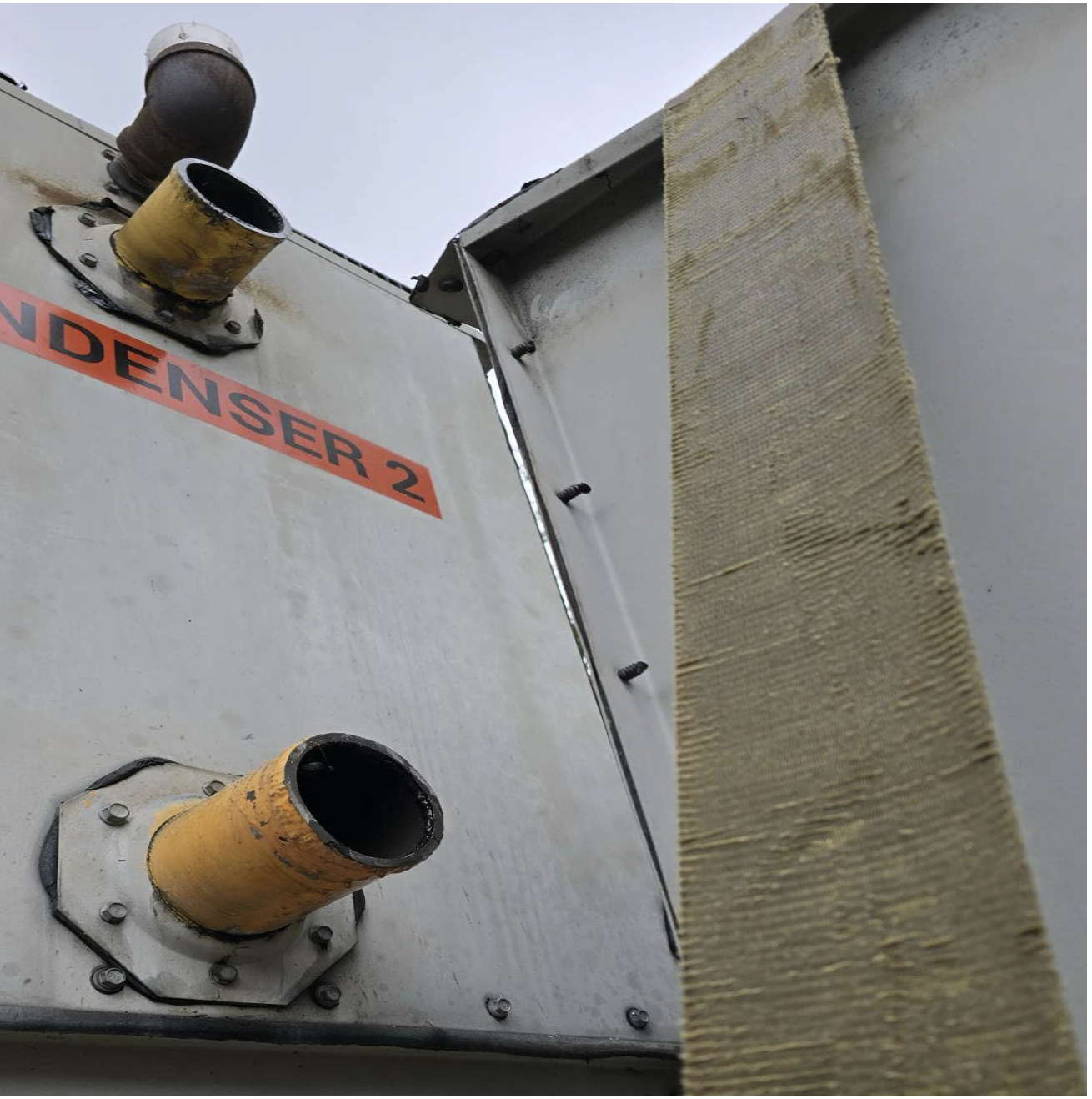
NH3 leak during refrigeration condenser replacement

Up to 100 pounds of ammonia was released outside a public athletic club with indoor ice facilities. The leak happened during decommissioning work of an ammonia refrigeration condenser by a refrigeration contractor and resulted in the facility enacting their Ammonia Release Emergency Protocol. Multiple workers and members of the public were in the area at the time of the leak. One bystander experienced symptoms of ammonia exposure and was treated by emergency services on site.  

The immediate area around the facility was cordoned off, neighboring companies were alerted, and the facility, a nearby condo building and children’s daycare were instructed to hold it in place until the leak was stopped.

A licensed refrigeration contractor was hired to replace two (2) ammonia condensers for the ammonia refrigeration system for the recreational ice facility. On the day of the incident, a crane was hired, and work was to be completed to replace the condensers. The contractor held a pre-job meeting in the morning to discuss the day’s work and potential hazards. A refrigeration mechanic apprentice, who had been employed by the contractor for two years, arrived at the site 2.5 hours late and did not participate in the pre-job meeting. After the apprentice showed up late, the job foreman, who is a certified refrigeration mechanic, instructed the apprentice to cut some welds on the condenser. The intent of the instruction was to have welds affixing the base of the condenser to the elevated metal structure cut with a grinder in preparation for the crane to lift it out.

The ammonia vapor lines connected to the condenser still contained ammonia and had NOT yet been isolated, evacuated, or purged with nitrogen in preparation for removal. The details of the job were not effectively communicated from the foreman to the apprentice, and when the apprentice went to the condenser with the grinder, he observed black felt marker lines on the ammonia piping and thought they were the marks on the welds that the foreman had instructed him to cut. The apprentice proceeded without direct supervision from the qualified site foreman and began to cut into the live ammonia vapor line with the grinder. Once he had cut into the pipe, ammonia began to escape. The apprentice informed the foreman of the leak, and the piping was isolated by closing the shutoff valves. The facility enacted its Ammonia Leak Emergency Protocol, and the immediate area was cordoned off; the facility, neighboring businesses, schools, and daycare were alerted until the leak stopped approximately one hour later. One bystander walked into the cordoned-off area after being warned of an ammonia leak in the area, experienced symptoms of ammonia exposure, and was treated at the scene by emergency response personnel.

Contributing factors to the incident include:

  • Ineffective communication between the qualified foreman and the apprentice led to the incorrect cutting of the live ammonia line resulting in the leak.
  • The apprenticed not participating in the pre-job safety meeting before starting work allowed him to begin work without a full understanding of the potential works hazards.
  • The apprentice working without direct supervision from a qualified person authorized to do the work allowed the work to proceed without the hazard being identified.

Source: https://assets.contentstack.io/v3/assets/bltdec2ded849740f4d/blt03b566f16d432cc3/672bce43ffab644928eddc4e/II-1700480-2024_(_45699).pdf

Scroll to Top