
Although this question has been discussed before, OSHA issued a new Letter of Interpretation (LOI) late in 2023 (posted in 2024), answering the following question and has ARCHIVED their previous LOI from November 26, 1996.
Does OSHA consider the initial monitoring data and subsequent re-testing data to constitute employee exposure records subject to the record retention period in 29 CFR § 1910.1020(d)(1)(ii)?
Here’s a HINT as to how OSHA responded:
if the sampling results described in your three scenarios include substances or chemicals that meet the definition of a toxic substance or harmful physical agent, the sampling results are employee exposure records. Also, please know that employee exposure records that indicate that an employee is exposed below the applicable action level or PEL are part of the employee’s exposure record and must be preserved and maintained in accordance with 1910.1020(d)(1)(ii).
Here is the full LOI…
NOTE: some emphasis is by me, and some links have been added for ease of access to referenced documents/sources
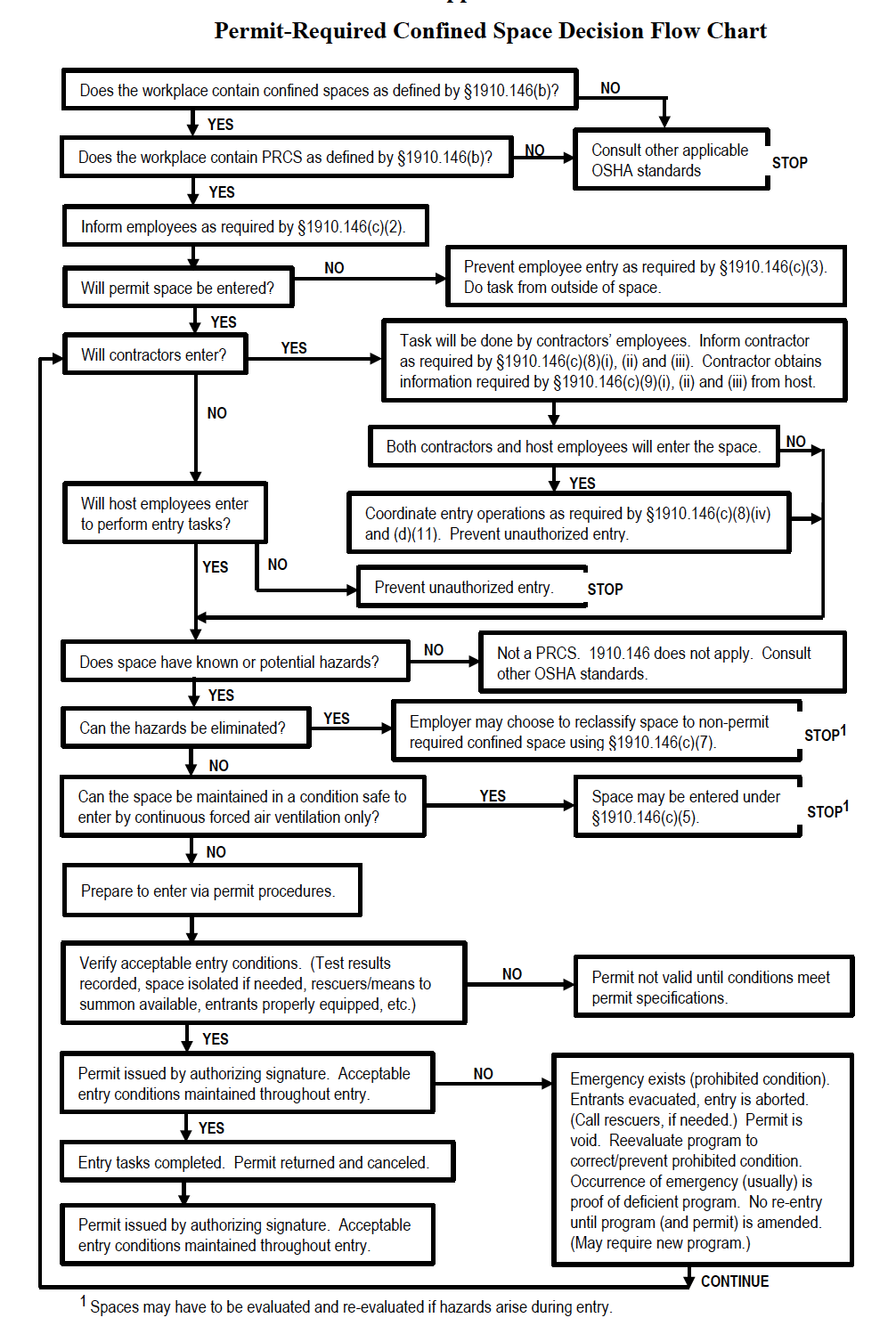
Background: In your letter, you discussed the documentation requirements in 29 CFR § 1910.146 for permits that include, among other information, the results of the employer’s testing within the confined space for atmospheric hazards (oxygen, flammable gases and vapors, and potential toxic air contaminants) whenever any employee is exposed to the atmosphere inside the space. You noted that section 1910.146(e)(6) requires employers to maintain canceled entry permits for at least one year. You also referenced a previous OSHA letter of interpretation issued on November 26, 1996, which stated that “[t]hose results which show the composition of an atmosphere to which an employee is actually exposed (even if the employee is using a respirator) are exposure records under 29 CFR 1910.1020(c)(5),” which imposes a retention requirement of thirty years.1
Your letter requested that OSHA reconsider its November 26, 1996, interpretation letter, that records generated from routine atmospheric monitoring need to be retained for thirty years. Specifically, you provided three scenarios of an entry into a confined space:
Scenario 1: Initial monitoring data reveals concentrations of toxic substances below 25% of any applicable permissible exposure limit (PEL) or Threshold Limit Value (TLV)2. The employee is therefore permitted to enter the confined space using appropriate respiratory protection. Atmospheric levels for toxic substances never exceed these limits during the time the employee spends in the confined space.
Scenario 2: Initial monitoring data reveals concentrations of toxic substances below 25% of any applicable PEL or TLV. The employee is therefore permitted to enter the confined space using appropriate respiratory protection. Atmospheric levels for toxic substances subsequently exceed 25% of the PEL (but do not exceed the PEL or TLV) at some time during the employee’s entry in the confined space. As a result, the employee is immediately removed, the space is stabilized using forced air ventilation, the confined space is then re-tested, and the employee re-enters with proper respiratory protection once the levels drop below 25% of the PEL or TLV. Thus, at no time during his or her entry were the atmospheric levels in excess of the PEL or TLV of any toxic substance.
Scenario 3: Initial monitoring data reveals concentrations of toxic substances above 25% of any applicable PEL or TLV. The space is then stabilized using forced air ventilation, the confined space is re-tested, and the employee is then permitted to enter with proper respiratory protection once the levels drop below 25% of the PEL or TLV.
Question: Under each of the above scenarios, does OSHA consider the initial monitoring data and subsequent re-testing data to constitute employee exposure records subject to the record retention period in 29 CFR § 1910.1020(d)(1)(ii)?
Response: The exposure monitoring requirements in OSHA’s permit-required confined spaces standard at 29 CFR § 1910.146(d)(5) are intended to document in the permit record either the absence of acute atmospheric hazards during employee entries, or an increase of an acute atmospheric hazard that requires removal of entrants until permit levels are restored. These acute atmospheric hazards may include asphyxiation, explosion, and toxic gases, vapors, or mists that are immediately dangerous to life or health (IDLH) and pose immediate or delayed (within 72 hours) threats to life, or irreversible adverse health effects, or any effects that would interfere with an individual’s ability to escape unaided from a permit space. While some of the hazards, particularly the air contaminants, that have been detected in permit spaces could also have long-term adverse effects on employees, those long-term effects are not addressed by the permit space standard3. The reason for the one-year retention time of the permit record in 29 CFR § 1910.146(e)(6) is to facilitate the review of the permit-required confined space program required by paragraph (d)(14), and to revise the program as necessary, to ensure that employees participating in entry operations are protected from any acute hazards in the permit spaces.
OSHA’s regulation at 29 CFR § 1910.1020, Access to employee exposure and medical records, applies to each general industry, maritime, and construction employer who makes, maintains, contracts for, or has access to employee exposure or medical records, or analyses thereof, pertaining to employees exposed to toxic substances or harmful physical agents. See section 1910.1020(b)(1). Section 1910.1020(d)(1) provides that, unless a specific occupational safety and health standard provides a different period of time, each employer shall assure the preservation and retention of records as follows:
“(ii) Employee exposure records. Each employee exposure record shall be preserved and maintained for at least thirty (30) years…”
With respect to the three scenarios described in your letter, the definition of “employee exposure record” in § 1910.1020(c)(5) includes records concerning the workplace monitoring or measuring of a toxic substance or harmful physical agent, including personal, area, grab, wipe, or other forms of sampling.
Section 1910.1020(c)(13) states that “toxic substance or harmful physical agent” means any chemical substance, biological agent (bacteria, virus, fungus, etc.), or physical stress (noise, heat, cold, vibration, repetitive motion, ionizing and non-ionizing radiation, hypo-or hyperbaric presence, etc.) which: (i) is listed in the latest printed edition of the National Institute for Occupational Safety and Health (NIOSH) Registry of Toxic Effects of Toxic Substances (RTECS), which is incorporated by reference as specified in 29 CFR 1910.6, or (ii) had yielded positive evidence of an acute or chronic health hazard in testing conducted by, or known to, the employer; or (iii) is the subject of a material safety data sheet kept by or known to the employer indicating that the material may pose a hazard to human health.
Accordingly, if the sampling results described in your three scenarios include substances or chemicals that meet the definition of toxic substance or harmful physical agent, the sampling results are employee exposure records. Also, please know that employee exposure records that indicate that an employee is exposed below the applicable action level or PEL are part of the employee’s exposure record and must be preserved and maintained in accordance with 1910.1020(d)(1)(ii). See OSHA’s April 1, 1999, letter of interpretation to Patrick S. Casey.4
As noted above, OSHA’s regulation at 29 CFR § 1910.1020(d)(1) provides that, unless a specific occupational safety and health standard provides a different period of time, employers must preserve and maintain employee exposure records for at least thirty years. Since OSHA’s standard at 29 CFR § 1910.146(e)(6) includes a specific requirement for employers to maintain canceled entry permits for at least one year, the information entered on the permit regarding routine atmospheric testing conducted in accordance with that standard would only need to be retained by employers for at least one year. The atmospheric monitoring information generated from the testing requirements in section 1910.146 is used to identify and evaluate the acute hazards of a permit space and to verify that acceptable conditions for entry into that space exist, and employers are not required to maintain such records for thirty years. However, if atmospheric testing is conducted at permit entry spaces in accordance with the monitoring requirements of an OSHA substance-specific standard or to assess compliance with 29 CFR § 1910.1000, the results of such monitoring are employee exposure records and would need to be maintained by the employer for the time period specified in that standard.
Additionally, as requested, OSHA has reviewed its November 26, 1996, interpretation letter1 that you referenced, and we’ve determined that this letter is to be archived.
CLICK HERE for the LOI

