
In response to a January 2021 complaint, the department’s Occupational Safety and Health Administration investigated a production facility and found machine operators and maintenance employees entered POWDER-COATING OVENS routinely without testing atmospheric conditions or securing natural gas lines and operating machine parts. By doing so, the employer exposed these workers to dangerous asphyxiation hazards and the potential for serious injuries or worse.
The company, which manufactures large busways used for power distribution, faces proposed penalties of $119,757. OSHA determined the business exposed workers to multiple safety and health hazards by failing to designate the ovens as permit-required confined spaces that require specific safety procedures before entry. The employer also failed to isolate natural gas lines and mechanical energy – a process known as lockout/tagout – to the ovens during maintenance procedures. OSHA cited the company for 11 serious violations of health and safety standards.
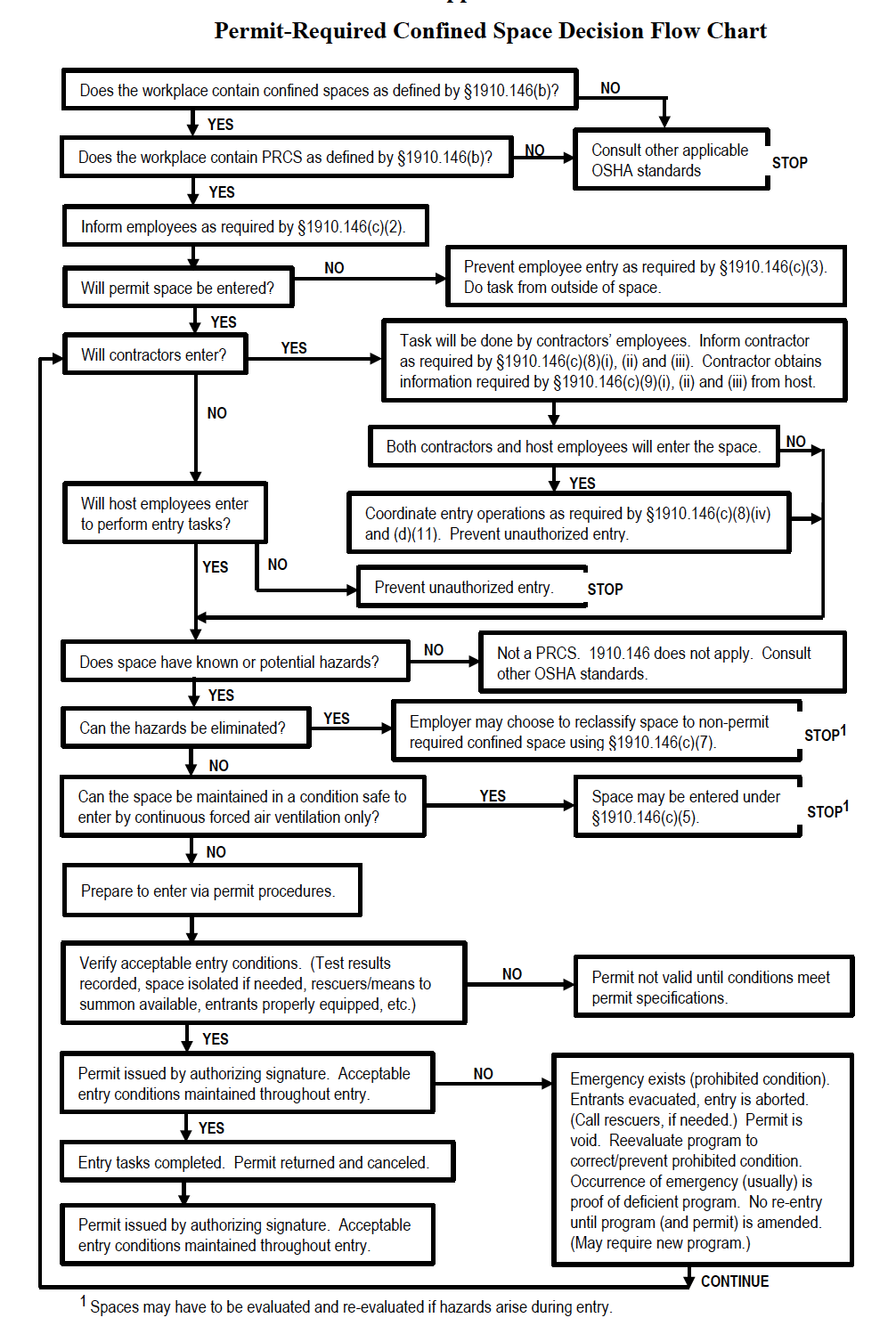
The alleged violations below have been grouped because they involve similar or related hazards that may increase the potential for injury or illness.
Citation 1 Item 1a
Type of Violation: Serious; $6,436
29 CFR 1910.134(c)(1): In any workplace where respirators are necessary to protect the health of the employee or whenever respirators are required by the employer, the employer shall establish and implement a written respiratory protection program with worksite-specific procedures. The program shall be updated as necessary to reflect those changes in workplace conditions that affect respirator use. The employer shall include in the program the following provisions of this section, as applicable:
1910.134(c)(1)(I) Procedures for selecting respirators for use in the workplace;
1910.134(c)(1)(ii) Medical evaluations of employees required to use respirators;
1910.134(c)(1)(iii) Fit testing procedures for tight-fitting respirators;
1910.134(c)(1)(iv)Procedures for proper use of respirators in routine and reasonably foreseeable emergency situations;
1910.134(c)(1)(v) Procedures and schedules for cleaning, disinfecting, storing, inspecting, repairing, discarding, and otherwise maintaining respirators;
1910.134(c)(1)(vi) Procedures to ensure adequate air quality, quantity, and flow of breathing air for atmosphere-supplying respirators;
1910.134(c)(1)(vii) Training of employees in the respiratory hazards to which they are potentially exposed during routine and emergency situations;
1910.134(c)(1)(viii) Training of employees in the proper use of respirators, including putting on and removing them, any limitations on their use, and their maintenance; and
1910.134(c)(1)(ix)Procedures for regularly evaluating the effectiveness of the program.
a) On or about September 17, 2020, the employer did not establish and implement a written respiratory program for maintenance employees who were required to wear 3M 8210 N95 respirators while working on the powder coat dust collectors, which contained SOL Epoxy DK15-0907 Epoxy Powder Phenol Novolac Epoxy 2-Methylimidazole (skin and eye irritant, allergic reaction skin, mucous membrane irritant, inhalation hazard, combustible dust), and Armada dust collectors, which contained metal dust (combustible dust).
Citation 1 Item 1b
Type of Violation: Serious
29 CFR 1910.134(e)(1): General. The employer shall provide a medical evaluation to determine the employee’s ability to use a respirator before the employee is fit tested or required to use the respirator in the workplace. The employer may discontinue an employee’s medical evaluations when the employee is no longer required to use a respirator.
a) On or about September 17, 2020, the employer had not provided a medical evaluation for maintenance employees who were required to wear a 3M 8210 N95 respirators while working on the powder coat dust collectors, which contained SOL Epoxy DK15-0907 Epoxy Powder Phenol Novolac Epoxy 2-Methylimidazole (skin and eye irritant, allergic reaction skin, mucous membrane irritant, inhalation hazard, combustible dust), and Armada dust collectors, which contained metal dust (combustible dust).
Citation 1 Item 1c
Type of Violation: Serious
29 CFR 1910.134(f)(1): The employer shall ensure that employees using a tight-fitting facepiece respirator pass an appropriate qualitative fit test (QLFT) or quantitative fit test (QNFT) as stated in this paragraph.
a) On or about September 17, 2020, the employer did not fit-test the respirators for maintenance employees who were required to wear 3M 8210 N95 respirators while working on the powder coat dust collectors, which contained SOL Epoxy DK15-0907 Epoxy Powder Phenol Novolac Epoxy 2-Methylimidazole (skin and eye irritant, allergic reaction skin, mucous membrane irritant, inhalation hazard, combustible dust), and Armada dust collectors, which contained metal dust (combustible dust).
Citation 1 Item 1d
Type of Violation: Serious
29 CFR 1910.134(k): Training and information. This paragraph requires the employer to provide effective training to employees who are required to use respirators. The training must be comprehensive, understandable, and recur annually, and more often if necessary. This paragraph also requires the employer to provide the basic information on respirators in Appendix D of this section to employees who wear respirators when not required by this section or by the employer to do so.
a) On or about September 17, 2020, the employer did not provide respirator training for maintenance employees who were required to wear 3M 8210 N95 respirators while working on the powder coat dust collectors, which contained SOL Epoxy DK15-0907 Epoxy Powder Phenol Novolac Epoxy 2-Methylimidazole (skin and eye irritant, allergic reaction skin, mucous membrane irritant, inhalation hazard, combustible dust), and Armada dust collectors, which contained metal dust (combustible dust).
Citation 1 Item 2
Type of Violation: Serious; $6,436
29 CFR 1910.141(a)(3)(i): All places of employment shall be kept clean to the extent that the nature of the work allows.
a) On or about January 7, 2021, the employer failed to keep working areas clean in that employees were exposed to SOL DK15-0907 Epoxy Powder Phenol Novolac Epoxy 2-Methylimidazole, (skin and eye irritant, allergic reaction skin, mucous membrane irritant, inhalation hazard, combustible dust), which was found to be coating the surfaces of objects, the floor, and the walls in the environmental room and around the powder coat line.
Citation 1 Item 3
Type of Violation: Serious; $10,728
29 CFR 1910.146(c)(7)(i): A space classified by the employer as a permit-required confined space may be reclassified as a non-permit confined space under the following procedures:
1910.146(c)(7)(i) If the permit space poses no actual or potential atmospheric hazards and if all hazards within the space are eliminated without entry into the space, the permit space may be reclassified as a non-permit confined space for as long as the non-atmospheric hazards remain eliminated.
a) From October 8, 2020, to January 4, 2021, the employer had reclassified and entered the powder coat process line, a permit-required confined space, on 13 occasions without ensuring the space posed no actual or potential atmospheric hazards in order for maintenance employees to perform repairs and preventive maintenance.
On the cure oven, the natural gas was not always gas locked out until November of 2020, the preheat oven and cure oven were not isolated from the natural gas lines as the isolation procedure was not correctly performed by all employees, and the atmosphere was not tested.
The alleged violations below have been grouped because they involve similar or related hazards that may increase the potential for injury or illness.
Citation 1 Item 4a
Type of Violation: Serious; $10,728
29 CFR 1910.146(d)(3)(i): Develop and implement the means, procedures, and practices necessary for safe permit space entry operations, including, but not limited to, the following:
Specifying acceptable entry conditions.
a) From October 8, 2020, to January 4, 2021, the employer reclassified and entered the powder coat process line, a permit-required confined space, on 13 occasions without implementing the means, procedure, and practices specifying safe entry conditions in order for maintenance employees to perform repairs and preventive maintenance.
The cure oven did not have the natural gas locked out until November of 2020, the preheat oven and cure oven were not isolated from the natural gas using a double block and bleed, and the atmosphere was not tested in the spaces for natural gas, carbon monoxide, carbon dioxide, nitrogen oxide, and oxygen deficiency.
Citation 1 Item 4b
Type of Violation: Serious
29 CFR 1910.146(d)(5)(i): Test conditions in the permit space to determine if acceptable entry conditions exist before entry is authorized to begin, except that, if isolation of the space is infeasible because the space is large or is part of a continuous system (such as a sewer), pre-entry testing shall be performed to the extent feasible before entry is authorized and, if entry is authorized, entry conditions shall be continuously monitored in the areas where authorized entrants are working;
a) From October 8, 2020, to January 4, 2021, the employer reclassified and entered the powder coat process line, a permit-required confined space, on 13 occasions without testing entry conditions for oxygen deficiency, natural gas, carbon monoxide, carbon dioxide, and nitrogen oxide.
The alleged violations below have been grouped because they involve similar or related hazards that may increase the potential for injury or illness.
Citation 1 Item 5a
Type of Violation: Serious; $10,728
29 CFR 1910.146(g)(3): The training shall establish employee proficiency in the duties required by this section and shall introduce new or revised procedures, as necessary, for compliance with this section.
a) On or about October 8, 2020, the employer did not provide training when a procedure was changed in that that employees were not trained on locking out the natural gas on the cure oven for the powder coat line, an entry supervisor and employees were not trained on how to isolate the natural gas lines on the cure oven and preheat the oven, and entry supervisors were not trained to test for the atmospheric hazards in the permit-required confined space prior to entry for hazards such as oxygen deficiency, natural gas, carbon monoxide, carbon monoxide, and nitrogen oxide.
Citation 1 Item 5b
Type of Violation: Serious
29 CFR 1910.146(j): Duties of entry supervisors. The employer shall ensure that each entry supervisor:
1910.146(j)(1) Knows the hazards that may be faced during entry, including information on the mode, signs or symptoms, and consequences of the exposure;
1910.146(j)(2) Verifies, by checking that the appropriate entries have been made on the permit, that all tests specified by the permit have been conducted and that all procedures and equipment specified by the permit are in place before endorsing the permit and allowing entry to begin.
a) On or about October 8, 2020, the employer had not ensured that each entry supervisor knew the hazards in the permit-required confined space and verified that the appropriate entries had been made, all tests specified by the permit were conducted and that the procedures were in place before endorsing the permit in that the entry supervisors failed to recognize the atmospheric hazards present from the natural gas and the byproducts from heating the SOL Epoxy DK15-0907 Epoxy Powder Phenol Novolac Epoxy 2-Methylimidazole which created carbon monoxide, carbon dioxide, and nitrogen oxide, and had not ensured that employees were locking out the natural gas line on the cure oven, and had not ensured proper isolation of the natural gas line.
Citation 1 Item 6
Type of Violation: Serious; $6,436
29 CFR 1910.1200(h)(3): Training. Employee training shall include at least: 1910.1200(h)(3)(ii)The physical, health, simple asphyxiation, combustible dust, and pyrophoric gas hazards, as well as hazards not otherwise classified, of the chemicals in the work area;
1910.1200(h)(3)(iii) The measures employees can take to protect themselves from these hazards, including specific procedures the employer has implemented to protect employees from exposure to hazardous chemicals, such as appropriate work practices, emergency procedures, and personal protective equipment to be used.
a) On or about January 7, 2021, the employer had not provided training on SOL Epoxy DK15-0907 Epoxy Powder Phenol Novolac Epoxy 2-Methylimidazole (a combustible dust; skin, mucous membrane, and eye irritant; allergic skin reaction, and inhalation hazard).
Citation 2 Item 1
Type of Violation: Other-than-Serious; $0.00
29 CFR 1910.134(d)(1)(iii): The employer shall identify and evaluate the respiratory hazard(s) in the workplace; this evaluation shall include a reasonable estimate of employee exposures to respiratory hazard(s) and an identification of the contaminant’s chemical state and physical form. Where the employer cannot identify or reasonably estimate the employee exposure, the employer shall consider the atmosphere to be IDLH.
a) On or about February 8, 2021, the employer had not identified and evaluated the respiratory hazards in the workplace in that employees were exposed to SOL DK15-0907 Epoxy Powder Phenol Novolac Epoxy 2-Methylimidazole, (skin and eye irritant, allergic reaction skin, mucous membrane irritant, inhalation hazard, combustible dust), for items such as but not limited to repairing pumps for the powder coat line, using compressed air to spray down the walls of the fluidized bed for the powder coat line, and replacing filters and performing cleaning of the powder coat dust collector.
Inspection # 1509043.015
Citation 1 Item 1
Type of Violation: Serious; $13,653
29 CFR 1910.22(b): Loads. The employer must ensure that each walking-working surface can support the maximum intended load for that surface.
On or about 1/7/2021 the employer did not ensure that the working surface of the Powder Coat Cure Oven roof could support the load of employees while performing maintenance on the exhaust fans located on the top of the oven. Employees were exposed to an approximately 12′ fall hazard if falling through the roof of the cure oven.
Citation 1 Item 2
Type of Violation: Serious; $13,653
29 CFR 1910.147(c)(4)(ii): The procedures shall clearly and specifically outline the scope, purpose, authorization, rules, and techniques to be utilized for the control of hazardous energy, and the means to enforce compliance including, but not limited to, the following: B)Specific procedural steps for shutting down, isolating, blocking and securing machines or equipment to control hazardous energy;
a) On or about 10/30/2020 the energy control procedure for the Powder Coat Cure Oven was inadequate in that it did not include specific procedural steps for safely shutting down and isolating the natural gas lines. The procedure did not identify the means of bleeding off the excess natural gas, thereby exposing employees to the hazards associated with natural gas.
b) On or about 1/21 an employee was in the process of performing maintenance on the PullMax PB46. The employee followed the machine-specific lockout procedures while performing maintenance. This resulted in the employee being exposed to a crush by hazard as a result of the lockout procedures not securing both hydraulic pumps to the machine.
Citation 1 Item 3
Type of Violation: Serious; $13,653
29 CFR 1910.147(c)(6)(i): The employer shall conduct a periodic inspection of the energy control procedure at least annually to ensure that the procedure and the requirements of this standard are being followed.
On or about 1/07/2021 the employer did not conduct periodic inspection of the energy control procedures annually, for equipment such as but not limited to; Mylar Former 700, Paint Line Dryoff oven, EHRT HP 160, and RF 103 Rollform. The procedures posted on the equipment were from December of 2019, the procedures were changed in January of 2021 but no certification was provided showing the change was part of a periodic inspection of the procedures.
Citation 1 Item 4
Type of Violation: Serious; $13,653
29 CFR 1910.147(c)(7)(iii)(A): Retraining shall be provided for all authorized and affected employees whenever there is a change in their job assignments, a change in machines, equipment or processes that present a new hazard, or when there is a change in the energy control procedures.
On or about 1/07/2021 the employer did not ensure that each authorized employee was re-trained to recognize the hazards associated with performing maintenance on equipment such as but not limited to; EHRT HP 160, RF 103, and PullMax PB46 without following energy isolation procedures.
a)The employer-provided machine-specific LOTO procedures dated 12/18/2019, made changes to the procedures, did not provide re-training on the new updated methods of securing the energy sources dated 1/08/2021 for the EHRT HP 160.
b)The employer-provided machine-specific LOTO procedures dated 12/11/2019, made changes to the procedures, did not provide re-training on the new updated methods of securing the energy sources dated 12/22/2020 for the Pullmax PB 46.
c)The employer-provided machine-specific LOTO procedures dated 12/11/2019, made changes to the procedures, did not provide re-training on the new updated methods of securing the energy sources dated 1/014/2021 for the RF 103 (Roll Form).
The alleged violations below have been grouped because they involve similar or related hazards that may increase the potential for injury or illness.
Citation 1 Item 5a
Type of Violation: Serious; $13,653
29 CFR 1910.147(d): Application of control. The established procedures for the application of energy control (the lockout or tagout procedures) shall cover the following elements and actions and shall be done in the following sequence:
(1)the authorized employee shall have knowledge of the type and magnitude of the energy, the hazards of the energy to be controlled, and the method or means to control the energy.
(2) turn off and shut down the machine
(3) physically locate and operate the energy isolating devices in such a manner as to isolate the machine or equipment from the energy sources.
(4) affix lockout or tagout devices to each energy-isolating device
(5) Prior to starting work on machines that have been locked out or tagged out, verify that isolation and deenergizing of the machine or equipment have been accomplished.
The employer did not provide an accurate machine-specific lockout procedure that would allow authorized employees to be able to properly lockout machines prior to performing service on the machines.
a)On or about 10/30/2020 an employee was in the process of performing maintenance on the Powder Coat LineCure Oven. The employee was exposed to the hazards associated with natural gas. The employee followed the machine-specific lockout procedures provided by the employer which did not include the bleeding of the natural gas line.
b) On or about 1/21 an employee was in the process of performing maintenance on the PullMax PB46. The employee followed the machine-specific lockout procedures while performing maintenance. This resulted in the employee being exposed to a shock hazard as a result of the lockout procedures not securing the power to the PLC on the machine.
Citation 1 Item 5b
Type of Violation: Serious
29 CFR 1910.147(d)(5)(i): Following the application of lockout or tagout devices to energy isolating devices, all potentially hazardous stored or residual energy shall be relieved, disconnected, restrained, and otherwise rendered safe.
On or before 1/7/2021 the employer did not ensure that all energy sources were secure on machine such as but not limited to; Powder Coat Cure Oven and Pull Max PB46 prior to employees performing maintenance on the machines. Employees were exposed to hazards associated with non-secured energy sources.
In accordance with 29 CFR 1903.19(d), abatement certification is required for this violation (using the CERTIFICATION OF CORRECTIVE ACTION WORKSHEET), and in addition, documentation demonstrating that abatement is complete must be included with your certification. This documentation may include but is not limited to, evidence of the purchase or repair of the equipment, photographic or video evidence, or written records.
CLICK HERE for the PRCS citations
CLICK HERE for the LOTO citations

