













Playing on what Hippocrates said centuries ago, I’ll offer this advice to safety pros who are exploring their next gig…
Before you can heal [an organization], ask [them] if [they’re] willing to give up the things that make [them] sick.
Hippocrates, 450 B.C.
…
HomeRead More »
Read More
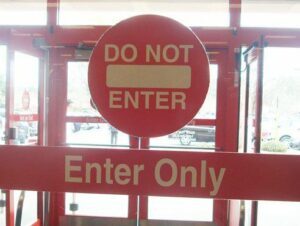
Not a doctored pic – it is real and you can verify it at your local store, which I will not name, but I am betting you can figure it out or at least be close to the target.
…
HomeRead More »
Read More
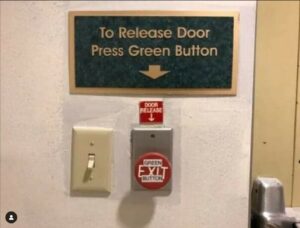
Size, Shape, and Color matter when reducing human error. It is really quite simple but seems to be a lost art these days.
REAL PIC – we can’t even make this stuff up!
…
HomeRead More »
Read More
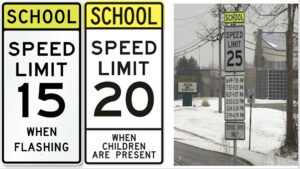
Which is most effective? All are real options. The one furthest to the right was one that caused quite a bit of controversy. Imagine trying to read that sign traveling at 40 mph…
Human Factors Engineering MATTERS!
Read More
Use safety as the vehicle to create a facility culture where SAFETY IS VALUED.
For any organization to advance in safety, there MUST be TRUST and CREDIBILITY, and the path to building both starts with EMPATHY.
Showing workers, we actually care about them is STEP 1 to any shift in safety. And EMPATHY is a powerful tool in gaining CREDIBILITY and building TRUST in a workforce.
It matters not the dark...
Read More
The significance (or severity) of an event depends upon the consequences suffered and not on the error that initiates it.
The error that triggers a serious accident … and the error that is one of the hundreds with no consequences… can be the same error.
Human Error, James Reason, Department of Psychology University of Manchester, 1990
Read More
Management’s responsibility for controlling the unsafe acts of employees exists chiefly because these unsafe acts occur in the course of employment that management creates and then directs. Management selects the persons upon whom it depends to carry out industrial work. It may, if it so elects, choose persons who are experienced, capable of, and willing to do this work, not only well but also safely....
Read More
Do parents have safety metrics for their children’s safety? Do we put up banners to demonstrate the significance of our children’s safety?
I am betting not on both. It is not needed as we naturally VALUE the safety of our children. We may never have the same level of VALUE of safety towards other adults as we do for our own children, but remember, our children are not a safety “priority”, we VALUE...
Read More
“An operator’s behavior is strongly influenced by their working situation and the human and organizational factors that characterize the situation. If unsafe behavior is noted, the most effective way to prevent it from happening again is to eliminate the conditions that produced it. This implies that time and thought must to given to an analysis. It could, for example, reveal that operators circumvent...
Read More
“If there is the will to achieve, if true accident causes are known and remedies are effectively applied, there can be no question of results. From the point of view of the industrial executive, no innovations are required. He may apply to accident prevention the very same methods that are successful in controlling the quality and volume of products. The task is simple but not easy. It requires...
Read More
The California Division of Occupational Safety and Health (Cal/OSHA) has cited Meeder Equipment Company of Rancho Cucamonga and referred D&D Construction Specialties, Inc. of Sun Valley (D&D) for criminal prosecution in two separate cases of workers’ deaths related to confined spaces. All employers must recognize, evaluate and control confined space hazards to ensure workers’ safety.
…...
Read More
The immediate and proximate causes of industrial accidents such as “falls of persons” are known to lie in two general groups, namely, mechanical or physical and personal. Both causes are controllable by management, and in the case of both, management has an unexcelled opportunity to exercise remedial action. Management further has a strong incentive to prevent accidents, because accident occurrence...
Read More