













Rotary valves/airlocks (rotary valves) are devices with close-fitting, revolving blades/vanes installed inside industrial equipment to control the flow of materials through a process (see Figure 1). Rotary valves are used in many industries and functions. A common example (Figure 2) is an airlock used in a pneumatic conveying system to dispense material while maintaining system pressurization. ...
Read More
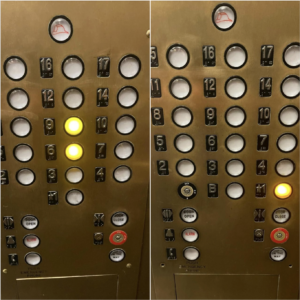
These are from the same hotel and the same bank of elevators.
Hint: We must always be consistently “grounded” in our HF design.
Day 1 I came down in the elevator shown on the left.
Day 2 I came down in the elevator shown on the right and ended up in the basement!
…
HomeRead More »
Read More
This is one of my favorite Safety PR videos. Not a single word is spoken, but the message is crystal clear. Congrats to Boart Longyear.
…
HomeRead More »
Read More
This is NOT a political post, nor is it a post about the pandemic. It is a simple reminder for the experienced safety pro or a mentoring moment for the younger safety pro…
We will all walk in Dr. Fauci’s shows one day!
What do I mean by this statement?
…
HomeRead More »
Read More
We cannot eliminate risk. It’s a consequence of the uncertainty in our situations and the world around us. It’s essential to think about how we can mitigate risks in the workplace. Also, consider the tools we can provide to make our colleagues more aware of risk in themselves and others. Risk assessments are a useful way of identifying and mitigating risks in the workplace. There are six (6)...
Read More
Human failure is a term used to describe ways in which humans in a system deviate from the intended course of action.
As a leader, you must recognize why you and others make errors and mistakes and use this knowledge to prevent this from happening again. A leader also plays an essential role in setting people up for success. While this section will help you understand human failure, in the system’s...
Read More
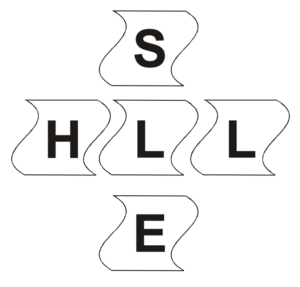
The SHELL Model is a conceptual tool used to analyze the interaction of multiple system components. The SHELL Model contains the following four (4) components:
SOFTWARE (S): procedures, training, support, etc.
HARDWARE (H): machines and equipment
ENVIRONMENT (E): the working environment in which the rest of the L-H-S system must function and
LIVEWARE (L): humans in the workplace
…...
Read More
One of my favorite movies is “Meet the Parents” and in this movie, the bride’s to-be dad, Jack, had his “circle of trust”. Well not to poke fun at the concept, we also have the “circle of safety”. It is core in each and every one of us. When we feel like we can trust our co-workers and we feel like they have our backs and we have theirs...
Read More
Generally, you asked OSHA to clarify whether loose-fitting powered air-purifying respirators (PAPRs) are a permissible alternative to N95 respirators where respiratory protection is required to protect workers from exposure to SARS-CoV-2, the virus that causes COVID-19. Additionally, you asked OSHA to clarify the interplay between the Respiratory Protection Standard and other laws that may require...
Read More
It seems there is a faction of safety professionals who want to claim that if OSHA’s blood-borne pathogens standard is “legal”, then so would the COVID ETS. But these two standards are nothing alike. For example, OSHA defined “occupational exposure” in 1910.1030 as:
Occupational Exposure means reasonably anticipated skin, eye, mucous membrane, or parenteral...
Read More
Back in June of last year (2020), the city of Wenling in China experienced a tragedy that involved a COLD BLEVE of a flammable liquified pressurized gas tanker truck and a subsequent explosion killing 18 people. We have dashcam footage of the COLD BLEVE and it is “textbook” footage of such an event – we even have the tanker rocketing through the air. I am not sure what...
Read More