













This has been a huge battle in the power generation and semi-conductor industries! To me, it is very clear – as soon as the trailer is “dropped”, meaning the semi that was pulling the tube-trailer has been detached, then that trailer becomes a “stationary process”. EPA has several documents making this point and for those who visit my PSM/RMP Case Page you...
Read More
Formaldehyde is not specifically listed with a concentration cutoff, but is listed with the QUALIFIER “solution”. Can the partial pressure exemption be applied to formaldehyde solutions?
…
HomeRead More »
Read More
The definition of a process would seem to say that my process is part of the larger company’s process because they are interconnected. Why can’t the larger company just include my process in its RMP?
…
HomeRead More »
Read More
Must a stationary source owner or operator consider the amount of ammonia present in ammonium hydroxide that is contained in a process when determining whether the threshold for ammonia is exceeded?
The list of regulated toxic substances at 40 CFR Section 68.130 includes BOTH
“ammonia (anhydrous)” and
“ammonia (conc 20% or greater)”
but does not include a specific listing for...
Read More
Under OSHA’s Process Safety Management Standard, an exemption is provided for the atmospheric storage of flammable liquids. Why has EPA decided NOT to include this exemption under the risk management program regulations?
…
HomeRead More »
Read More
I have written often about this topic and it is without a doubt the most questioned/challenged topic in my 5-Day Advanced Process Safety course. Several toxic substances are listed as regulated substances under 40 CFR §68.130 with CONCENTRATION QUALIFIERS (e.g., “conc 37% or greater”). The four(4) regulated substances that have concentration qualifiers are:
Ammonia (conc 20%...
Read More
The wonderful team of process safety engineers “across the pond” in the UK have published an EXCELLENT and MUST READ guide on how a business can develop their process safety LEADING indicators. This is a MUST READ for those PS Leaders who are looking for ideas on what and how to measure PSM/RMP Leading Indicators. The guide methodically teaches the reader how to go about identifying...
Read More
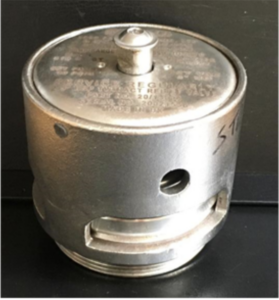
HAZMAT containers used for flammable, corrosive, and toxic liquids and gases will have a pressure/vacuum relief valve to prevent damage to the tank from changes in the internal pressure. These valves MUST be inspected and maintained in line with the manufacturer’s instructions. Some valve designs require a special tool to dismantle them for servicing. Investigations by HSE found a technician...
Read More
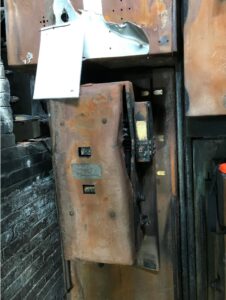
Investigation into an explosion of a High-Voltage (HV) circuit breaker indicated that recently carried out maintenance may have been a causal factor. The incident resulted in catastrophic failure of the HV circuit breaker leading to fire/explosion and could have resulted in fatal injuries. Maintenance of HV and LV circuit breakers typically involves both the cleaning and lubricating of the operating...
Read More
This question causes quite the debate during our audits/assessments! My record is 27 full-size cabinets in a single control area. It was actually inside a single, but large room that had NO fire ratings. And when I began to question the number and load of flammables in the room, you would have thought I shot someone’s puppy. So the question is:
How many Flammable Cabinets can I have inside...
Read More
Way back in my day as a site safety manager, one day I had a knock-down-drag-out with the facility maintenance manager regarding overdue piping inspections. It was not long before my Plant Manager stopped by for a chat. Apparently, the maintenance manager was not too happy having the lowly safety manager expect him to carry out the MI inspections per the plan and passed on his displeasure...
Read More
If you deal with emergency planning and response to releases of hazardous substances you can take a deep breath and have a sigh of relief… OSHA is NOT touching its HAZWOPER standard under its proposed revision to its emergency response standards. The changes OSHA is proposing will apply ONLY to its Fire Brigade standard, 1910.156. OSHA’s potential Emergency Response standard could...
Read More