








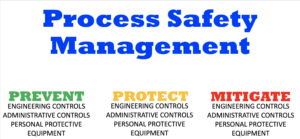
To make this simple, I like to use this slide from my Process Safety course for a visual aid in how we should be “looking at process safety”…
It also does a decent job of outlining what a HCA could look like. More on HCA’s later…
…
HomeRead More »
Read More
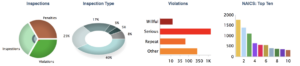

This is a highlighted version of WA-OSHA’s DRAFT of their proposed PSM standard for refineries. I have highlighted those areas that are “new” as compared to OSHA’s PSM Standard (1910.119).
…
HomeRead More »
Read More
Last year we saw the state of California implement their “PSM for Refineries” standard and now the state of Washington’s Division of Occupational Safety and Health is releasing draft language for a new chapter that will ONLY apply to Process Safety Management (PSM) for petrochemical refining facilities. This Process Safety Management rulemaking is in the early stages, and the...
Read More
Here is some good ole sound advice on relief valves from our friends to the north (Technical Standards & Safety Authority). These are some good basic rules to follow, regardless of what country your pressure vessel operates.
…
HomeRead More »
Read More
Case #1
At 10:15 a.m. on February 12, 2015, an employee was working from the elevated basket of a manlift, installing sheetrock in an area of the job site where water piping was undergoing pneumatic testing, at 130 psi. At the same time, another contractor was performing a compressed air leak test. An 80-pound section of the pipe under pressure dislodged and struck and killed the employee. CLICK...
Read More
This is why using your hazardous material to perform the pressure or leak testing is NOT a good idea
On June 29, 2005, Employee #1 was involved in the following the maintenance activities in the Chloropyridines Complex at the employer’s chemical manufacturing facility. Employee #1 was returning a reactor vessel to service. He was attempting to do a pressure and leak test using chlorine gas. The pipe was supposed to be pressure tested with nitrogen gas during the previous shift. During the test...
Read More
It is 24 years after OSHA promulgated it’s Permit-Required Confined Space standard and then in 2015 OSHA promulgated their Confined Spaces in Construction standard and yet we continue to see more “would-be rescuers” dying in Permit-Required Confined Spaces as do actual “entrants”. We can only hope that one-day worker training and awareness will end the “would-be...
Read More
I am not quite sure why they did this, but the ICC decided that the requirements for “leak detection” and “emergency shutoff” for high hazard gases and liquids ONLY apply when the “maximum allowable quantity per control” area is exceeded. This was done by moving these requirements from Section 5003 where they applied to any quantity of these high hazard...
Read More
Due to the potential environmental impact, there has been a shift to consider use of natural refrigerants, which have a lower Global Warming Potential (GWP) than traditional fluorocarbon based refrigerants. One type of natural refrigerant are hydrocarbons (e.g. propane), which are classified as Class A3 refrigerants per ASHRAE Standard 34. The Environmental Protection Agency (EPA)...
Read More
Industrial
CONFINED SPACE FATALITIES Two workers die while cleaning molasses tank in Queensland (two workers died while they were reportedly cleaning a molasses tank – the men, aged 52 and 48, died after being affected by fumes while cleaning the tank)
LOTO FATALITY OSHA investigating fatal accident at Michael Foods (fatal incident happened at about 11:15 AM when an employee was hurt after a...
Read More
When we think about process safety, we can think of the analogy of a wild animal inside its cage… as long as the cage holds or we don’t open the door on the cage the wild animal is safely contained. Unfortunately, sometimes the cage was not designed to hold such a powerful animal and believe it or not, we sometimes think it will be OK to open the door of the cage… just...
Read More