











In April, 2011, an ammonia leak at a large warehouse where anhydrous ammonia is used in the refrigeration system in a cold storage building. In this incident, one worker was burned on the arm from the escaping gaseous ammonia. An estimated 3600 pounds of ammonia evaporated into the air during this incident. As part of the planned mechanical integrity schedule, two employees were changing...
Read More
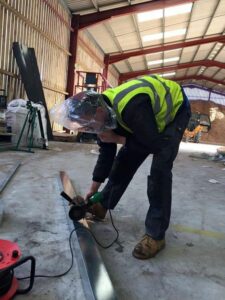
Back in January 2012 I posted a study that was conducted in conjunction with the Faculty of the Undergraduate College of Integrated Science and Technology, James Madison University, Virginia; the Harrisonburg (VA) Fire Department; and the Harrisonburg (VA) Rescue Squad HRS. This week I present to you a hands-on “study” done by the “HAZMAT Guys“, as seeing is believing....
Read More
As promised here is the ppt file we used today in our presentation. CLICK HERE
Read More
An electrical contractor was under contract to update the energy monitoring and control system of a Hospital. An employee of the contractor who was “troubleshooting” (quotations added by me) the system was burned when an arc flash occurred as he worked near energized electrical parts. The contractor reported the employee injury to OSHA which initiated an inspection of the jobsite on October...
Read More
Respondent owns and operates a facility that produces, processes, handles, and/or stores a regulated extremely hazardous substance, anhydrous ammonia. The facility uses anhydrous ammonia in a closed-circuit refrigeration system to produce and store ice. Though the ice maker process runs continually, employees are not normally present at the facility outside of business hours. On March 15, 2016,...
Read More
Respondent owns and operates a soft drink manufacturing facility where it manufactures soft drinks and fills various can sizes and bottles for consumption. As a part of its manufacturing operations, the Facility utilizes a refrigeration cooling system, Ammonia is the refrigerant in the cooling system. The cooling system is used to lower the temperature at which product is canned and bottled. On...
Read More
Respondent is a municipality operating two “stationary sources”, the Water Treatment Plant (WTP) and the Waste-Water Treatment Plant (WWTP). At the time of the inspection, respondent had submitted and registered RMPlans for each of its stationary sources at the WTP and the WWTP and had developed an RMProgram accidental release prevention program for each of these two (2) stationary sources....
Read More
Following up on a 2012 post about complying with 1910.95(j), I wanted to share a working example of how I document my “hearing protector attenuation” evaluation. I think the example speaks for it’s self, but if you need a reference as to what this exercise is meant to accomplish please refer to my 2012 post Hearing Protection Attenuation Evaluation, has it been done? ...
Read More
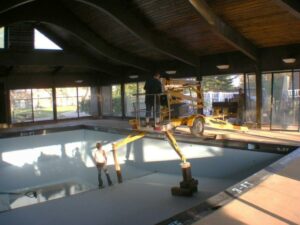
I love science, especially when we can relate it directly to industrial safety. We all know the power of pressure, but the power of a vacuum is often lost.
Read More
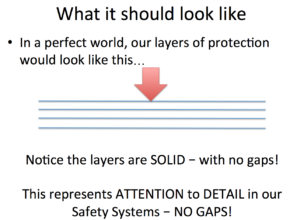
One of the most often asked questions in my Process Safety training courses is… “What do you mean when you say Layers of Protection?” So I have made this very simplified powerpoint presentation to provide a visual of how “Layers of Protection” are effective and how they BECOME INEFFECTIVE. This safety principle is most often mentioned in process...
Read More