












Respondent operates a breakfast food production facility that uses ammonia as its refrigerant and has on-site for use, 15,000 pounds of ammonia. Respondent has one RMProgram level 3 covered process, an ammonia refrigeration process. On May 20, 2014, the EPA conducted an onsite inspection of the RMProgram related records and equipment for the purpose of assessing the Respondent’s compliance with...
Read More
Respondent owns and operates a Refinery and on August 26-28, 2014 EPA Region 6 conducted an unannounced, onsite CAA 40 C.F.R. Part 68 and Section 112(r) Partial Compliance Evaluation of the Facility. The facility’s Risk Management Plan (RMP) lists covered processes subject to Program 3 requirements with flammable substances that are held above the threshold quantities identified in...
Read More
Respondent is the “owner or operator” of a plastics and resins manufacturing facility. On May 15, 2014, EPA inspectors visited the Facility to assess Respondent’s compliance with Section 112(r) of the CAA and with Sections 302-312 of the Emergency Planning and Community Right-to-Know Act (“EPCRA”). Respondent uses vinyl acetate monomer in one or more “processes”...
Read More
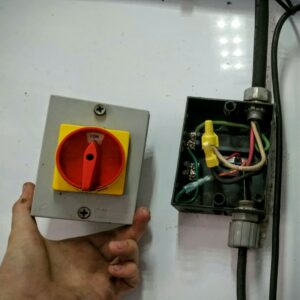
WARNING! Viewer Discretion is advised, video could be upsetting to some.
This LOTO fatality is from 2012, but it is so telling that it is worth sharing again! This is a true and actual event at a bottling plant and involved a temp-worker cleaning broken bottles from UNDER the palletizer WITHOUT the aid of LOTO and in the presence of a supervisor. It is now 2017… could this happen...
Read More
Respondent operates a river barge terminal, which stores anhydrous ammonia and blends fertilizers for sale to farmers and cooperatives (NAICS code: 42459; Other Farm Product Raw Material Merchant Wholesaler). Anhydrous ammonia is received via barge and rail, stored, and distributed for both direct application and for blending into mixed-grade fertilizers for crop production nutrients. Approximately,...
Read More
Respondent operates a chemical manufacturing plant which has more than 2,500 pounds of chlorine in a process, making the process a RMProgram level 3 covered chemical manufacturing process, which stores or otherwise uses chlorine in an amount exceeding its applicable threshold of2,500 pounds. On November 10, 2015, the EPA conducted an onsite inspection of the RMProgram related records and equipment...
Read More
This is another incident involving hot-gas defrost and liquid hammering effect causing a large diameter pipe to fail and releasing 183 pounds of NH3. This failure actually occurred inside the building (vs the 2010 Mobile, AL hammering release occurred on the roof of the building) and had far-reaching and serious consequences.
Respondent owns and operates the poultry processing facility which includes...
Read More
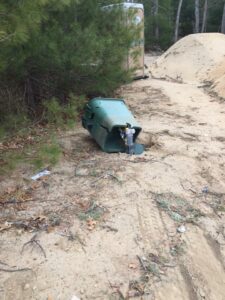
This week we saw a construction vehicle strike a fill valve of an underground propane tank. The valve was not only unprotected, it was actually camouflaged by a large plastic trash can that sat over top of it. The valves for the 1000 gallon tank were struck by a construction vehicle which led to an active and significant leak.
See: Is a bollard just a post?
Read More
Back in 2015 I wrote about changing the “service” of a pressure vessel and all that should be considered in this change. Late last year my team and I ran across a very common error in “changing the service”, albeit the change was an actual change of location. Here’s what happened…
…
HomeRead More »
Read More
The transfer of Class IA liquids from polyethylene drums and containers may be safety accomplished and is deemed to comply with the intent of the standards at 29 CFR 1910.106(e)(6)(ii) and (h)(7)(i)(b) when:
A polyethylene drum is equipped with an approved metallic suction pump and draw tube for taking liquid through the top of the drum and the pump is electrically grounded, or
The drum or container...
Read More
OSHA does not have any provisions that require the emergency relief devices on PORTABLE TANKS to discharge to the outside of buildings. However, if portable tanks are part of a PSM-covered process, at a minimum, the employer would be required to IDENTIFY, EVALUATE, AND CONTROL [§1910.119(e)(1)] the hazard of discharging flammable and combustible materials through an emergency relief device into...
Read More