
The Safety Authority of British Columbia (BC) has released a case study of all refrigerant leaks in BC from 2007 to 2015. The study breaks down:
-
-
-
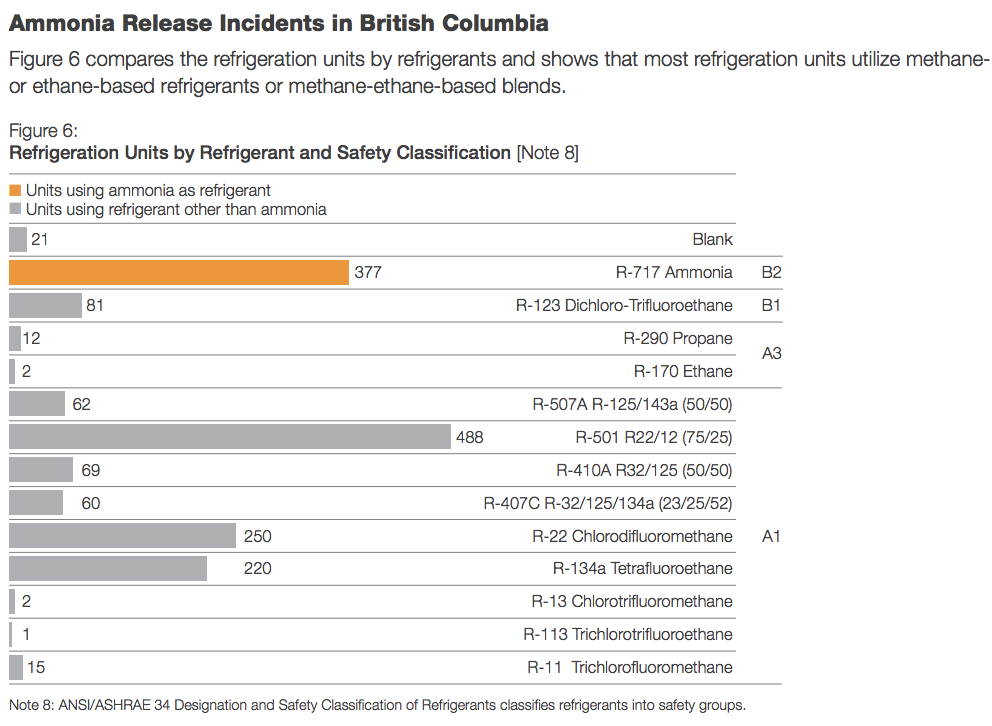
- Number of Refrigeration Units by Refrigerant and Safety Classification
- The Boilers, Pressure Vessels and Refrigeration (BPVR) Incident Investigations
- Refrigeration Incidents by Refrigerant
- Ammonia Releases by Facility Type
- Ammonia Releases at Arenas that Resulted in Injuries
- Ammonia Releases at Food Production Facilities that Resulted in Injuries
- Summary of Factors Contributing to Ammonia Release Incidents
- AMMONIA RELEASE INCIDENT INVESTIGATIONS Summaries
-
-
Of the 50 refrigerant release incidents reported to BCSA between 2007 and 2015, 40 resulted in the release of ammonia from the refrigeration system. However, only 10 incidents included reports of injuries resulting from the incident.
Here is more from the study:
Ammonia is the 2nd most popular refrigerant used in BC, R-501 R22/12 (75/25) is the most popular.
- 377 processes use NH3 (R-717)
- 488 processes use R-501 R22/12 (75/25)
Years 2014 and 2015 saw dramatic increases in refrigerant incidents releases:
2007 = 0
2008 = 2
2009 = 0
2010 = 7
2011 = 7
2012 = 6
2013 = 5
2014 = 13
2015 = 10
The study makes no indication as to why this spike occurred and could just be better reporting.
Ammonia Releases accounted for the vast majority of refrigerant releases
2008 = 2 NH3; none other
2009 = 0 releases reported
2010 = 6 NH3; 1 R-410
2011 = 4 NH3; 2 R-134a; 1 unknown
2012 = 4 NH3; 1 R-134a; 1 unknown
2013 = 3 NH3; 1 R-134a; 1 R-22
2014 = 12 NH3; 1 R-410
2015 = 9 NH3; 1 R-143a
Ammonia Releases by Facility is pretty even between food and arenas
Most releases at arenas resulted in injuries; although the study does not state WHO it was that was injured (public vs. worker)
Top three (3) causes of ammonia releases was
#1 – “component failure”,
#2 – “inadequate or lack of preventive maintenance program and procedures”
#3 – Control or Monitoring System failure
CLICK HERE (pdf) for the full study which provides a brief explanation of each incident.
CLICK HERE (xlsx) for the spreadsheet with the incident summaries