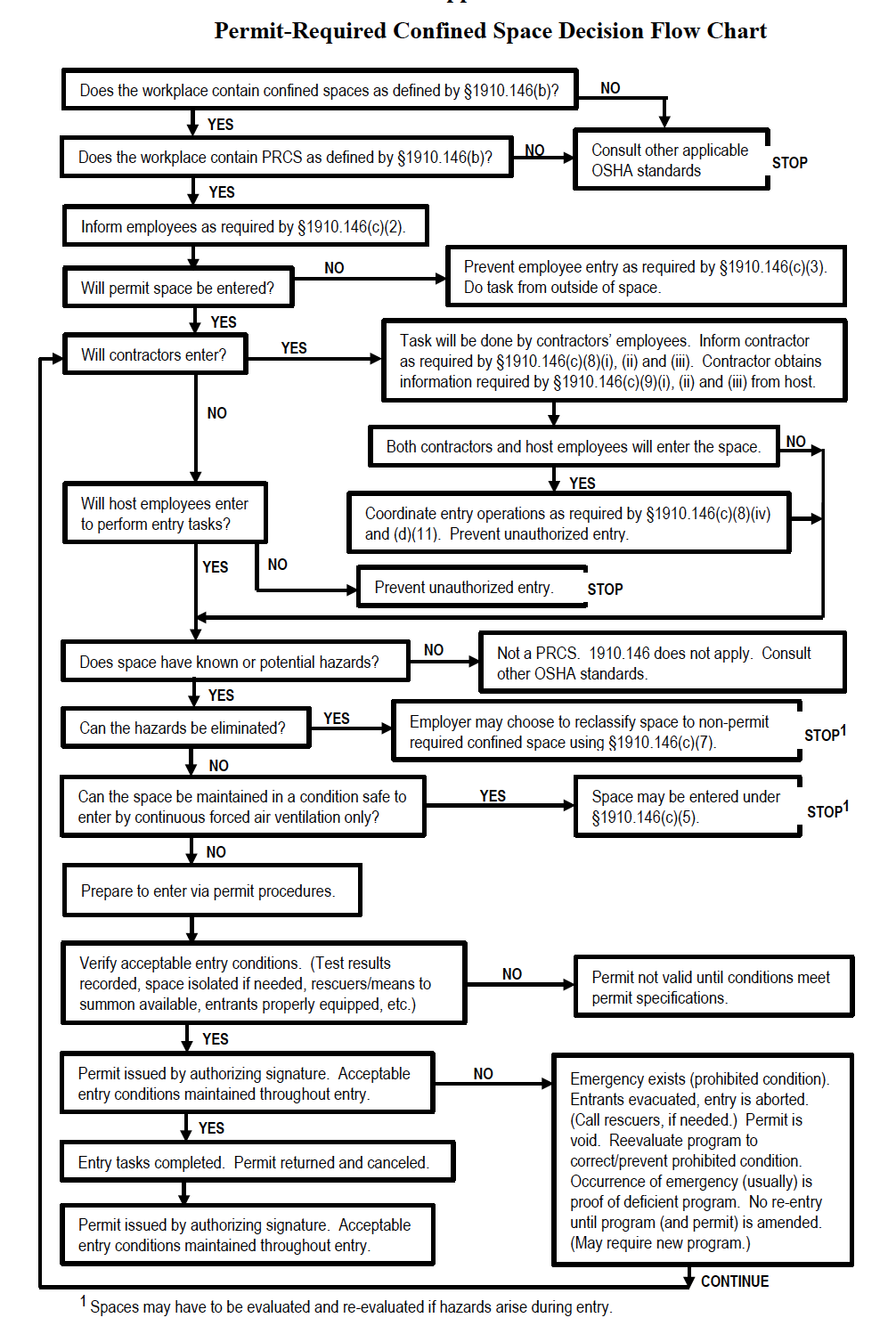
Most of us will envision a vessel’s manway when someone mentions a Permit-Required Confined Space (PRCS). Plenty of PRCSs will have larger entry/egress portals, but they will all be limited in size or configuration such that they will limit entry and egress from the space. With this common characteristic of limited means of entry/egress, entry/egress with respiratory protection can make matters much worse. When we put rescuers at this increased risk, we ask for serious issues. Take, for example, the Key Largo PRCS incident, where a firefighter had only his Self-Contained Breathing Apparatus (SCBA) to attempt the rescue. As we now know, he could not enter the sewer manhole with his SCBA, so he removed it with the plan to enter and re-don it, but it did not work out. The FF went unconscious and had to be rescued. SCBA’s are wonderful devices; heck, their life-saving devices when they are used properly! So if an SCBA has size limitations yet has the highest Assigned Protection Factor (APF) when used in the pressure-demand (positive pressure) mode, what other options do we have?
Every PRCS team I have been on in my 30 years and every team I have trained in the past 15 years ALWAYS used a Full-Facepiece Supplied-Air Respirator (SAR)with an auxiliary Escape Bottle.
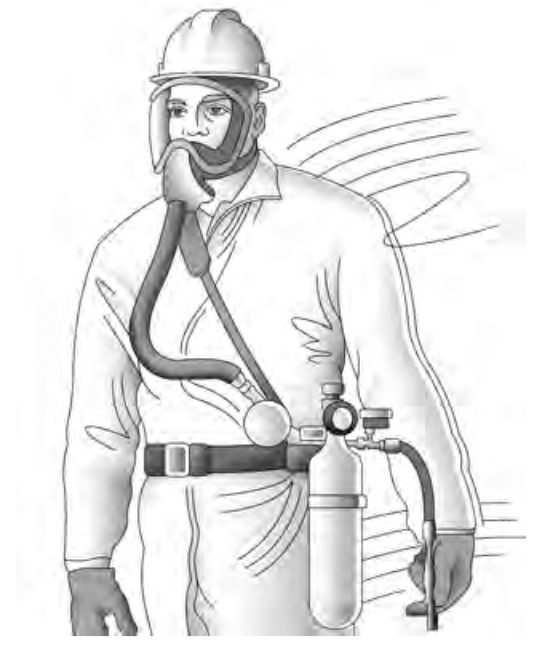
This combo system has an APF of 10,000 just like the SCBA; however, as long as we do not have to travel over 300′, this mode of respiratory protection provides the advantages we need to enter tight openings. And these days, the auxiliary bottles come with up to 15 minutes of back-up breathing air.
So when this is your entry/egress portal, an SCBA is not an option!
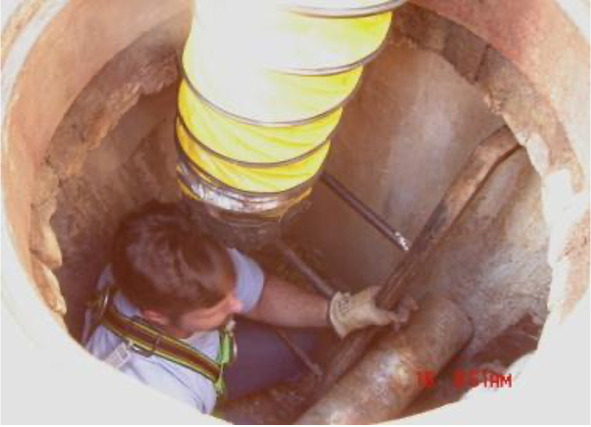
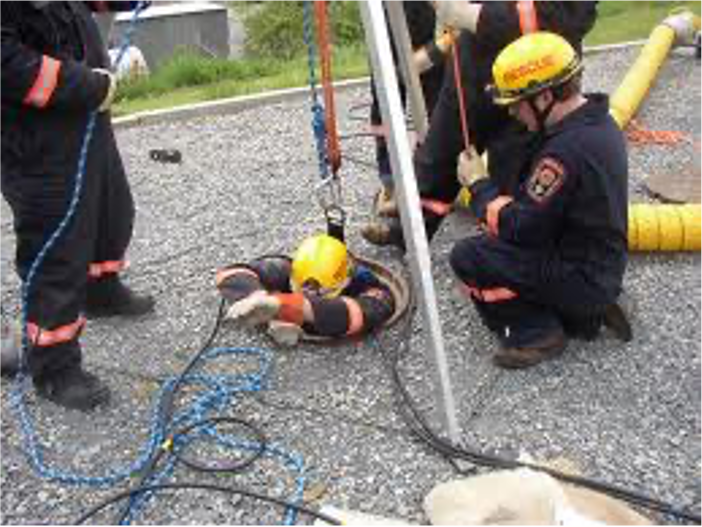
If all your PRCS entry/egress portals are 48″ and larger, maybe a PRCS team equipped with newer SCBA bottles may work. Still, very few facilities will be able to meet these criteria, and the traditional SCBAs just will not be a viable option for your rescue team.
OSHA even makes mention of small entry/egress portals and the issue with SCBAs in their Non-Mandatory Appendix F — Rescue Team or Rescue Service Evaluation Criteria
|
10. Does the rescue service have a plan for each of the kinds of permit space rescue operations at the facility? Is the plan adequate for all types of rescue operations that may be needed at the facility? Teams may practice in representative spaces, or in spaces that are “worst-case” or most restrictive with respect to internal configuration, elevation, and portal size. The following characteristics of a practice space should be considered when deciding whether a space is truly representative of an actual permit space: … (3) Portal size. (a) Restricted — A portal of 24 inches or less in the least dimension. Portals of this size are too small to allow a rescuer to simply enter the space while using SCBA. The portal size is also too small to allow normal spinal immobilization of an injured employee. |