
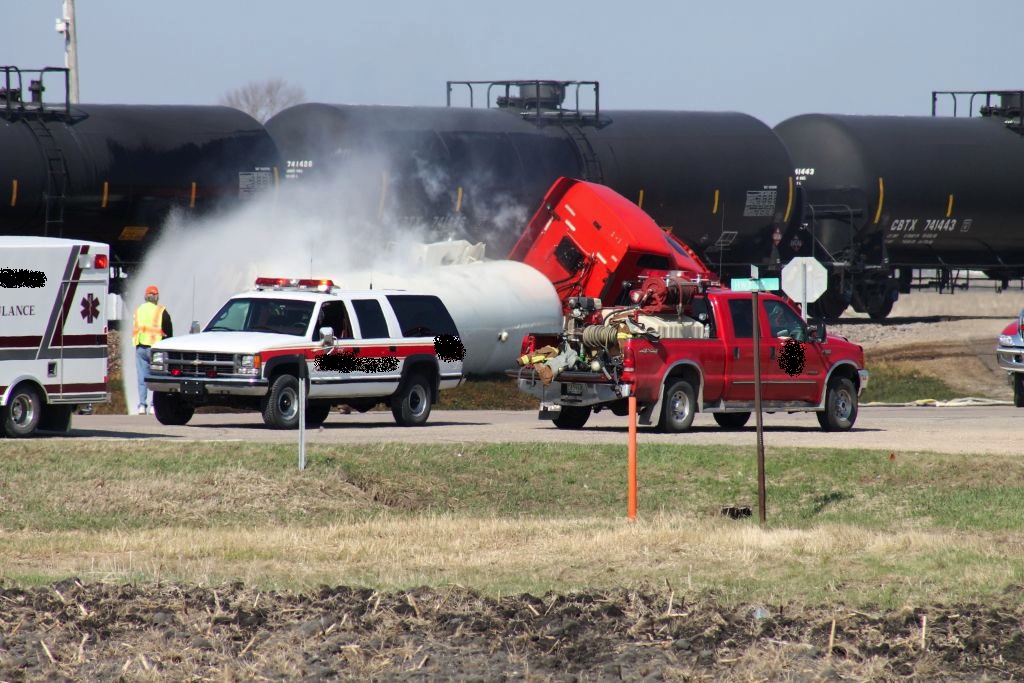
Just two weeks ago we lost a dozen firefighters and speculation is there was no formal Incident Command set-up/communicated in the response (based on radio traffic from the scene and responders). Here is another SIGNIFCANT INCIDENT involving a FULL Anhydrous Ammonia (NH3) tanker truck being struck by a train. Note the appartus placement of the responding agencies at an ACTIVE RELEASE scene! We can see ammonia vapor within the water fog pattern that is being used to “scrub” the vapors (just behind the red tractor). This is NOT advanced training, but basics of setting up a HOT, WARM, COLD zone based on the material(s) and quantity(s) involved in the incident. It amazes me that just weeks after we lost our brothers in TX that every single FD has not had a stand-down to discuss scene management, reviewing Tier II reports, IC role in ALL responses, etc. to ensure that our responders SAFETY IS #1! I am sorry, but this response is just unacceptable, regardless of the events in West, TX. There are many that will claim I need to shut up as I was not there and “just don’t understand what was going on”! So be it, but when the most basic ERG material calls for an intial isolation distance of 500′ for large spill (even 100′ if you want to call this a “small spill”) and take a look at the appratus placement. I also like the Level of PPE the gentleman is wearing!!! Just baffling! Here is a news source for the incident.
Here is the DOT ERG #125 (for NH3) – keeping in mind this is the MOST BASIC of guidance and is to be used by those true first responders arriving on scene. It is intended to establish protective zones and protective action distances downwind. The use of the this manual is a topic of training for the LOWEST LEVEL of emergency responder training (i.e. awareness level). It is considered to be “MINIMUM” guidance. CLICK HERE to download the 2012 DOT ERG.
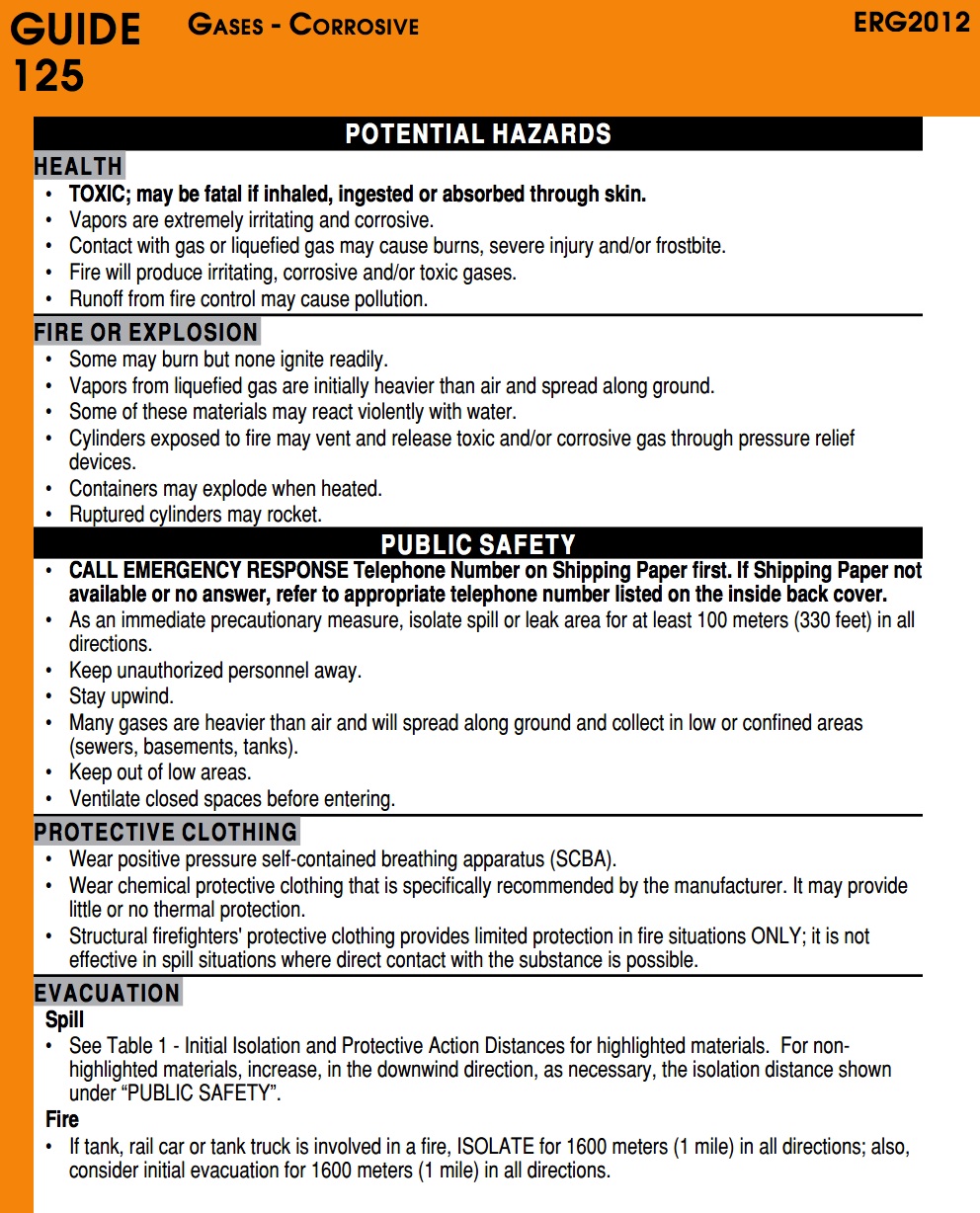
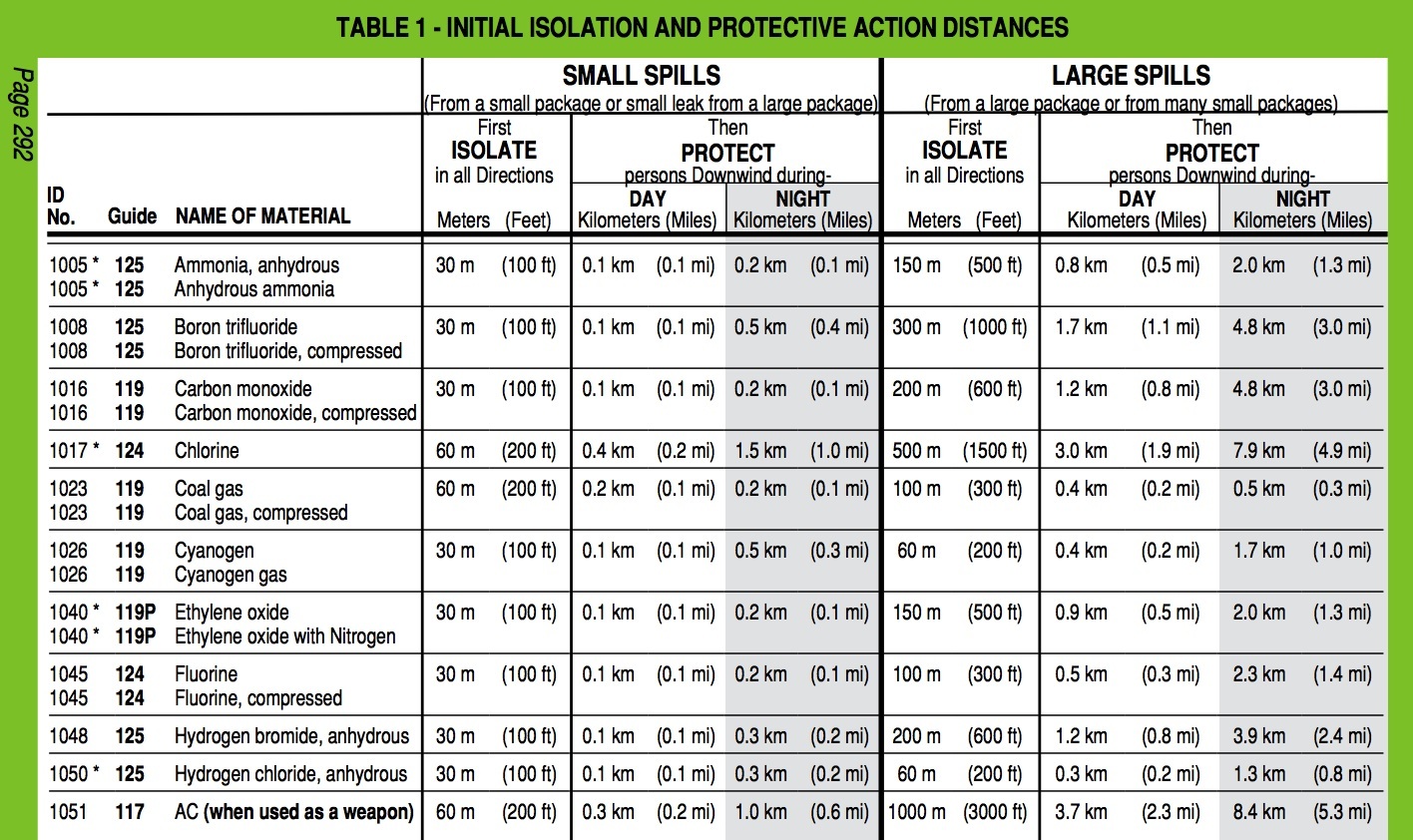
Page 2 of the guide book states the following… PAGE 2!
SAFETY PRECAUTIONS
RESIST RUSHING IN!
APPROACH CAUTIOUSLY FROM UPWIND, UPHILL OR UPSTREAM:
• Stay clear of Vapor, Fumes, Smoke and Spills
• Keep vehicle at a safe distance from the scene
SECURE THE SCENE:
• Isolate the area and protect yourself and others
IDENTIFY THE HAZARDS USING ANY OF THE FOLLOWING:
• Placards
• Container labels
• Shipping documents
• Rail Car and Road Trailer Identification Chart
• Material Safety Data Sheets (MSDS)
• Knowledge of persons on scene
• Consult applicable guide page
ASSESS THE SITUATION:
• Is there a fire, a spill or a leak?
• What are the weather conditions?
• What is the terrain like?
• Who/what is at risk: people, property or the environment?
• What actions should be taken – evacuation, shelter in-place or dike?
• What resources (human and equipment) are required?
• What can be done immediately?
OBTAIN HELP:
• Advise your headquarters to notify responsible agencies and call for assistance from qualified personnel
RESPOND:
• Enter only when wearing appropriate protective gear
• Rescue attempts and protecting property must be weighed against you becoming part of the problem
• Establish a command post and lines of communication
• Continually reassess the situation and modify response accordingly
• Consider safety of people in the immediate area first, including your own safety
ABOVE ALL: Do not assume that gases or vapors are harmless because of lack of a smell—odorless gases or vapors may be harmful. Use CAUTION when handling empty containers because they may still present hazards until they are cleaned and purged of all residues.