
Styrene has been a chemical I just can not seem to get away from. I dealt with it throughout my career in the petro-chem industry and now as a consultant, I have a number of clients who use this flammable liquid in a number of different processes. In 2005 I was consulted about a leaking styrene railcar in my hometown of Cincinnati – not many people get to have that much fun on their birthday!!! In the railcar case, we knew polymerization had begun as temperatures were rising to 270 degrees on the shell of the RCar. It was a crazy time in Cincinnati, but that event ended as well as could be expected – still don’t know how to this day, but it did. No catastrophic failure of the RCar occurred and in fact, by Labor Day they were able to sample the remaining liquid in the RCar and a new gasket and relief valve were installed so as to contain the monomer and move the railcar for disposal. But this most recent Styrene incident is how many polymerization events end up! And by the way, polymerization is such a hazard to responders the DOT ERG has been calling out this special hazard for decades… we used to say the “P” stood for “pucker factor” (sorry for the rude reference but that is how we rolled back in the 1990’s!)

At about 0600 on September 28, 2019, the Singapore registered chemical/products tanker Bow Dalian secured alongside Stolt Groenland, a Cayman Islands registered chemical/products tanker’s port side. The purging of Bow Dalian’s cargo tanks with nitrogen supplied from shore-side vehicles was then commenced in readiness for a ship-to-ship cargo transfer with the Stolt Groenland.
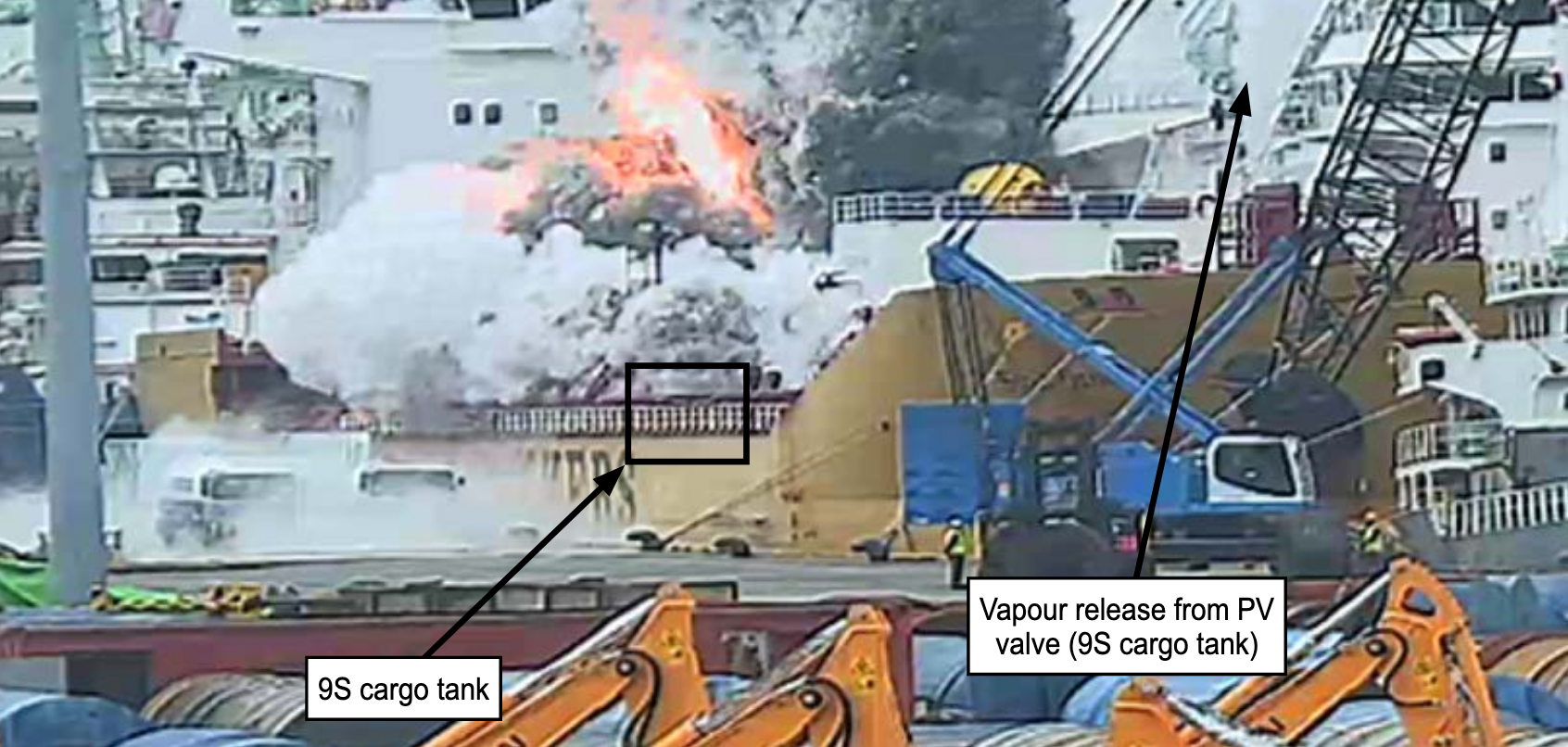
At 1043, vapor started to release from the pressure vacuum valve on the Stolt Groenland number 9 starboard (9S) cargo tank, which contained Styrene monomer. About 2 minutes later, a high-level alarm indicated that the level in 9S cargo tank had reached 95%, soon followed by a high-high-level alarm indicating that the level had increased to 98%. By now, the Stolt Groenland‘s on-watch deck officer and the chief officer had made their way to the cargo control room and they saw from the cargo monitoring system that the pressure inside 9S cargo tank was rapidly rising. Suddenly, at 1050, two (2) explosions were seen and heard in rapid succession in way of the tanker’s cargo manifold (Figure 1).
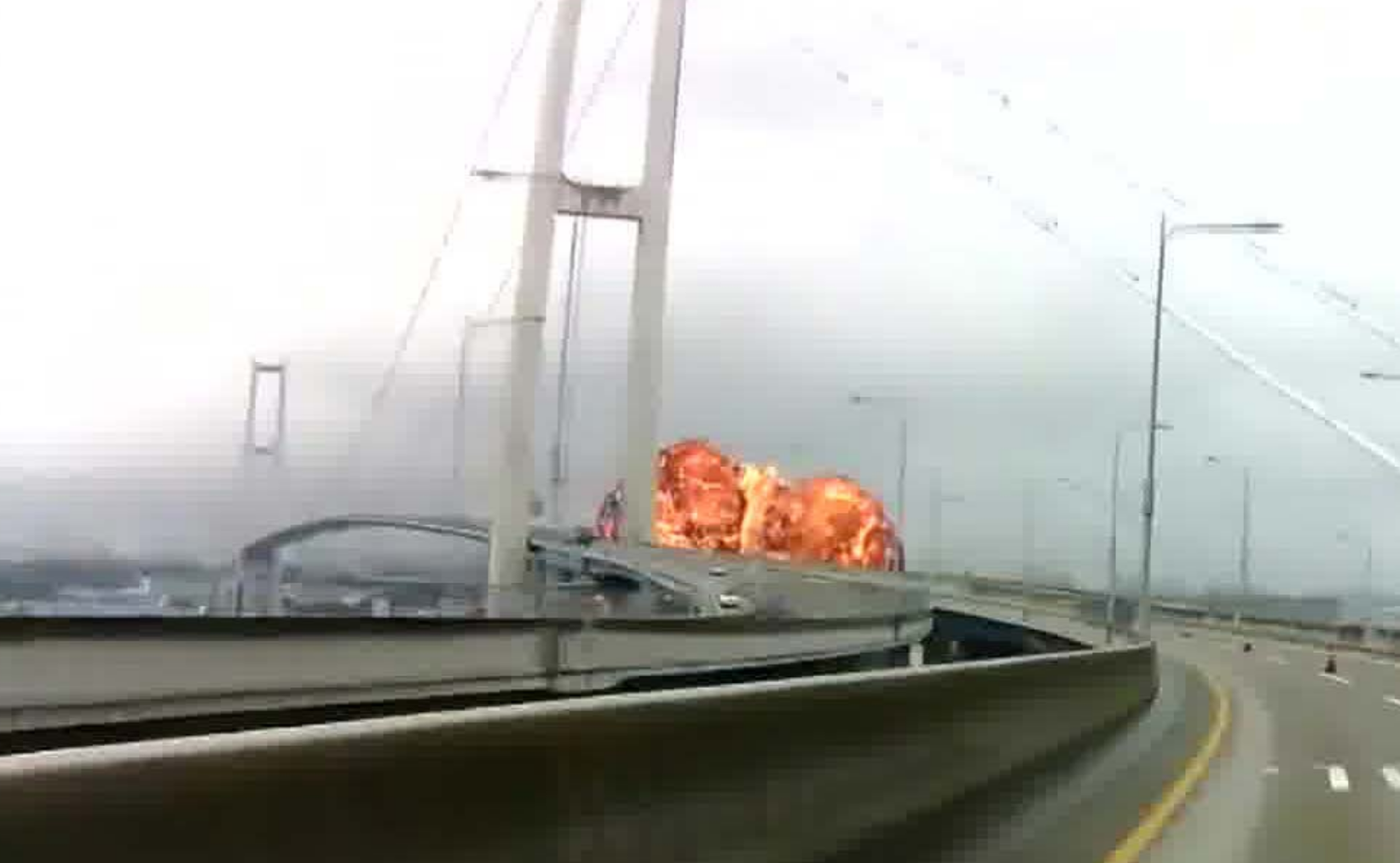
The resulting fireball passed very close to a road bridge above the quay (Figure 2).
DAMAGE AND INJURIES
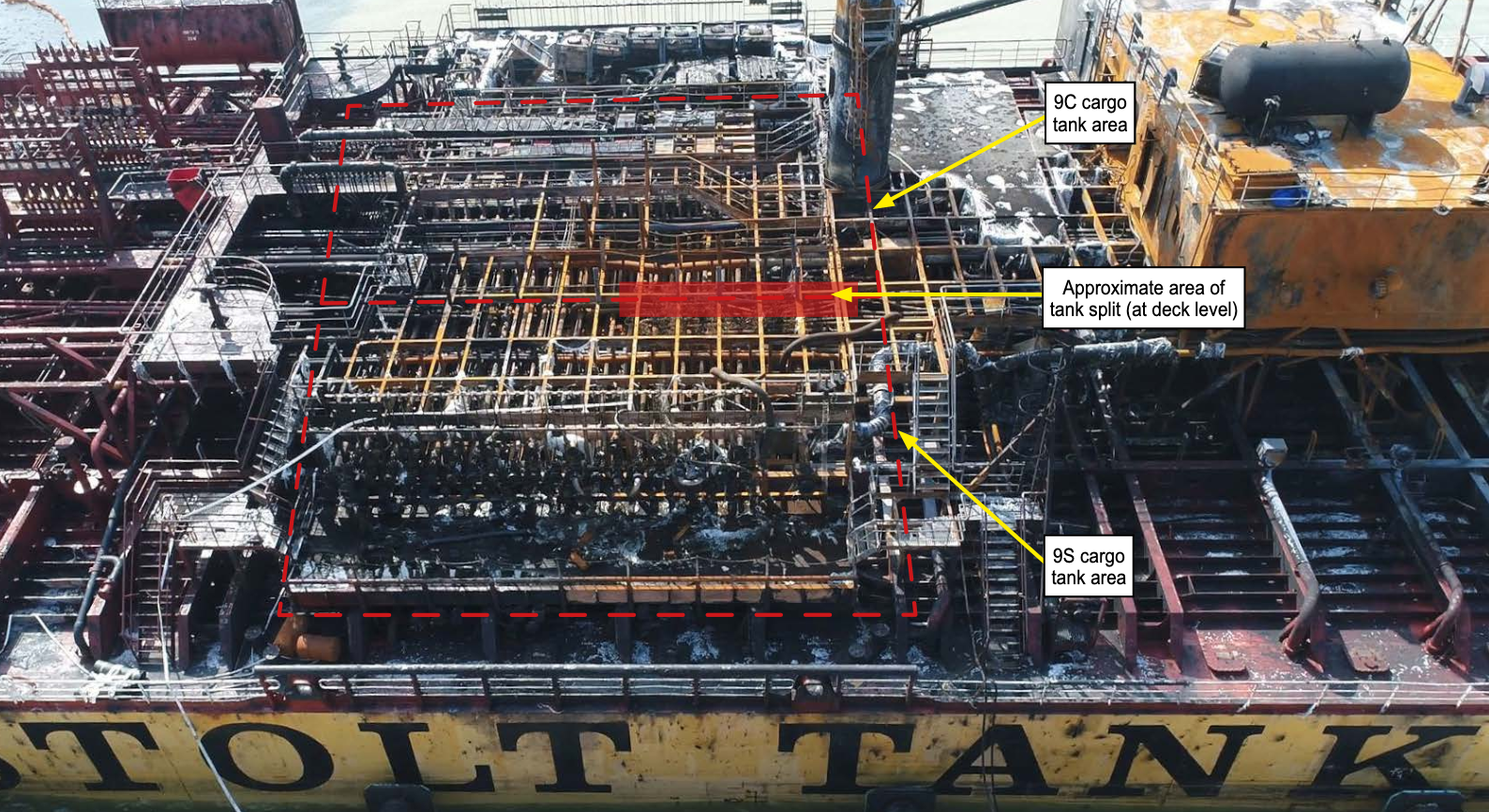
The fire was fought from the shore and from the water and lasted until early the following morning. The damage in way of Stolt Groenland‘s cargo manifold and accommodation block was extensive (Figure 3).
The following persons were injured:
- gangway watchkeeper, who was blown over the guardrails by the force of the explosion;
- a deck rating; and,
- a number of shore workers, including firefighters and police during the emergency response
STYRENE MONOMER
Styrene monomer is used to make plastics, paints and synthetic rubber. It is a colorless to yellowish oily liquid with an aromatic odor and is highly flammable. It has a flashpoint of 32°C (90°F). It is also toxic and reactive and is generally stable at ambient temperature. The polymerization of the monomer is initiated by heat or contact with peroxides. The polymerization process is exothermic and the monomer’s temperature may rise to the point where the reaction becomes very rapid and self-sustaining (runaway polymerization). Normally, temperatures above 65°C (149°F) are needed to initiate runaway polymerizations.
To reduce the possibility of polymerization in storage and during transportation, Tert-Butylcatechol (TBC) inhibitor is added to styrene monomer, typically at a concentration of between 10-15ppm, but higher levels might be needed depending on storage conditions and expected voyage duration. The depletion of TBC over time and its effectiveness as an inhibitor are affected by temperature, oxygen levels, and water.
INVESTIGATION
On September 28, 2019, the Maritime Authority of the Cayman Islands requested the MAIB investigate this accident in accordance with the International Maritime Organization Casualty Investigation Code. During the on-site investigation in Ulsan, the Marine Accident Investigation Branch (MAIB) was assisted by the Korean Maritime Safety Tribunal. In addition, the Singapore Transport Safety Investigation Bureau supported MAIB’s evidence collection onboard Bow Dalian, along with the vessel’s owners.
Access to the Stolt Groenland was controlled by the Korean Coastguard and restricted by the toxicity of the atmosphere on board. MAIB inspectors eventually boarded the tanker on October 8, 2019, with the co-operation and assistance of the vessel’s operator. A further inspection was carried out on November 12, 2019. The vessel’s operator has provided a copy of the data saved on the tanker’s voyage data recorder capsule.
INITIAL FINDINGS
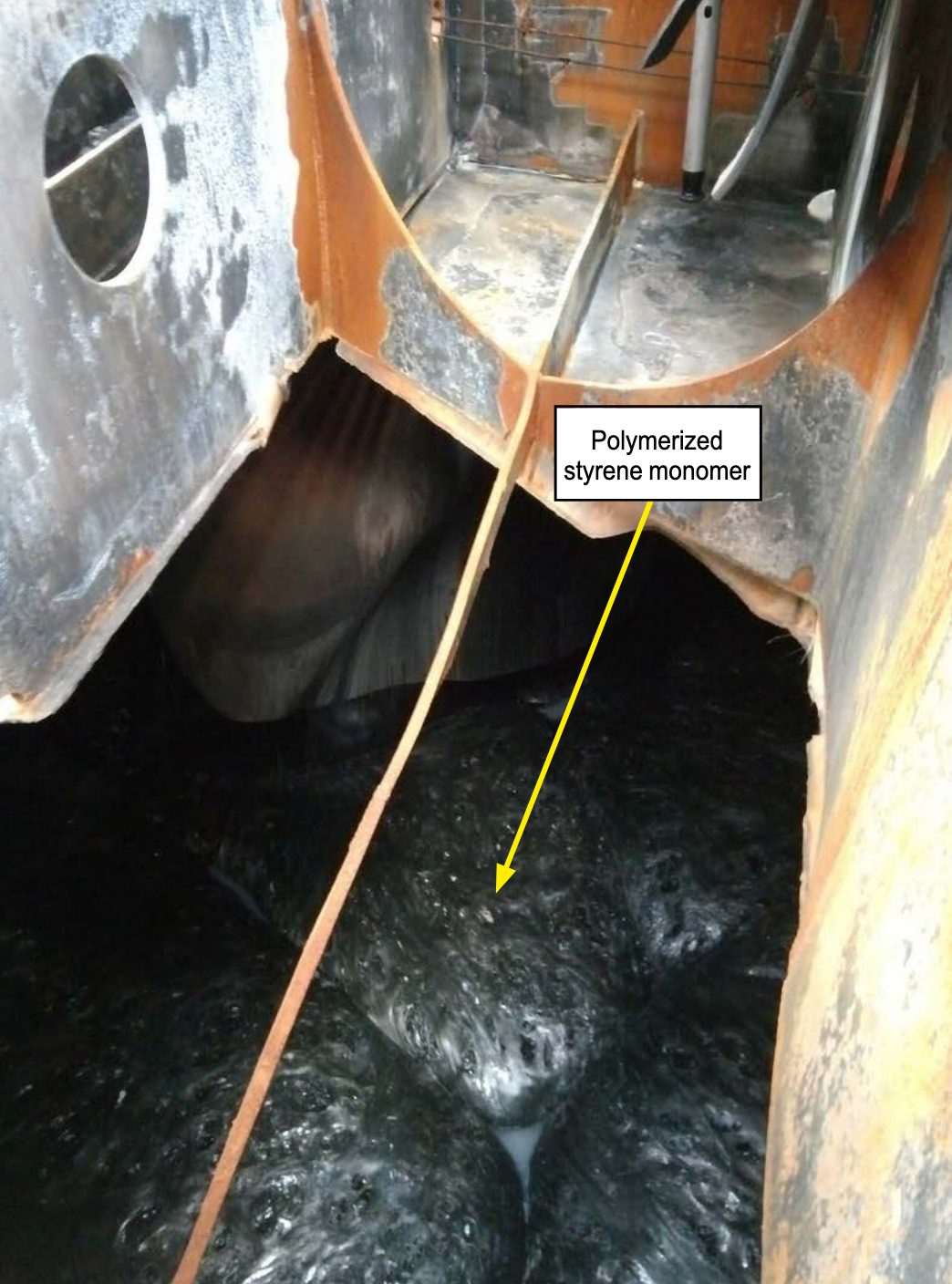
The explosions on board Stolt Groenland were probably caused by the rupture of the deck above 9S cargo tank, followed immediately by the ignition of the styrene monomer vapor that was then released. The rupture was due to over-pressurisation and the likely sources of the ignition were static electricity, sparks or elevated steel deck plate temperatures resulting from the tank rupture. A large hole was found in way of the tank’s common bulkhead with number 9 centre (9C) cargo tank (Figure 4) and its hatch cover had been blown off. No cargo operations or deck maintenance were in progress at the time. VDR data showed that the temperature of the styrene monomer had reached 100ºC (212°F) at the time of the explosion. Such an elevated temperature indicates that the cargo was polymerizing
Stolt Groenland had loaded 5,250 tonnes of styrene monomer at the LBC terminal in Houston, TX between August 7-8, 2019. The cargo was distributed between three stainless steel cargo tanks: numbers 9S, 6P and 6C. Prior to loading, the tanks had been washed and inspected and wall wash tests had been conducted; no problems were recorded. The tanks were not purged with nitrogen before loading and none were adjacent to heated cargoes in accordance with cargo loading instructions. The concentration of TBC inhibitor in the styrene monomer in the shore tank was 11.3ppm but this was increased by the addition of 3 US gallons of liquid TBC to each of the destination tanks before loading was commenced. The target concentration of the TBC was 17ppm. The certificate of inhibitor, issued by the cargo surveyor at the time of loading, stated that the TBC should remain effective for between 60 and 90 days. It also stated that the inhibitor was oxygen dependent and that the ideal temperature for the styrene monomer was between 60ºF and 85ºF (15.5ºC – 29.4ºC). Stolt Groenland did not carry additional inhibitor.
OTHER RECENT INCIDENT
On 20 November 2019, the MAIB was informed of an incident on board the Cayman Islands-registered chemical/products tanker Stolt Focus in which the temperature of a styrene monomer cargo had steadily increased. Efforts to stabilize the temperature, including the injection of additional inhibitor, were unsuccessful. Following consultation with chemists ashore, the crew distributed the cargo between four cargo tanks and mixed it with seawater, which stabilized the styrene monomer.
CLICK HERE for the full MAIB report