
It has been 36 years since the Bhopal tragedy killed thousands of people late one night when it was released from its process. I was recently surprised by a facility claiming that the incident was “overblown” and that “MIC is a vital chemical to commerce around the world”. I can’t disagree with the second statement, but I got myself in trouble pushing back with the “overblown” comment as I felt it was disrespectful to the thousands who died that night and since then. So the EHS manager asked me to explain how MIC is so bad.
I know there are some who may be manufacturing MIC or have in the past that will claim I am “screaming the sky is falling”, but I used the facility’s very own SDS for the debate.
So let’s start with the GHS Categories, now used in 67 countries around the globe; MIC is a:
CAT 1 Flammable Liquid (FP=21°F) with a larger than normal flammable range of 5 – 26%
CAT 1 Acute toxicity, inhalation with an IDLH of 3.0 ppm, and an LC50 of 12.0 ppm, and a PEL of 0.02 ppm
CAT 1 Serious eye damage/eye irritation
CAT 1 Sensitization, respiratory
CAT 1 Sensitization, skin
CAT 1 Reproductive toxicity
CAT 2 Acute toxicity, dermal
CAT 2 Skin corrosion/irritation
CAT 3 Acute toxicity, oral
CAT 3 Respiratory tract irritation
Remember CAT 1 is the highest level of hazard and CAT 4 is the lowest. Honestly, I can not think of a chemical that has that many CAT 1 Hazards – there may be one, but I have never worked with it.
The GHS label is another record-setter with MIC requiring 5 of the 9 pictograms:
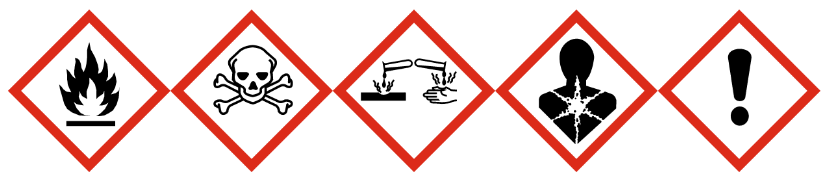
Next, we look at the HAZARD STATEMENT:
- Extremely flammable liquid and vapor.
- Toxic if swallowed.
- Fatal in contact with skin.
- Causes skin irritation.
- May cause an allergic skin reaction.
- Causes serious eye damage.
- Fatal if inhaled.
- May cause allergy or asthma symptoms or breathing difficulties if inhaled.
- May cause respiratory irritation.
- May damage fertility or the unborn child.
MIC is also one of the few chemicals that officially qualify for ASME Lethal Service description for vessels and piping handling it:
By “lethal substances” are meant poisonous gases or liquids of such a nature that a very small amount of the gas or of the vapor of the liquid mixed or unmixed with air is dangerous to-life when inhaled. For purposes of this Division, this class includes substances of this nature which are stored under pressure or may generate a pressure if stored in a closed vessel.
The weight of MIC vapor is 57.06 g/mol which means that it is 2X’s heavier than air; which is how it killed so many people the night of 12/3/1984. When it was released it the vapor fell to the ground and traveled along the ground and it did not take much to cause death via inhalation and skin contact. NOTE: “air” weighs 28.9647 g/mol.
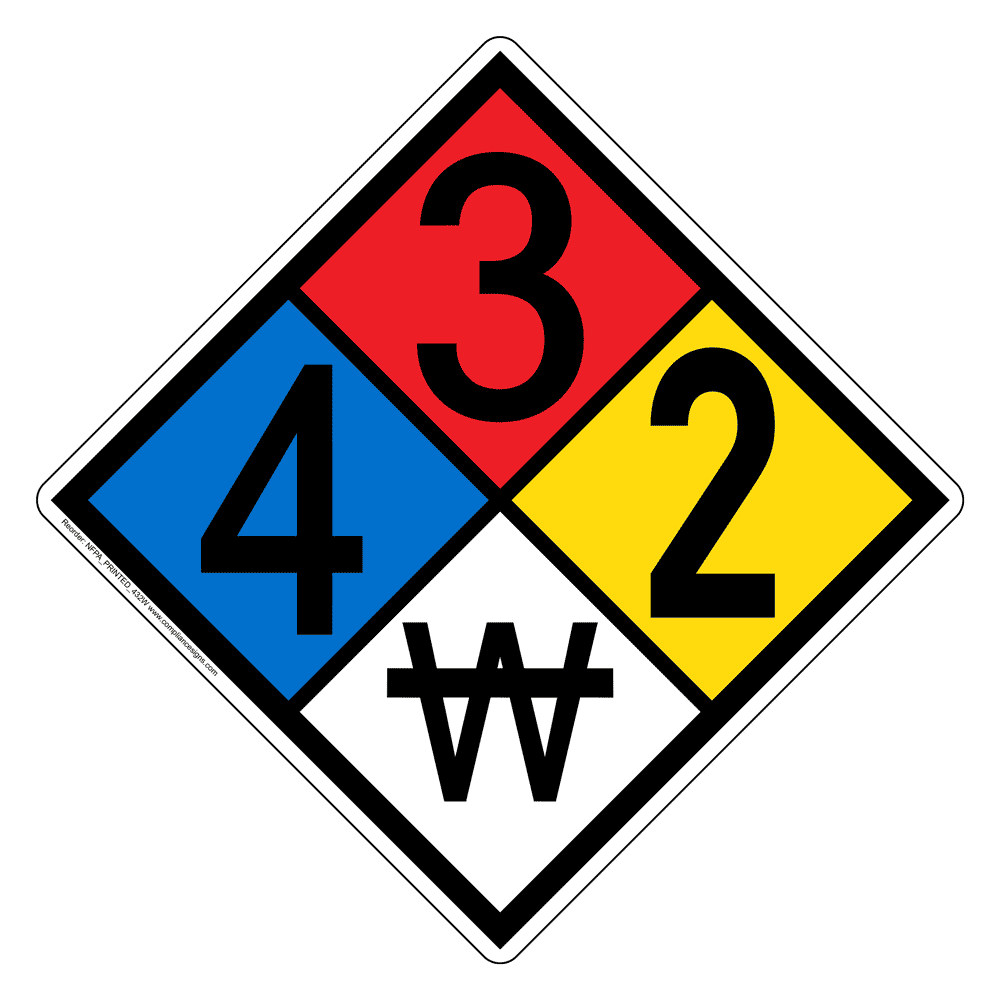
The last visual is the NFPA 704 diamond:
Folks, there are not many chemicals made/processed more hazardous than MIC. The local AHJ has good reason to worry about this material being brought into the community, especially by a bunch of “cowboys” who go to great lengths to downplay the significance. I did not take on this facility as a client, but I will never mention company names in my posts, but on this occasion, I seriously thought about a shaming campaign. These folks have not even figured out the OSHA GHS system as the ONLY SDS they had was the one the importer provided them; when I asked for another SDS so we could make some comparisons they had all the old MSDS and did not even have all the necessary MSDS (we looked out the conference room window at a smaller tank farm and I randomly picked two tanks and they did not have an MSDS for either of the chemicals). They wanted me to issue a letter on my company letterhead stating I was working with them on bringing the MIC on-site. I fear for the consultant who may not know enough and would fall for their shenanigans and with MIC, things need to be done to a near-perfect performance level. This facility did not have a respiratory protection program and having no clue what they were dealing with wanted to assure me that they did not need one to handle the MIC. God help them.