
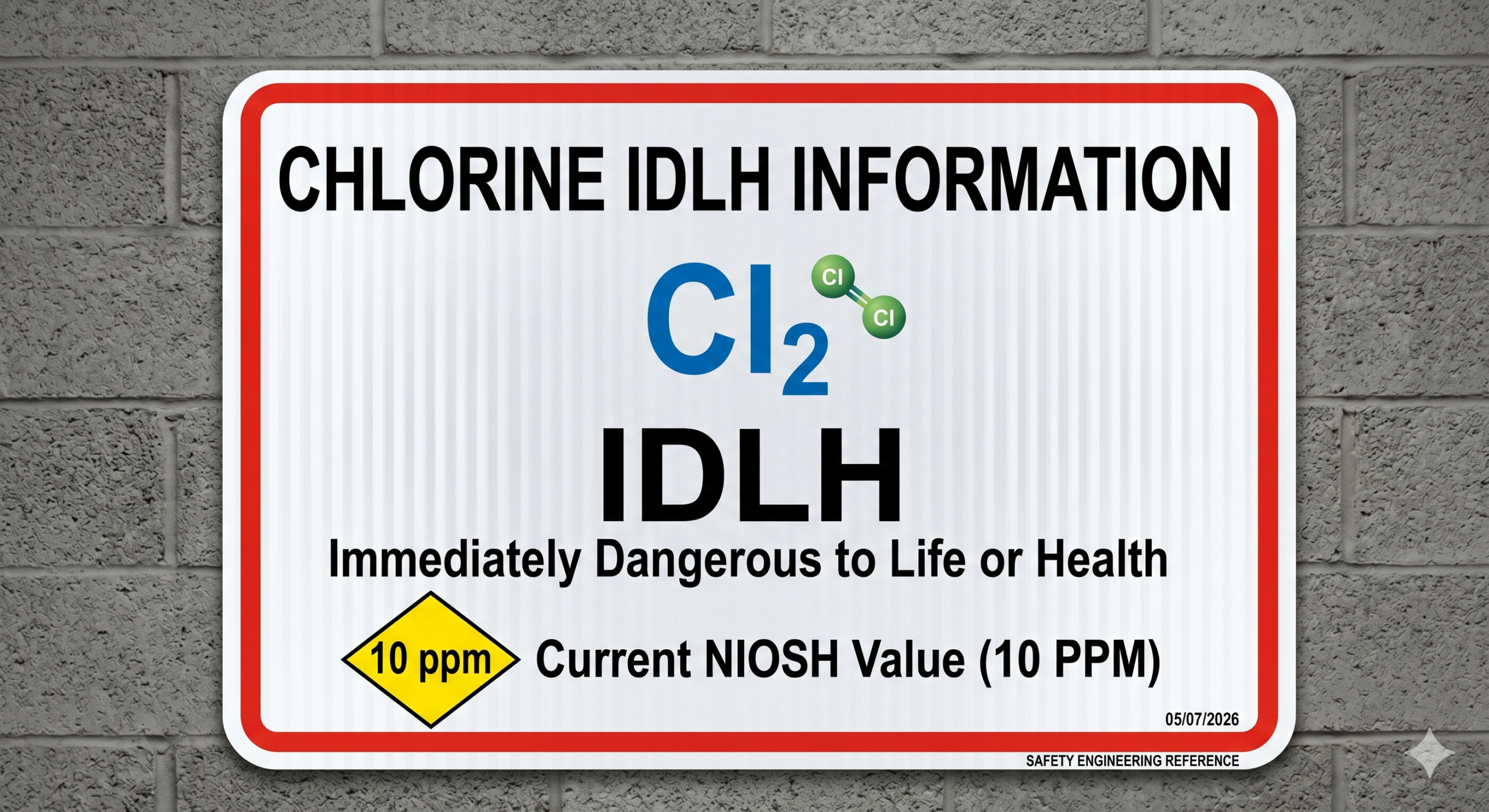
The Immediately Dangerous to Life or Health (IDLH) value for chlorine has been subject to significant reevaluation since its inception in the 1970s. The history reflects a transition from an early consensus on occupational safety to more rigorous, data-driven toxicological assessments.
The Origin: The Standards Completion Program (1974)
The original IDLH values were established as part of the NIOSH/OSHA Standards Completion Program (SCP) in the mid-1970s. At that time, the IDLH for chlorine was set at 30 ppm.
- Basis: The 30 ppm limit was largely based on early human clinical data and industrial experience. Reports from the early 20th century suggested that while 30 ppm caused intense irritation of the eyes and respiratory tract, it was generally considered the maximum concentration that could be inhaled for a short period (roughly 30 minutes to 1 hour) without causing death or permanent damage.
- The “Escape” Philosophy: The primary goal was to define a concentration from which a worker could escape without being incapacitated or suffering irreversible health effects if their respirator failed.
The 1994 Revision: A Major Shift
In 1994, NIOSH re-evaluated the IDLH values for hundreds of chemicals, including chlorine. During this review, the IDLH for chlorine was significantly reduced from 30 ppm to 10 ppm.
The Rationale for 10 ppm
The reduction was driven by a more conservative interpretation of acute toxicity data and a focus on preventing “severe” irritation that could impede escape.
- Human Data: Reviews indicated that exposure to 10 ppm caused severe coughing and eye irritation so intense that it could interfere with a person’s ability to find an exit or operate emergency equipment.
- Animal Data: Toxicological studies (including $LC_{50}$ data in rats and mice) were used to calculate a more protective threshold. For chlorine, 10 ppm was identified as a level that provided a sufficient margin of safety to prevent pulmonary edema (fluid in the lungs), which can be fatal but often has a delayed onset.
Current Regulatory Landscape
Since 1994, the IDLH of 10 ppm has remained the standard used by NIOSH and is the figure most commonly cited in Process Safety Management (PSM) and Risk Management Programs (RMP).
| Agency/Organization | Value | Type | Purpose |
| NIOSH | 10 ppm | IDLH | Respirator selection and escape planning. |
| OSHA | 1 ppm | PEL (Ceiling) | Absolute maximum for routine work. |
| ACGIH | 0.1 ppm | TLV-TWA | 8-hour exposure limit (2024 standards). |
| AIHA (ERPG) | 20 ppm | ERPG-3 | Life-threatening effects (1-hour exposure). |
Historical Context of Toxicity Levels
To understand why the limit moved from 30 ppm to 10 ppm, it helps to look at the physiological effects identified across different historical studies:
- 1–3 ppm: Mild mucous membrane irritation; can be tolerated for up to an hour.
- 5 ppm: Threshold where symptoms like chest pain and vomiting begin to appear in sensitive individuals.
- 10 ppm: Severe irritation; considered the modern limit for safe escape.
- 30 ppm: Immediate coughing and choking; the original (now defunct) IDLH limit.
- 40–60 ppm: Risk of toxic pneumonitis and fatal pulmonary edema.
- 400+ ppm: Generally fatal within 30 minutes.
This downward trend in the IDLH value reflects a broader shift in industrial safety toward lower tolerance for acute respiratory distress, ensuring that “escape” is not just possible, but achievable without the risk of long-term lung injury.