
If you have equipment that uses compressed air (CA) as an energy source, you will understand my frustrations with how poorly we manage this hazardous energy source. Typically, compressed air is provided via a plant-wide header system with drops for machine/equipment. These drops will then use a hose to deliver the compressed air to the machine/equipment, much like my picture below. Unfortunately, the vast majority of LOTO procedures for these machines/equipment are done poorly when it comes to isolating the compressed air.
Compressed air is a simple but unique form of energy that can be easily isolated, verified ZES, and prevented from re-accumulating; however, most compressed air systems are built cheaply and archaically, making the simple task of LOTO much more difficult than it needs to be, especially in the 21st Century! Shown below is a picture of how most CA systems are built:
- Isolation valve is a 1/4 turn ball valve (red box)
- Water/oil filter (with drain port) (yellow circle)
- Pressure gauge (green box)
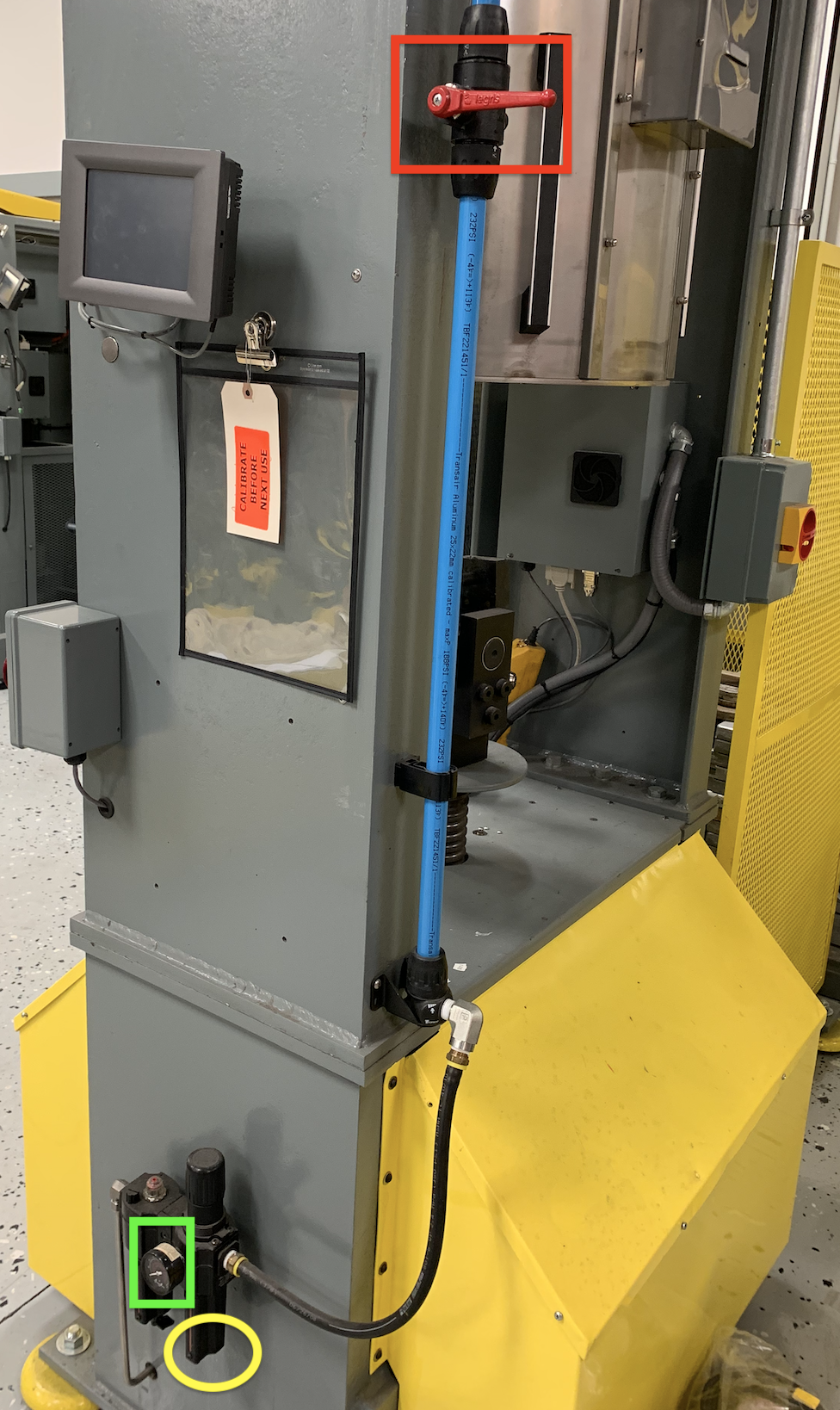
In order to lock this energy source out correctly with this setup we must
- CLOSE and LOCK CLOSED the 1/4-turn ball valve
- OPEN and LOCK/TAG OPEN the drain valve on the filter housing
- VERIFY ZES on the pressure gauge
So we have TWO (2) points of isolation: the red-handled valve shown (red box) and the drain valve on the filter housing (yellow circle). Because we have two (2) points that need to be under the exclusive control of the authorized employee(s), this Lockout does NOT pass the test for the “written procedure exemption” under 1910.147(c)(4)(i).
Along with 21st-century technology, we can lock out compressed air in ONE (1) simple action and prevent the reaccumulation of the energy source. Thus, compressed air is allowed to fall under the “written procedure exemption” under 1910.147(c)(4)(i). Welcome to the game… Dump Valve! As shown below, these valves make locking out compressed air so simple, fast, and easy. They start at around $70 (compared to a 1/4-turn CA block valve, which is ~$50), and if you have machines that have compressed air and are locked out often, the savings these dump valves can bring can be tremendous.
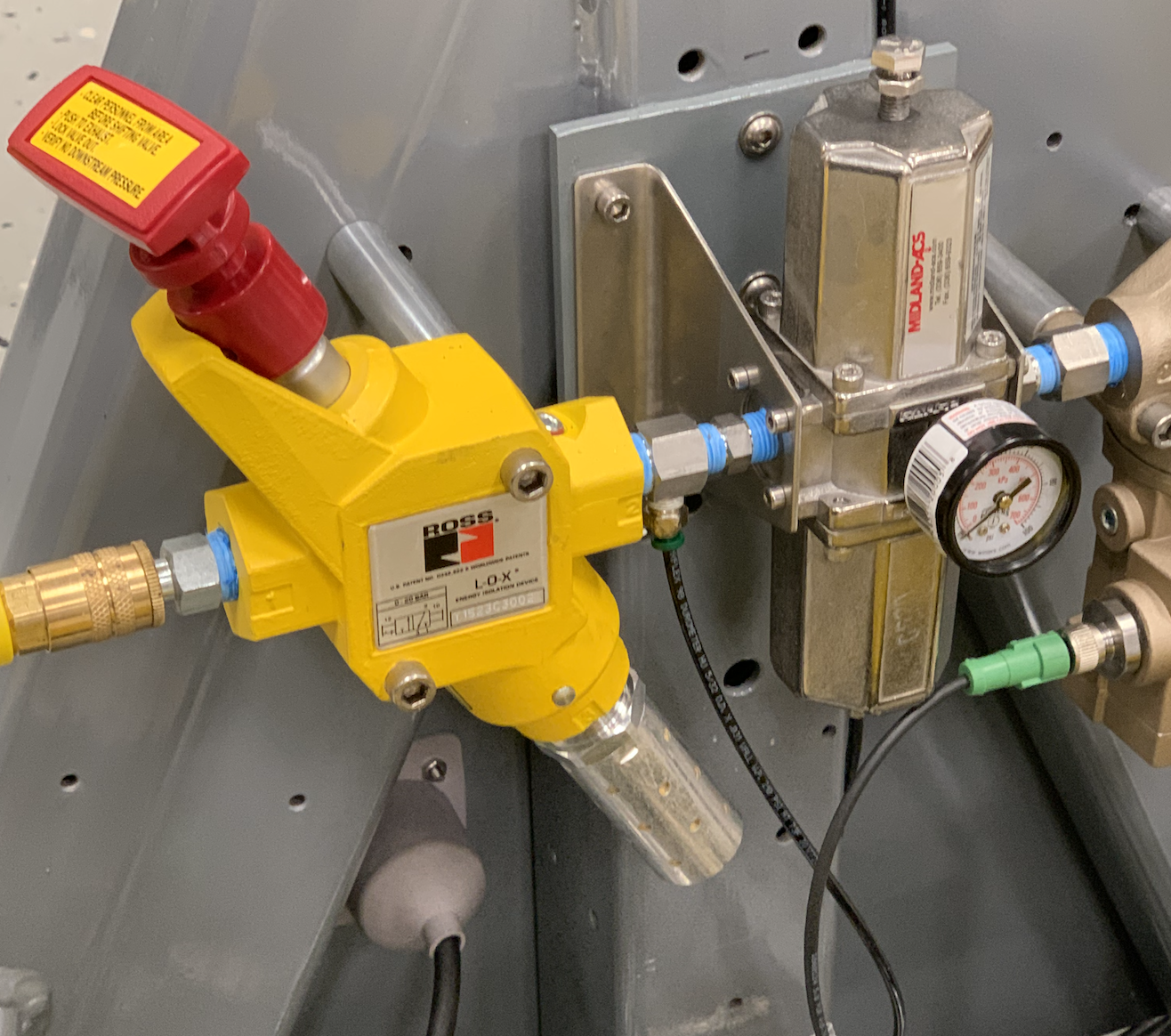
NOTE: This is NOT an endorsement for Ross Controls- but they are one of my favorite brands for this application.
As shown below, this valve requires a SINGLE action to achieve ISOLATION, BLEEDING OFF stored energy, and VERIFICATION of a ZES.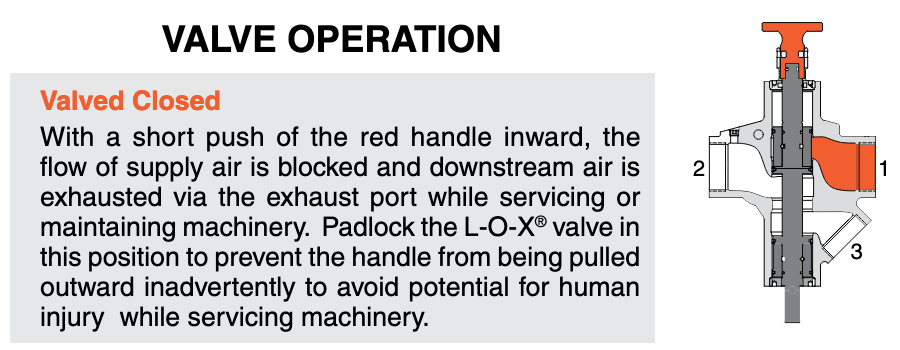
If we had this dump valve AND our machine (as the one shown above) had ONLY the compressed air as its sole energy source, we would then claim “written procedure exemption” under 1910.147(c)(4)(i). Wherewith the basic 1/4-turn ball valve setup, we would not as we would have two (2) points to isolate.
So be sure that your LOTO procedures do not merely instruct the authorized employee to close and lock out the 1/4 turn ball valve! That does not get us to a ZES; we must deal with the stored energy by instructing the employee to bleed off this stored pressure and purposefully verify we are at a ZES. We then must take measures to ensure that the air can not reaccumulate to a hazardous level (1910.147(d)(5)(ii).
Or we could spend a few extra dollars on those machines we have to lock out often and use dump valves to isolate and control compressed air hazards.