
When we were children, adults frequently told us to stop and think—good advice, but they rarely told us what to think about. I have sought to overcome this omission with the ‘three-bucket’ model described below. This model forms the basis of the mental skills designed to impart error wisdom and risk awareness.
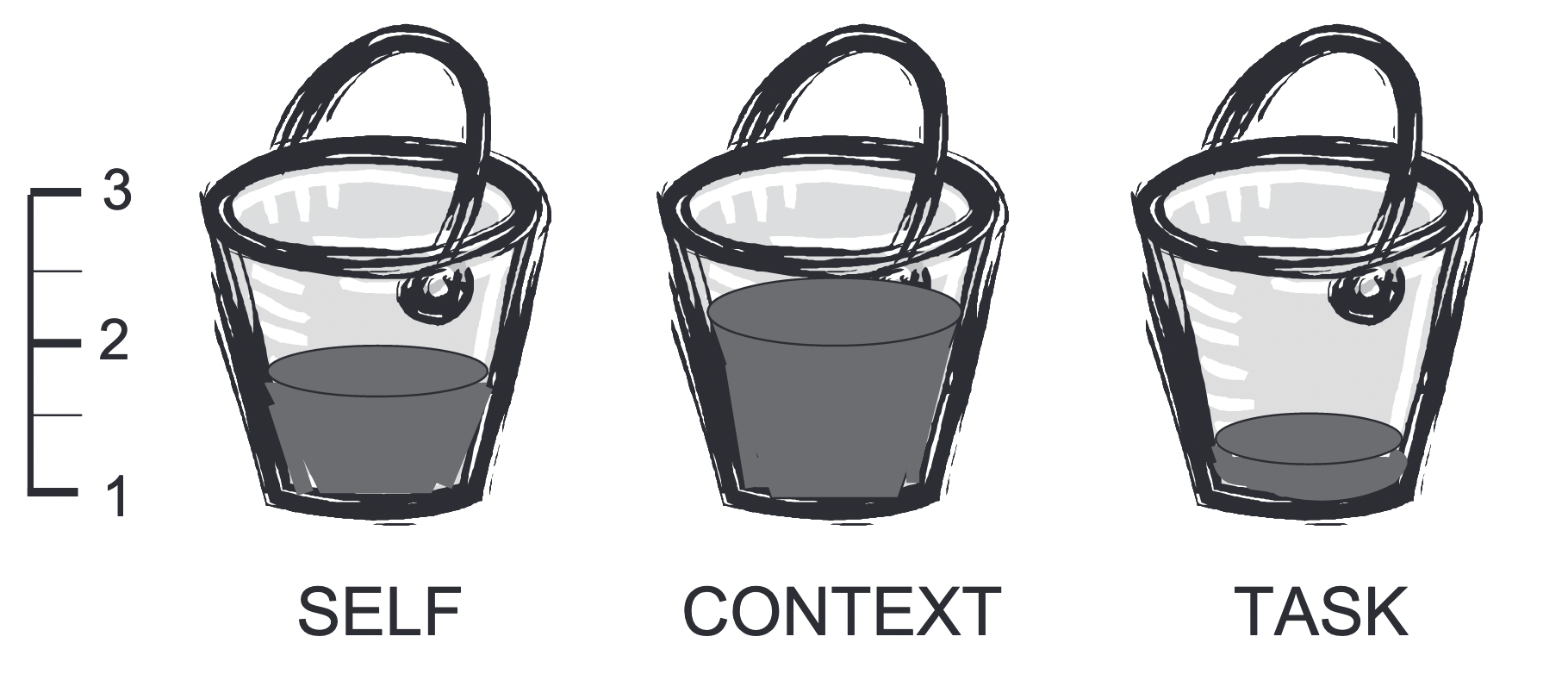
The buckets correspond to the three features of a situation that influence the likelihood of an error being made.
- One bucket reflects the well-being or otherwise of the front-line individual,
- the second relates to the error-provoking features of the situation, and
- the third concerns the nature of the task – individual tasks and task steps vary widely in their error potential.
In any situation, the probability of unsafe acts being committed depends on the amount of “bad stuff” in all three (3) buckets. Full buckets do not guarantee the occurrence of an error, nor do nearly empty ones ensure safety (they are never completely empty) – we are dealing with probabilities rather than certainties. The contents of each bucket are scaled from one to three, summing to nine in total.
People are very good at making rapid, intuitive ratings of situational features. With relatively inexpensive instruction on error-provoking conditions, front-line carers could acquire the mental skills necessary to assess the error likelihood in any given situation.
![]() |
How the buckets might be ‘read’ by junior staff working alone |
Subjective ratings totaling between six and nine should set alarm bells ringing.
Where possible, this should lead them to step back and seek help.
The three-bucket model seeks to emphasize the following aspects of mental preparedness:
- Accept that errors can and will happen.
- Assess the local “bad stuff” before embarking on a task.
- Be prepared to seek more qualified assistance.
- Don’t let professional courtesy get in the way of establishing your immediate colleagues’ knowledge and experience concerning the patient, particularly when they are strangers.
- Understand that the path to adverse events is paved with false assumptions.

