
These safety strategies work – But are you using them? (WA-OSHA)

One of the most effective ways to reduce the risk of injury while operating machines is to use what’s called the Hierarchy of Controls method. It ranks the ways to reduce risks from most effective to least effective. Often, you’ll need to combine control methods to best protect workers.
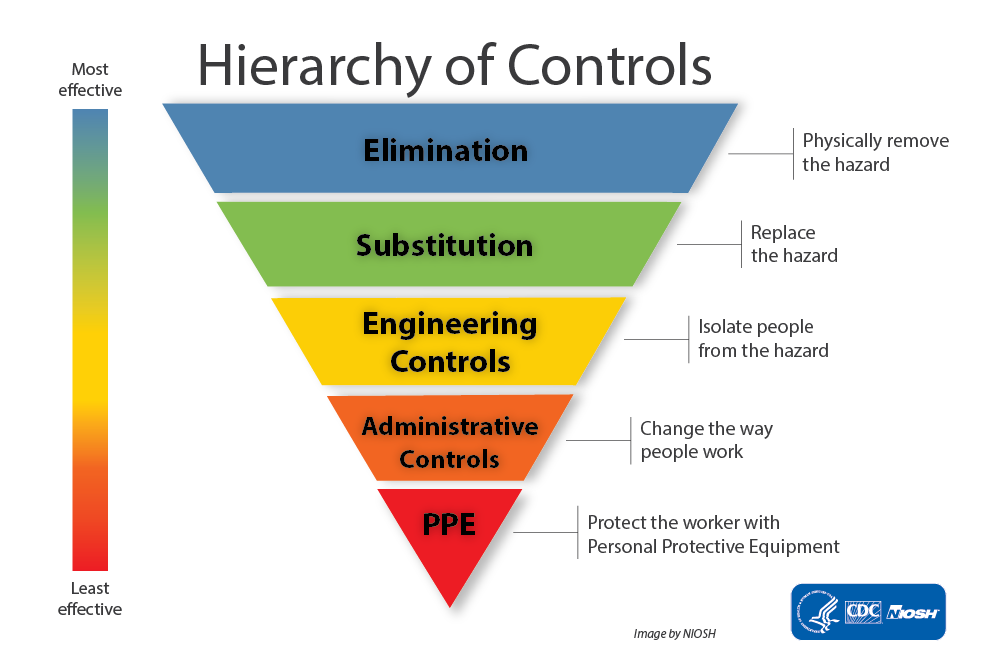
Elimination
Make sure the hazard no longer exists.

Examples include: Ending the use of a hazardous material; Doing work at ground level rather than at heights; and Stopping the use of noisy processes.

Substitution

If you can’t eliminate the risk, try using a safer machine or method instead.

Examples include: Switching to a less hazardous material; and Switching to a process that uses less force, speed, temperature, or electrical current.

Engineering Controls

Reduce exposure by preventing hazards from coming into contact with workers. They still allow workers to do their jobs.

Examples include: Noise enclosures; Local exhaust ventilation; Guardrail system; Machine guards; Presence sensing devices; Interlocks; and Lift equipment.

Administrative Controls

Rules and procedures that change the way work is done or give workers more information to help minimize risks. They’re often used together with higher-level controls.

They include: Procedures, such as equipment inspections, standardized safe work, planned preventive maintenance, safe startup checklists, lockout/tagout, pre- and post-task reviews, and rotation of workers; Training on topics such as hazard communication, permit-required confined space entry, lockout/tagout, and safe work procedures; and Warnings such as signs, backup alarms, smoke detectors, computer messages, mirrors, horns, labels, and instructions.

Personal Protective Equipment (PPE)

This is the last line of defense. Workers should have PPE to protect them from any remaining risks that can’t be eliminated or controlled another way. PPE needs constant effort and attention (including proper use and training) from workers.

Examples include: Safety glasses; Personal Fall Protection Systems, and related equipment; Hardhats; Respirators; Hearing protection; and Protective clothing.

Now that you know what you can do to reduce the risk of machine hazards, how does your workplace rate when it comes to machine safety?

Use the Machine Safety Checklist to help you evaluate your equipment and procedures.

Source: https://content.govdelivery.com/accounts/WADLI/bulletins/3e128d3

Scroll to Top