On May 3, 2022, at about 19:45 local time, the inspected passenger vessel Natchez, with one crewmember on board standing a security watch, was moored in the Industrial Canal in New Orleans, Louisiana, undergoing renovations when a fire broke out.1 Local firefighters extinguished the fire at 2139. No pollution or injuries were reported. Damage to the vessel was estimated at $1.5 million.
SPECIAL NOTE:
- The investigation determined Hot work to remove the electrical panel in the generator space within the engine room was completed at 15:45.
- The diesel engine technician, working in a different area of the space, was the last to leave when he stopped working in the generator space at about 18:00. He did not notice any sign of a fire or smoke before departing the area, and neither he nor the deckhand on vessel security watch noticed any indication of a fire when the technician departed the vessel about 18:30.
- The first indication that there was a fire was about 1 hour and 15 minutes later, at 19:45, when the deckhand saw smoke, went to investigate, and saw the fire within the engine room.
The work to remove the electrical panel located on the port side of the generator space, started with the removal of the electrical components by a contractor. Once that was completed at about 08:30, the project superintendent from the contractor responsible for hot work evaluated the space to determine if it was safe for hot work, including checking the environment for flammable vapors, looking for oil on deck, and ensuring there were no combustible materials next to the hot work area. Once the space was determined safe for hot work, the employees used an acetylene torch to cut the panel’s metal framing so it could be removed. As one worker was cutting with the acetylene torch, the other served as the fire watch and had a bucket of water, charged garden hose, and fire extinguisher at the ready in case a fire started.
While the hot work was underway, the chief engineer had two Natchez crewmembers place a piece of sheet metal along the side of the port generator, about 3 feet from the hot work at the electrical panel, so that the sparks from the acetylene torch cutting would not damage it. The hot work to remove the framing of the electrical panel was completed about
15:45. Following the hot work, workers cleaned up the area and collected and stored the tools while monitoring the area as the cuts cooled down. The hot work contractor employees started to depart the vessel at 1630, with the project supervisor departing at 16:50. They told investigators that they did not note any unusual concentration of smoke within the generator space before their departure. While the hot work was in progress on the port side of the generator space, another contractor, Southern Diesel, had been installing the fuel, lube oil, and water lines for the new diesel generator on the starboard side of the room. This work continued after the hot work was completed.
The deckhand on board the Natchez who was standing the 1600–2400 security watch, conducted a round of the vessel at about 17:45. During this round, he entered the engine room, looked into the generator space, and saw the diesel technician (contractor). He did not observe any smoke or other issues; he then returned to the captain’s salon, located on the forward section of the main deck. The diesel technician worked on the diesel engine piping installations until about 1800. After picking up his tools, the technician talked with the deckhand on the vessel’s port bow before departing the Natchez about 1830. The technician told investigators that although he noted the smell associated with hot work following the completion of the panel frame removal, he did not smell or see any other indication of smoke before leaving the generator space.
About 19:45, while the deckhand was in the captain’s salon, he saw smoke passing the window. He exited the space to investigate, looked aft, and saw “a big puff of smoke coming from the overhead of the bottom [main] deck.” The deckhand moved down the gangway and along the dock toward the vessel’s stern to investigate the source of the smoke. He saw small flames that were growing and expanding inside the open starboard-side engine room doors. From his cell phone, he immediately called 911, and then he called the captain and additional company personnel to inform them of the fire.
The New Orleans Fire Department arrived on the scene at about 20:25, and the fire was reported extinguished at about 21:39. Most fire damage was contained within the generator space, with minor heat damage to the engine room and minor smoke damage to the external passenger decks located directly above the fire.
On May 9, investigators from the US Coast Guard; the Bureau of Alcohol, Tobacco, Firearms and Explosives (ATF); the National Transportation Safety Board; and private fire investigators representing the vessel owners and the hot work contractor conducted a fire scene examination on board the Natchez. In addition to examining the fire scene, investigators were provided with pre-fire photos of the work conducted in the generator space on May 3. While reviewing the photos, investigators noted that cardboard boxes, wooden shelves, and other combustible materials, including plastic and rubber, were present in corner storage areas on the port side, forward and aft, on the generator space bulkhead.
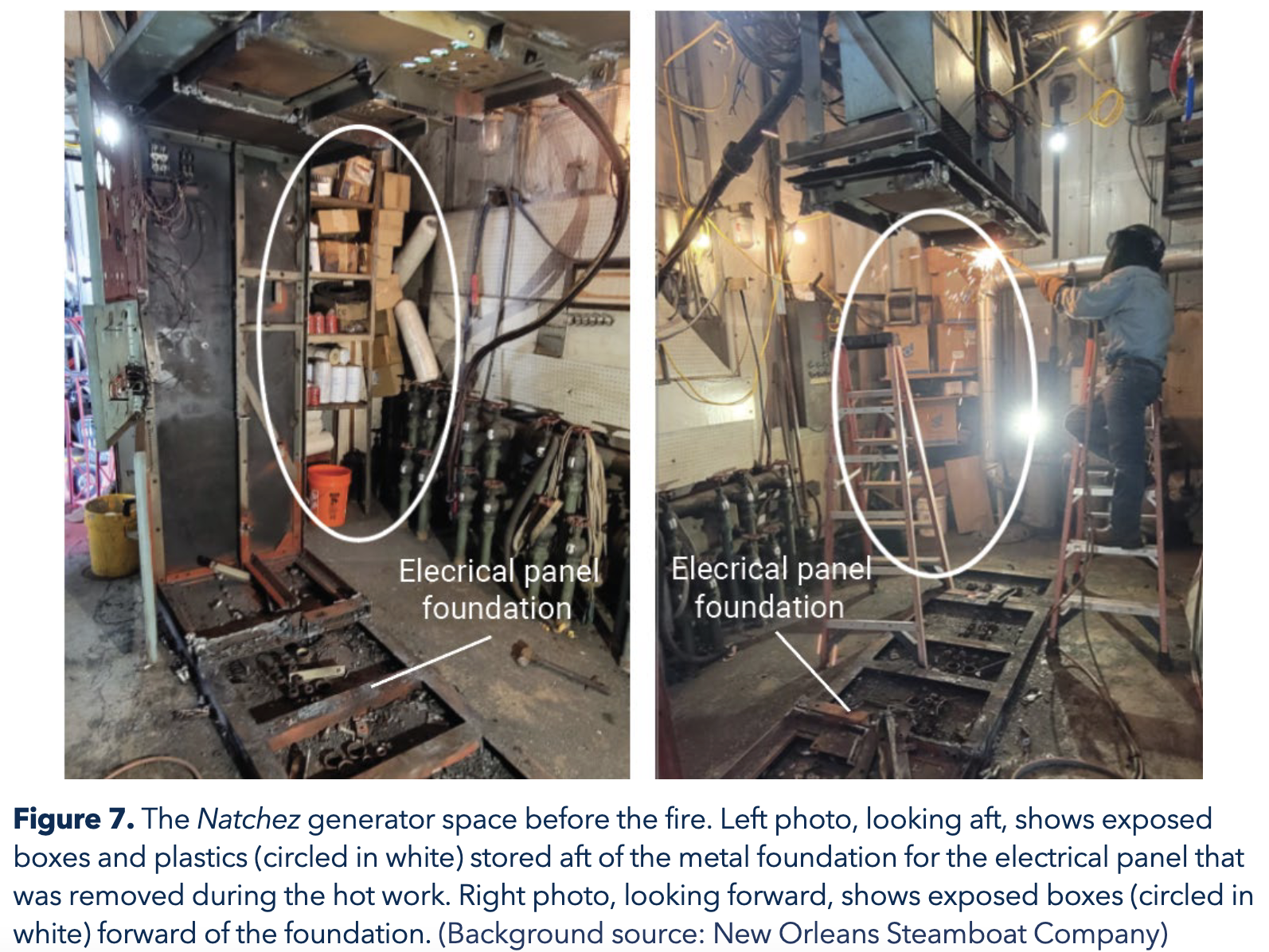
During the postfire examination of the generator space, investigators determined that the approximate distance between the area where the hot work was performed and the storage areas that contained combustible materials (forward and aft) was 2–3 feet.
As the ATF fire investigators examined the generator space to identify the location of the initial fire, they discovered a “distinctive V-shaped” fire pattern on the forward bulkhead that was 2 feet away from the forward section of the electrical panel framing. The fire investigators also observed clean burn patterns on the forward bulkhead above the V-shaped pattern and below the vent fan. Based on their observations and examinations, the ATF fire investigators determined that the clean burn patterns were consistent with the type and size of available fuels: the combustible materials that were located along the forward bulkhead as shown in the photos taken the same day before the fire. The fire patterns found within the generator space were determined by the ATF fire investigators to be consistent with a fire originating near the deck along the forward bulkhead, adjacent to where the hot work was performed. Except for the hot work conducted before the fire, no other potential source of ignition was discovered.