
For 20 years now, when teaching any of my process safety courses I make the student repeat this three times: UPWARDS and UNOBSTRUCTED, UPWARDS and UNOBSTRUCTED, UPWARDS and UNOBSTRUCTED. We do this when we get to the Relief System design basis. The vents to the atmosphere almost will always be required to be UPWARDS and UNOBSTRUCTED based on just about any RAGAGEP for hazardous materials. You would think this would be a simple requirement and that an engineer would have the ability to defeat rainwater! But time and time again, we find rain water scares the heck out of most engineers who are tasked with designing the PRD vent to the atmosphere. Here is what the Compressed Gas Association (CGA) requires in their vent design…
In their most recent revision of 5.5 for H2 vents, the CGA allows for a “minter cut” on a horizontal discharge and this caused quite the stir among those who design PRD venting systems.
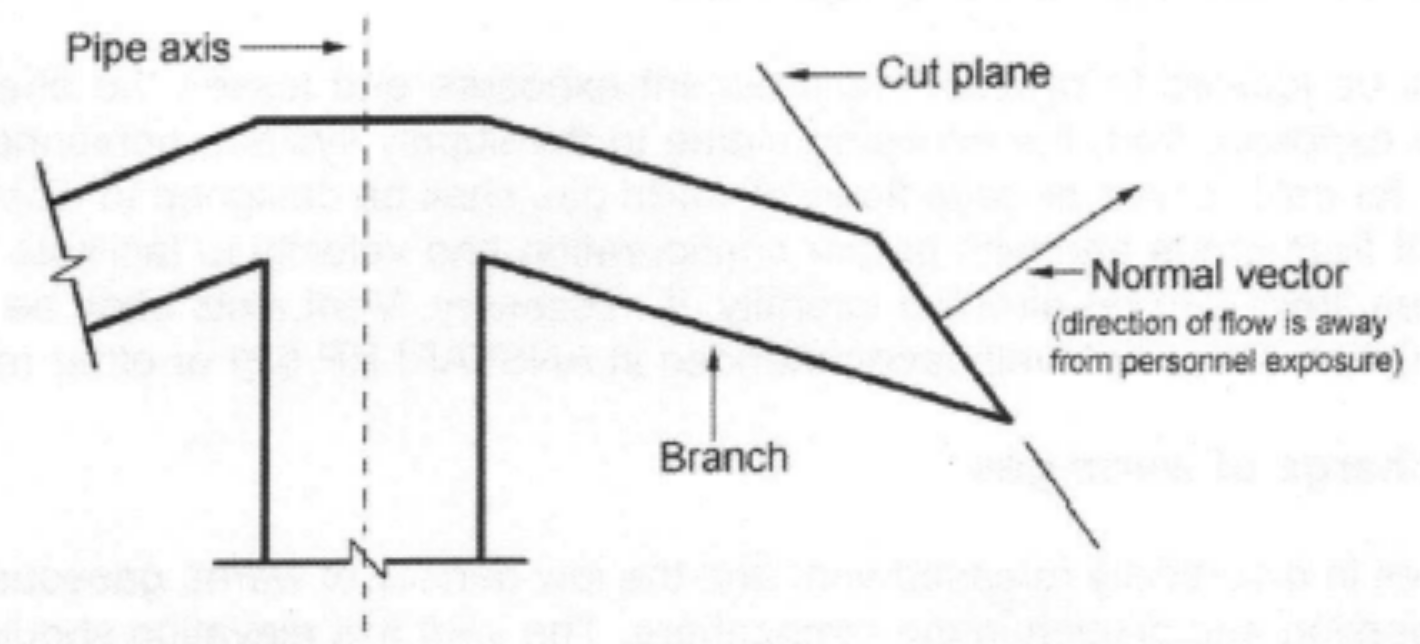
“Referring to the above miter cut and to the examples of recommended stack designs shown above, the standard states that
“the miter cuts on the ends of the vent cap are designed to direct the resultant discharge vector with some vertical component as the gas is discharged. The vent exit shall not downwards since it can direct flow to an area of potential personnel exposure”.
But not everyone was keen on this new design… (not my comment – but from a very capable engineer on using the miter cut on a H2 stack)
In the author’s opinion, this statement is only partially true. If the exit velocity is close to sonic, the flow of hydrogen will be initially directed downwards. If the velocity is low, the flow will be horizontal and then rise.
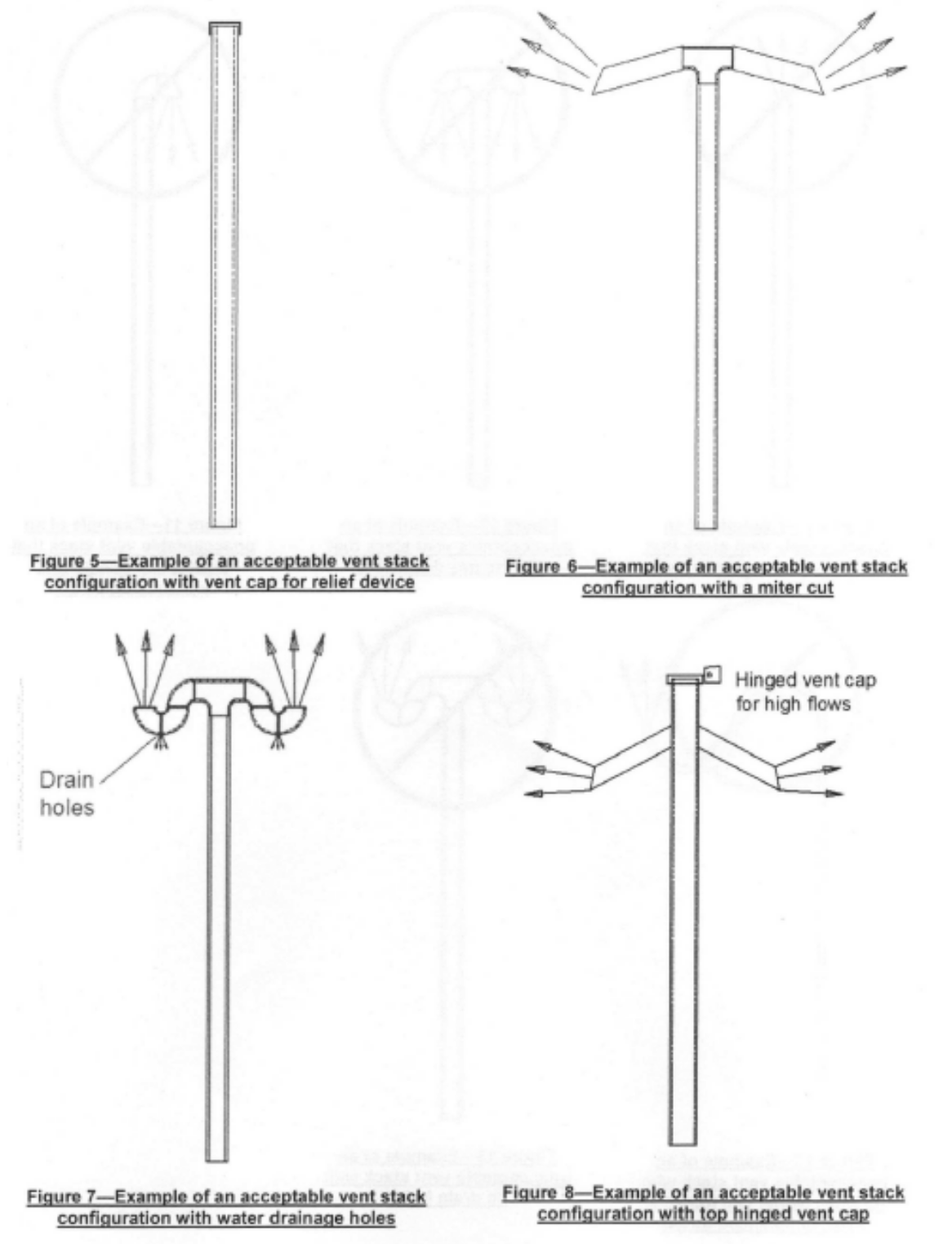
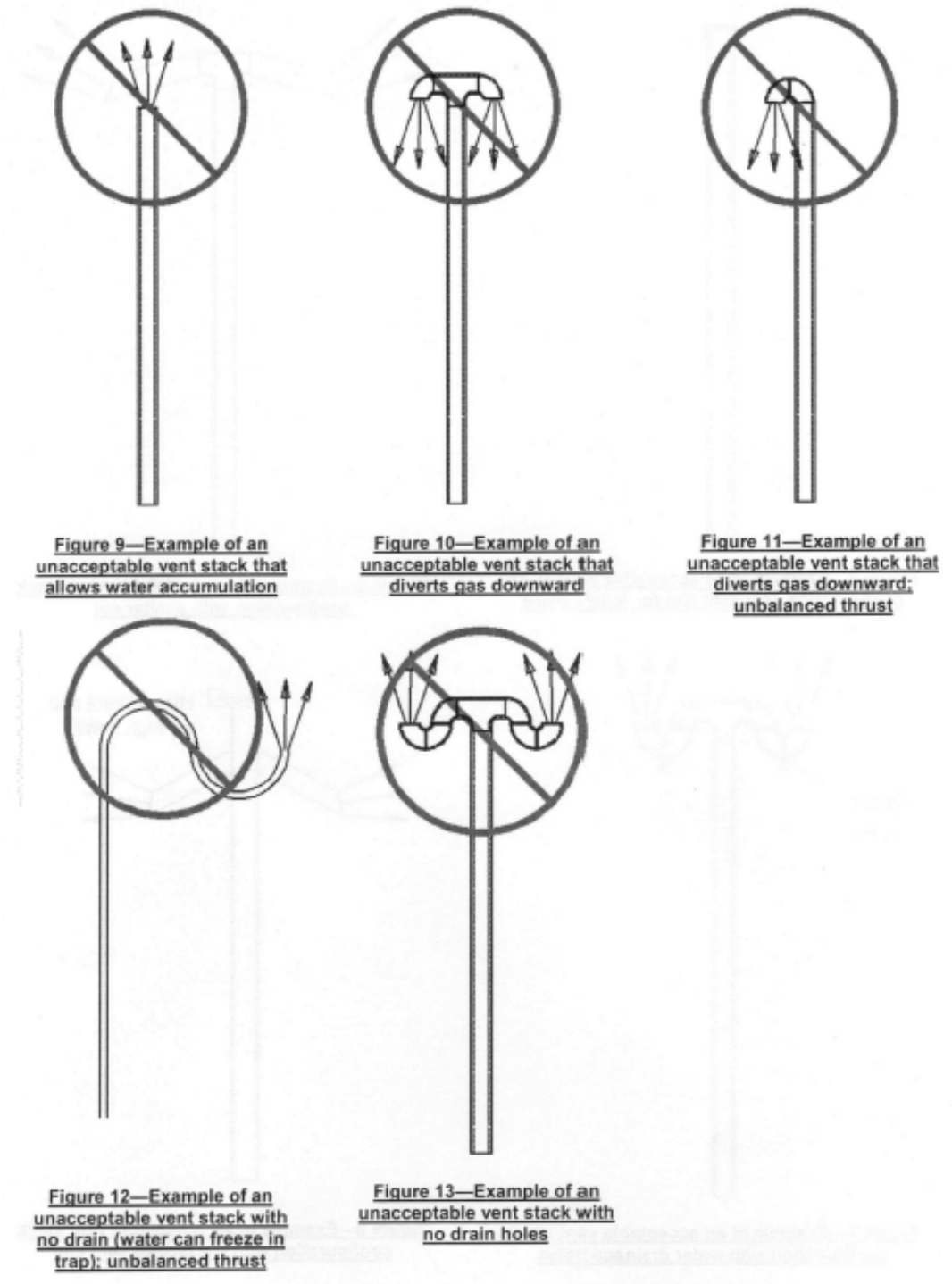
But the CGA also offers some alternatives to defeat that scary rainwater…
| GOOD | BAD |
 |
 |