How often have we heard “entry supervisors” ask the following question… “Do I have to call the fire department before I sign each permit?”
How do you answer this question? Does their responsibility change if there is an on-site rescue team vs. off-site rescue services?
This is an EXTREMELY CRITICAL path in confined space safety, and we need to be spot on in our answers and expectations.
Here is how I answered their questions and dealt with their protest.
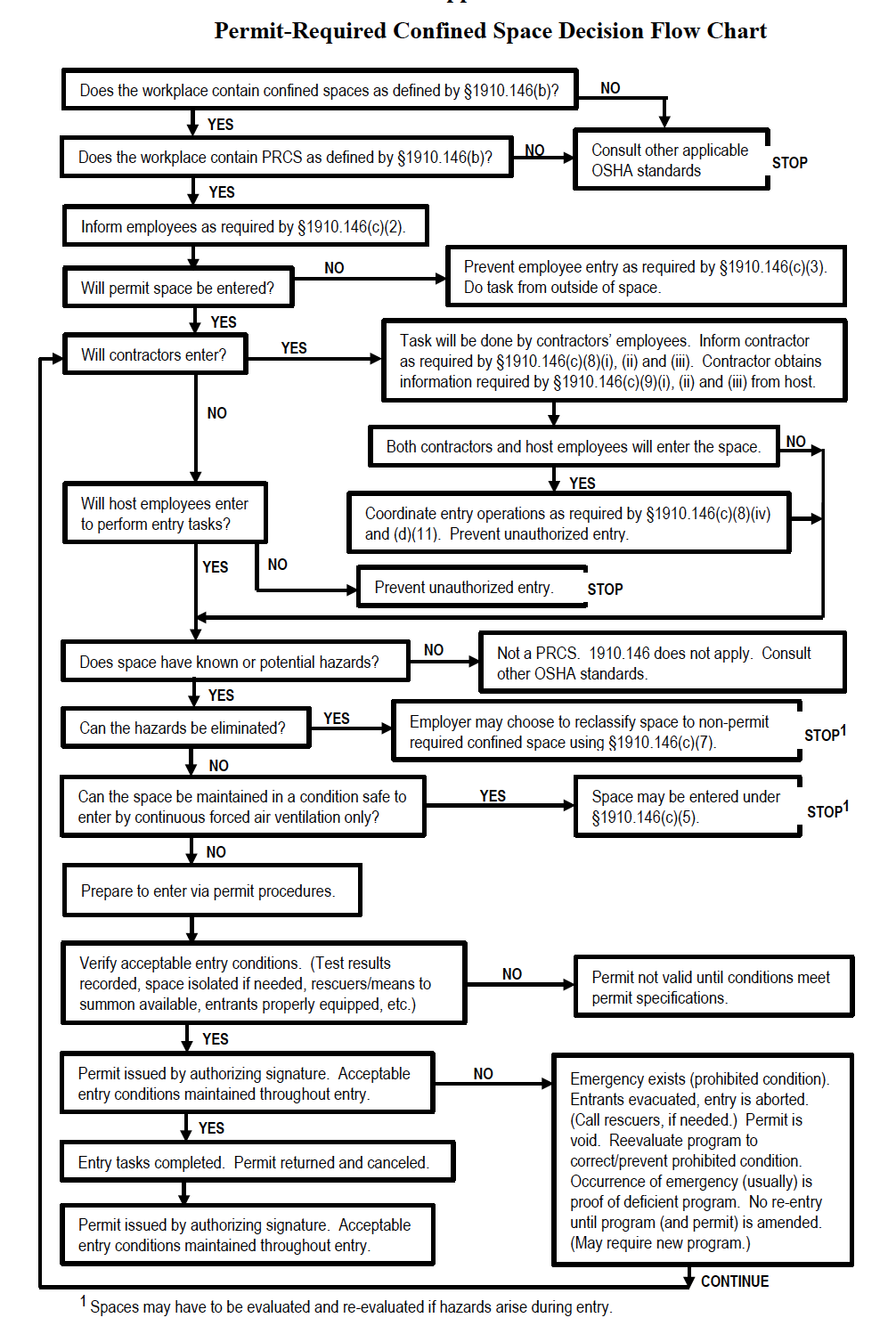
Let’s review what OSHA has set as the bare minimum requirements for the entry supervisor BEFORE he/she authorizes entry into the space. 1910.146(j)(4) states the entry supervisor must…
Verifies that rescue services are available and that the means for summoning them are operable;
This is very simple to understand, but it is more often NEVER DONE! The entry supervisor is expected to contact the rescue service, regardless if they are on-site or off-site. Most facilities use their local fire department (FD) as their rescue service, and this is just full of potential issues and very serious issues!
Please see my article “Using my local FD as my PRCS Rescue Team” for potential issues if this is not managed properly. But the facility has every right to use its local FD to provide the CS rescue services; however, when they rely on the local FD (provided the FD is qualified, staffed, and equipped), this means that the entry supervisor MUST HAVE A MEANS to contact the FD to verify their availability. The community will not appreciate if they use the 911 system to make this contact, so oftentimes there will need to be some other means available to make this contact. And YES, this must be done for EACH ENTRY PERMIT. Of course, if you know there will be six entries during the same time, I recommend making one call and reviewing EACH PERMIT and SPACE with the FD during the one call. But the FD must know of EACH ENTRY, the COMPLEXITIES and HAZARDS of the space, and the number of entrants. Please remember that I use the local FD as my off-site resource example, but these needs would apply to ALL off-site rescue providers.
As I discussed in previous articles that when we use the local FD, we not only have to make contact before the entry permit is approved, we MUST have a means of communication with the FD for when they have to go on another call. Thus they are no longer “available”! This means that we STOP the entry and remove ALL entrants until the FD is back in the station and “available.” This could delay a lot of work, but this is one of the drawbacks of relying on the local FD.
What if the rescue service is an “on-site” service? Maybe the facility has its internal rescue team or hired a third-party rescue service to be on-site during the “turnaround.” Since the rescue team is already on site, does the entry supervisor still have to make contact to verify they are available? The short answer is YES! Although the means to make contact is usually much easier, the contact MUST BE MADE.
As I have written before, the main issue with on-site rescue services is that the facility will OVERLOAD them such that a team of 4-6 rescuers is responsible for up to 30 entries simultaneously. There is a risk breakpoint somewhere between 1-30, and just because the team is on-site does not make them invincible to delays. In some of my sites, the rescue team would take up to 15 minutes to move from one space to perform a rescue at another space on site. Until you have seen what equipment is involved and the location of many spaces, it is hard to imagine it taking a team 10-15 minutes to move from one space to another to affect a rescue. The CS Rescue leader MUST be responsible and take many factors into consideration before establishing a maximum number of active entries. Still, he/she MUST DRAW the line somewhere, or things can get out of control quickly.
Bottom line… the entry supervisor MUST contact the rescue service to ensure they are “available” for EACH ENTRY PERMIT they authorize. Each plant must manage this critical path that best suits their facility and ensures the highest level of safety for the entrants and rescuers; however, as pointed out in this article, there are many pitfalls that a facility can fall into, and unfortunately, often these pitfalls go unnoticed until it is too late. That is why safety professionals need to have prying eyes and NEVER settle for anything less than EXCELLENCE when it comes to Permit-Required Confined Spaces.