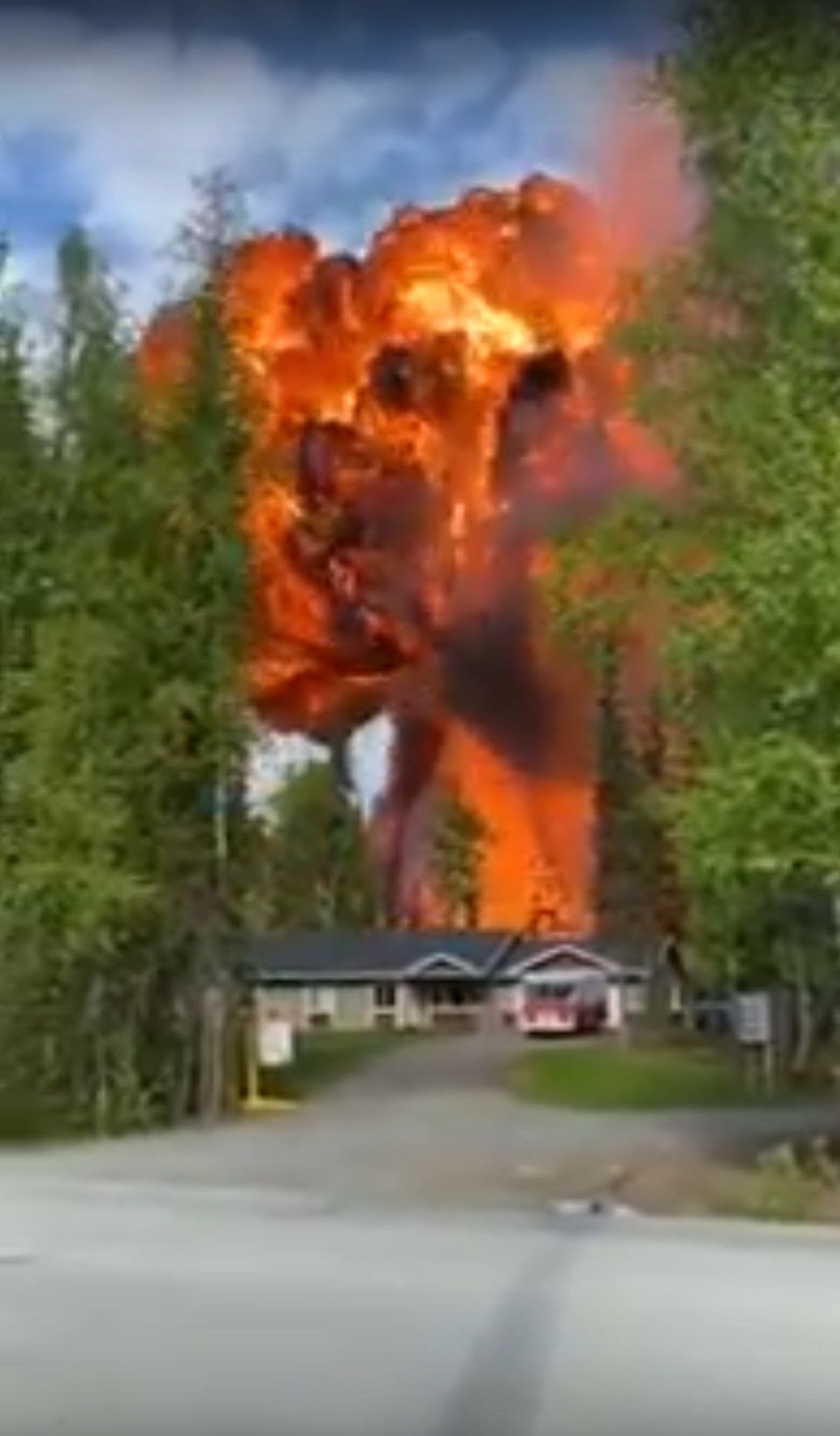
Recently a fire district posted a video of a HIT occurring on a gasoline storage tank at a residence in Alaska. In their posting, they called the event a BLEVE and technically speaking we can see (as I show below) that this event was NOT a BLEVE.
A Boiling Liquid Expanding Vapor Explosion (BLEVE) is best described by Canada’s Transportation of Dangerous Goods…
During a BLEVE, a fire impinged or damaged tank car fails to contain its internal pressure and explodes with a sudden product release, propelling tank car fragments with great force and high speed over long distances. In addition, if the product (e.g. liquefied pressure gas such as propane) is flammable, there will also be a fireball and intense heat generated. This catastrophic failure is more likely to occur on damaged pressure tank cars, whether under fire conditions or not.
A Heat-Induced Tear (HIT) is best described by Canada’s Transportation of Dangerous Goods…
A HIT is a different type of tank car failure. Under the intense heat of a fire, non-pressure tank cars containing flammable liquids will tear, generally at the top, causing the product to suddenly vent at high speed, generating a fireball and an intense heat wave. Unlike BLEVEs, HITs rarely result in the projection of tank car fragments. HITs have been known to occur within 20 minutes to several hours after a derailment of tank cars carrying flammable liquids such as crude oil or ethanol. Unlike a BLEVE, where all the product is quickly released or consumed, a tank car with a HIT may still contain product that can burn or leak for 8 hours or more.
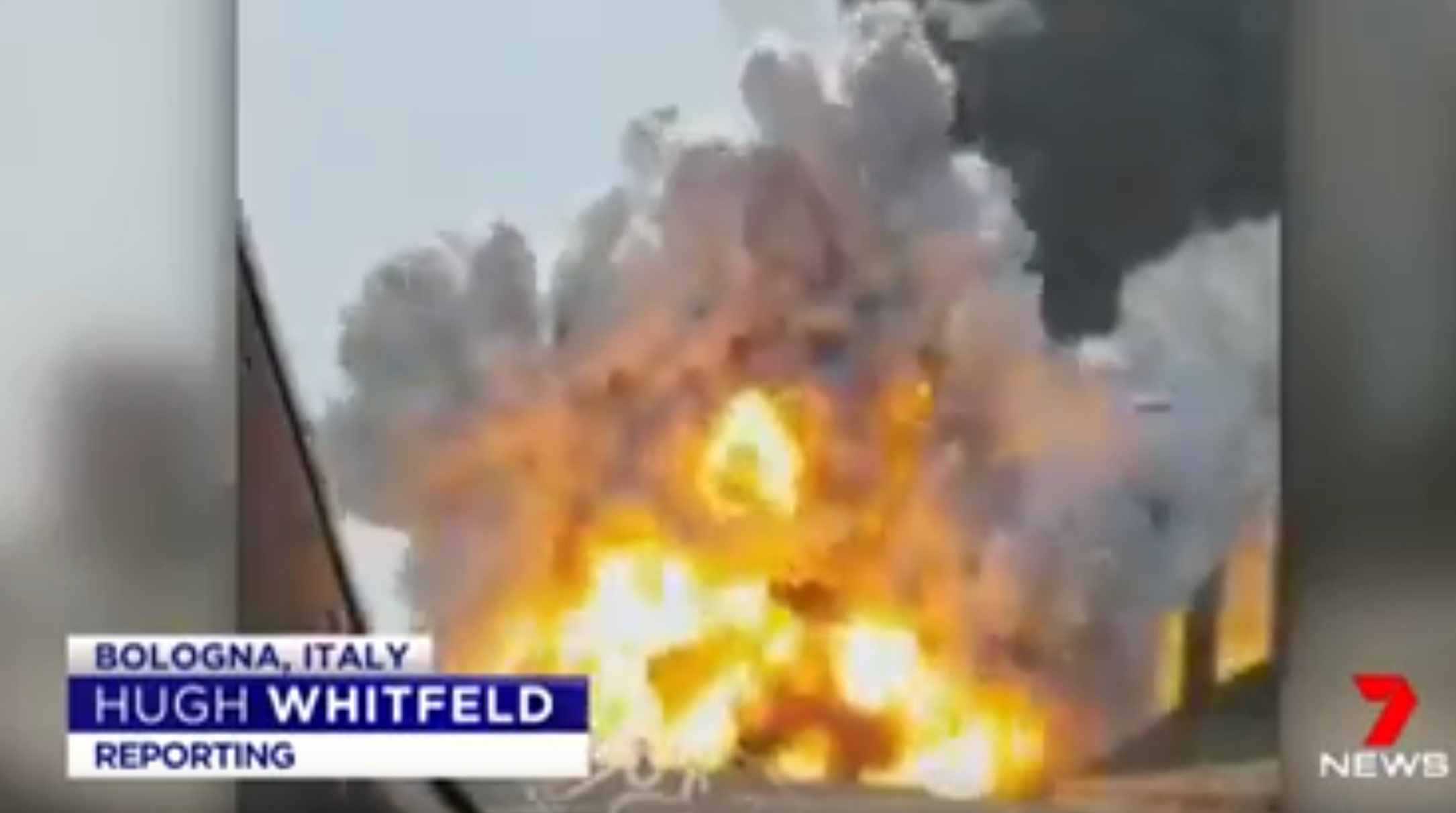
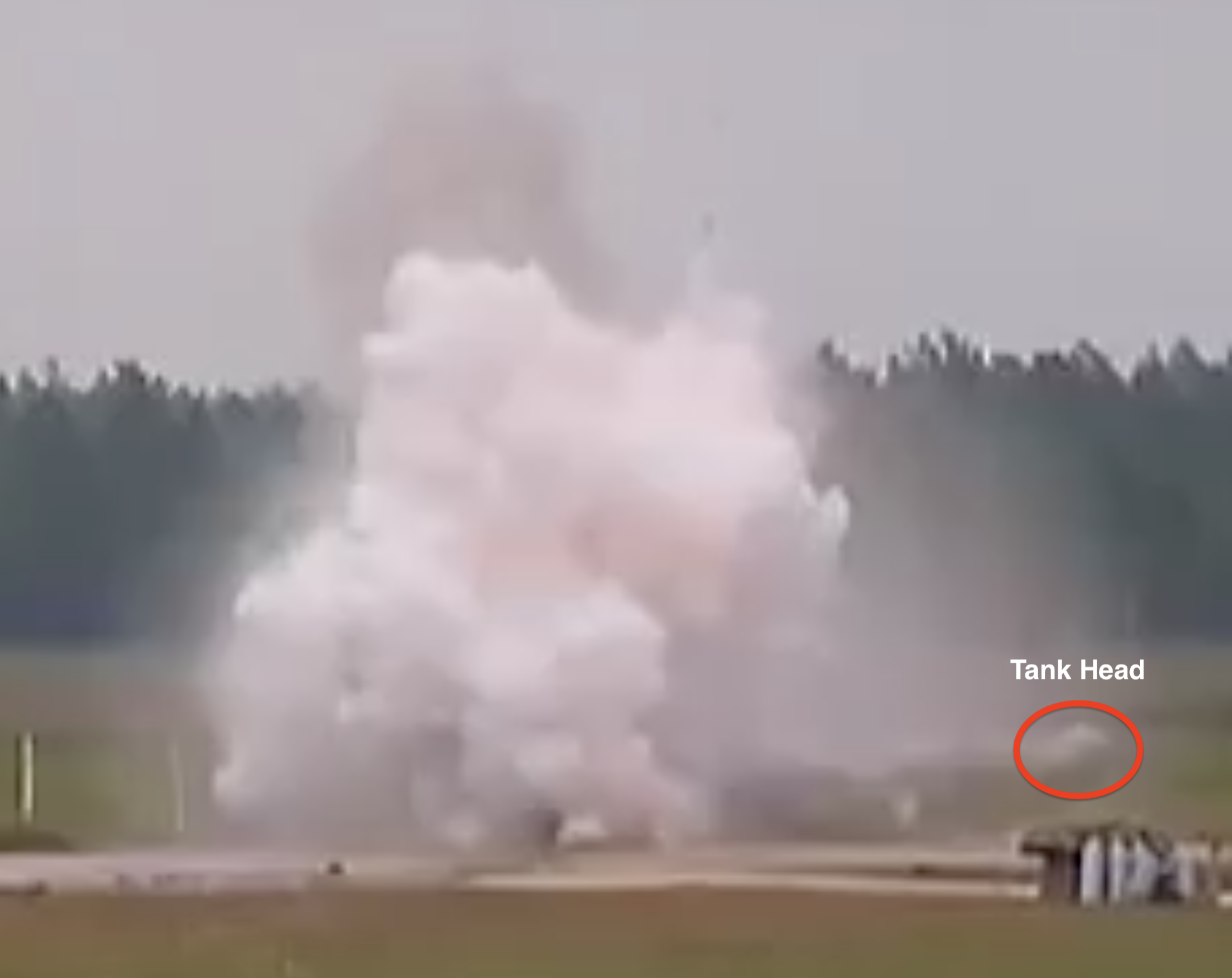
As we can see in my screen grabs, there is a visual difference in these events. In a BLEVE, we can clearly see an enormous vapor cloud after the failure of the pressure vessel and as this cloud quickly expands it falls back into its flammable range and ignites giving us the spectacular fireball. But as we have discussed in my previous articles, a BLEVE can and often does occur with NON-flammable liquified pressurized gases such as cryogenic materials like Nitrogen and even Carbon Dioxide (even though CO2 is not officially cryogenic).
Here are some of the recent BLEVEs that were caught on camera. I have stopped the video at the moment we have the failure of the vessel so as to capture the vapor cloud just before it ignites.
 |
 |
Here are the full videos of these BLEVEs so you have something to visually compare:
Compare these two BLEVEs to this more recent HIT that involved a gasoline storage tank at a residence in Alaska:
Screenshot of the fireball, notice no vapor cloud is present; we have ignition of the vapors as soon as they are released from the tear/failure of the atmospheric storage tank. The video below shows the full event…