
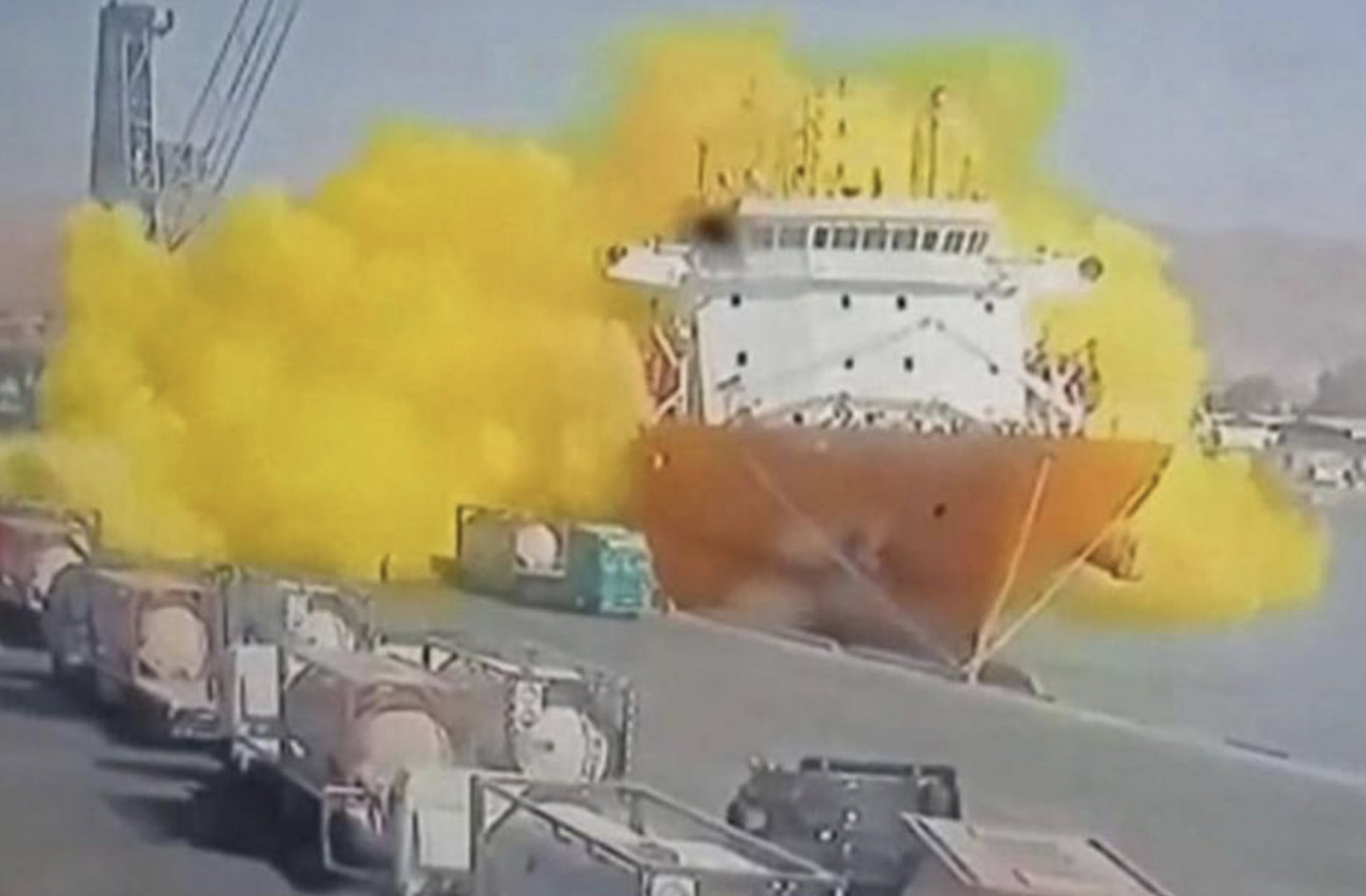
 This past week we witnessed a tragic incident involving chlorine (Cl2), a 25-ton ISO container, and a crane/sling failure. The incident claimed 13 workers’ lives and sent another 250 to hospitals for emergency care. Many have claimed this to be the “worst-possible outcome”. Here in the USA, we call these “Worst Case Release Scenarios” (WCS). A lot of process safety and OSH professionals have a distorted view that a WCS scenario can’t happen in 10-minutes as defined by the WCS definition. Well, we just got to witness a catastrophic release that was 20-25 tons of liquefied Cl2 in under 10-minutes. A Liquified-Pressurized Gas (LPG – not to be confused with Liquified Petroleum Gas). OSHA defines a Liquefied [Pressurized] Gas as:
Was the Jordan Cl2 a true Worst-Case Release Scenario?