
When/if the time comes when disciplining worker(s) is needed for safety, just remember: CONTEXT is everything!
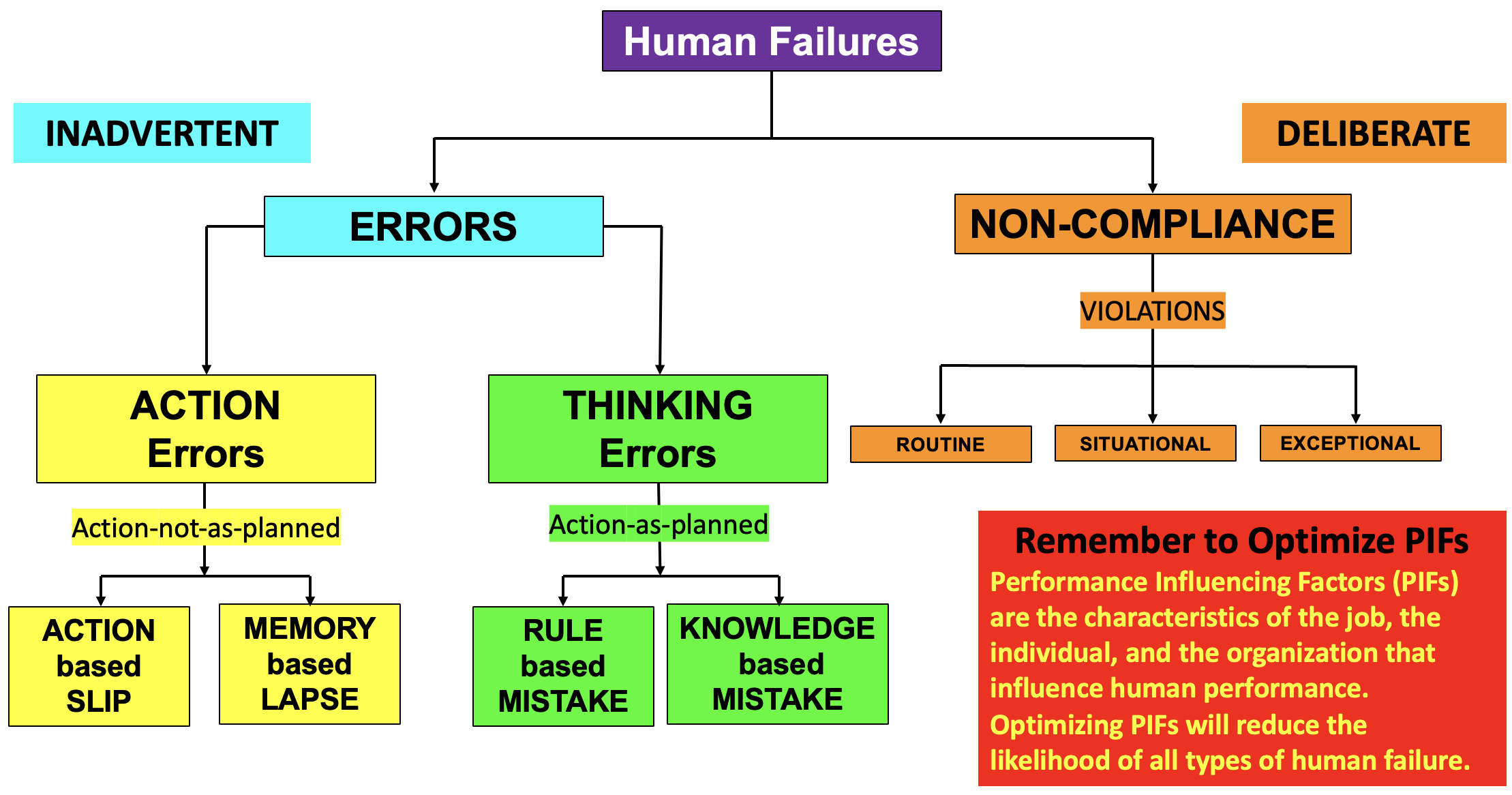
James Reason Human Failure Model Flowchart 2023

I was recently involved in a safety review at a client with two (2) separate LOTO failure events in a month.  I know this client and the PM very well, and I was never more disappointed in their decisions about the discipline around these two (2) very different LOTO events.  One event resulted in NO injury, and that employee received no discipline; the other event injured two workers (both recordable), and the worker involved in that LOTO was suspended without pay for five (5) days.  I tried to fix this horrible situation, as I have lived this first hand and know the damage it will do to trust and credibility in safety.  Here are the details of the events and why my positions were opposite of facility management’s.

Scenario # 1- A worker locks out one of two energy sources on a machine. The worker was observed inside the machine with only the single energy source locked out. He was belligerent when removed from the machine. He was well aware of his failure to lock out both energy sources. His only defense was that “he knew better than anyone in the plant how to do his job safely.” Call the machine-specific LO plan “stupid” and “a waste of time.”

 Scenario # 2 – A worker was tasked with isolating a Permit-Required Confined Space. The task is “normally” done with two (2) operators. This operator was new to the unit and had less than six (6) months of experience in that unit. Rather than waiting a day until staffing returned to normal, the Unit Superintendent decided that the unit was running smoothly and to have the single (and new) operator perform the isolation. This vessel did not have a prepared isolation plan, leaving the new operator to perform the isolation from scratch. He did so; however, the P&ID he was provided was not up-to-date. He missed one (1) energy source out of 39 others. The Shift Supervisor walked the isolation down as part of the entry-permitting process and failed to identify the missed isolation. Entrants were exposed to caustic (the missed energy source) during the entry and received recordable injuries.


Both events involved failure to Lockout “ALL” hazardous energy sources.

But do both incidents need discipline?


Using Reason’s Human Failure Model, Scenario # 1 is an “Exceptional Violation,” and Scenario # 2 is a “Knowledge-Based Mistake” coupled with LATENT Organizational Failures.

James Reason Human Failure Model Flowchart 2023


Scenario # 1: The operator should have been terminated—instead, he was ordered to go through LOTO training again ( ? ), even though the investigation and causal analysis did not identify “training” as a cause or contributing factor. The machine-specific procedure was 100% accurate; he had been trained in the past ten (10) months. He simply chose not to follow the procedure and showed zero responsibility for his decisions and actions. There was no pressure put upon him to take this shortcut.


Scenario # 2: Management wanted to terminate the operator because his/her “mistake” resulted in two (2) recordable injuries.  But in my eyes, this operator was set up to fail.  Less than six months experience in the Unit, no experience doing a complex energy isolation for a vessel, provided with a P&ID that did NOT show the energy source that he “missed”, his supervisor missed the same energy source and signed off on the isolation plan, and the Unit Superintendent missed the same energy source during his walk-down as part of the entry permitting process.


CONTEXT is everything when management feels the need to take action after an event.  Just not wanting to lock out 50% of the energy sources vs. missing one of 39 energy sources is VERY different.  Looking at all the “contributing factors of the event” makes these two events very different.

Scroll to Top