
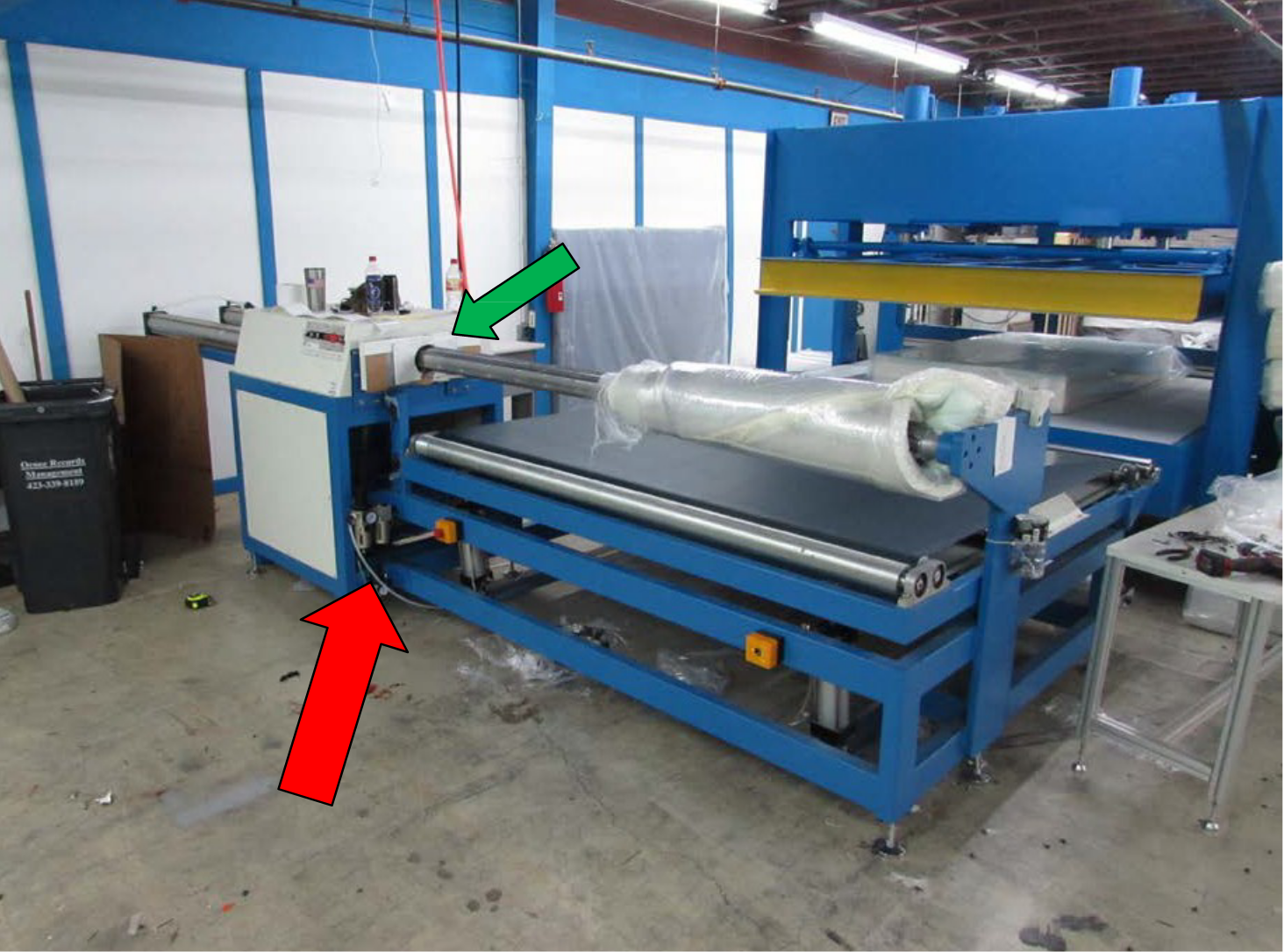
A 32-year-old male employee was crushed by/caught in a rotating machine roller while attempting to package a mattress. The victim was in the process of operating the machine, rolling, and wrapping a twin-sized mattress with cellophane to prepare it for packaging and shipping when he was caught by the roller. Two machines function together to first compress a mattress to a flat, thin state inside of a vacuum-sealed plastic bag and then roll the mattress into a tube to be placed in a box to be shipped.
The machines can process mattresses from twin sizes to king. It was explained that the size of the mattress that the facility processed could change multiple times a day as they were dependent on customer orders for each lot and the facility did not maintain a back-order of stock at any time. It was discovered that most of the time, there were two people working together to process an order; however, on the day of the incident, only the victim was operating both machines.
The mattresses are first put in the plastic sealing bags and stacked beside the compression machine.
Typically, one operator positions themselves on the west side of the compression machine while the other employee is on the east side of the compression machine to unload the mattress and place it on the conveyor of the roller machine. The employee places the mattress onto the press and hits the start button. The press takes approximately 16 seconds to press the mattress, then the operator steps on a foot pedal to activate a heat induction press bar to heat seal the vacuumed bag.
The other operator would pull the mattress out the east side of the press across an air gap between the machines place it on the conveyor of the roller machine. On the east end of the roller machine were two roller bars that were approximately eight inches in diameter that ran the width of the conveyor table. The lower roller on the conveyor table was smooth and free rotating. The second roller was mounted approximately 14 inches above the conveyor table and had six gripper fingers that helped pull the elastic sheet and mattress over and around in the rolling process. This roller was the driving roller that the mattress would wrap around and was controlled at the operator controls. The upper roller and conveyor belt operated in sync with each other. There was also a free-turning roller positioned on the bottom of the west side of the machine to hold spools of elastic sheets to wrap the mattresses while they rotated on the roller bar to hold them in a rolled shape.
Using a switch, the operator hydraulically lifts the east end of the conveyor table up to within two (2) inches of the upper roller and then pulls the edge of the mattress bag and plastic sheeting above the lower roller, underneath the upper roller, and back over the top of the upper roller and tucks it in so that it is pulled in the direction the roller turns. The operator then returns to the panel and activates the roller/conveyor switch.
While the roller and conveyor table continued to advance, the east end of the conveyor table is lowered to horizontal again. The operator waits for the elastic wrap to rotate around the now cylindrical mattress for a few more rotations and then stops the roller/conveyor. The operator then cuts the elastic wrap to end the supply of wrap to the product. The roller machine has an ejector ram mechanism to push the roll off of the end of the top roller after the operator opens the end of the machine. The ram is a metal plate covered in cardboard to protect the mattresses and is positioned adjacent to the operator controls around the shaft of the upper roller. The operator advances the ram the length of the shaft and when finished its cycle, the rolled and wrapped mattress is set to the side to be boxed and shipped.
Employee interviews revealed that on larger mattresses, it was common to have to tug or pull on the mattress as it rotated, as the mattresses would get off-center and begin to roll up crooked. Also, it was stated that one person had their sleeve pulled in the roller and another had his finger caught in the plastic while adjusting a mattress.
It was determined that the victim was working to roll and package a mattress on the roller machine. It is assumed that somehow his arm, sleeve, etc. was caught by the roller and he was thrown onto the conveyor table while it was moving and in the raised position. It appeared that the victim tried to hit the stop button and in the process dislodged the pneumatic line allowing the conveyor to lower creating an opening between the two rollers. Due to the movement of the conveyor belt, he was pushed between the upper and lower rollers of the machine sustaining fractures and compression injuries that resulted in the fatality.
Citation 1 Item 1
Type of Violation: Serious; $7,000
29 CFR 1910.212(a)(1): One or more methods of machine guarding was not provided to protect the operator and other employees in the machine area from hazards such as those created by point of operation, ingoing nip points, rotating parts, flying chips, and sparks. In that there were four instances where there was no form of machine guarding to protect employees in the mattress compression and rolling process as follows:
a)the press mechanism of the JK-C1 semi-auto mattress compression machine,
b)the induction heat sealer adjacent to the JK-C1 semi-auto mattress compression machine,
c)the ejection ram for the JK-R1 semi-auto mattress rolling machine, and
d)the roller for the JK-R1 semi-auto mattress rolling machine that resulted in a fatality.


