H. W. Heinrich, Assistant Superintendent Engineering and Inspection Division, The Travelers Insurance Company is best known as the “Father of Industrial Safety”. Much of what he developed in the 1920s-1950s can still be applied today. He was a true pioneer in our profession, but it seems there are some in the profession today that want to throw out all of his work. From claiming his “pyramid” and “domino” theories are flawed and blames the worker for accidents. Much of this debate is on a flawed understanding of what Mr. Heinrich truly meant in his work. Yes, he was the first to assess that unsafe acts were the leading cause of accidents. But only 1 of his 5 dominos in his theory was “unsafe acts,” and he was unequivocal in his books about who is responsible for the unsafe acts and the fact that investigations need to understand why those acts were being committed. (emphasis added by me)
Proximate Causes and Subcauses (Personal)
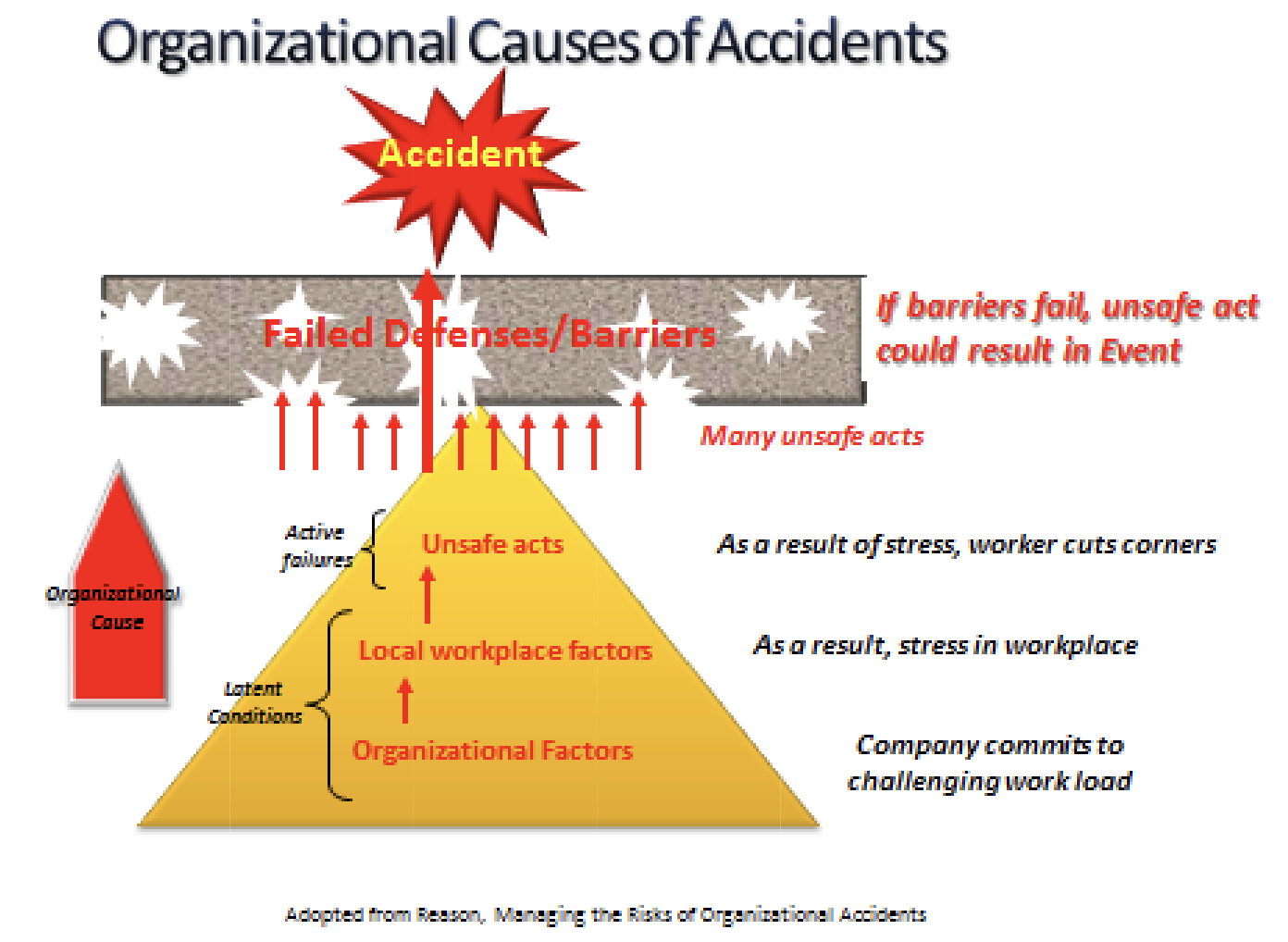
In connection with the unsafe acts of persons (which are the direct causes of the majority of accidents), the IMMEDIATELY PRECEDING SUBCAUSES ARE OF GREAT VALUE in determining the most practical remedy. For example, it is not always enough to know merely that a machine operator oiled his machine while it was in motion. THE REASON WHY HE ACTED UNSAFELY IS OFTEN OF VITAL SIGNIFICANCE.
He may have been required to do so by the foreman.
Enforced time schedules may have prevented him from taking safer action.
He may not have realized the danger, may have been physically or mentally unsuited or may have willfully disregarded instructions.
Industrial Accident Prevention – A Scientific Approach, H. W. Heinrich, Assistant Superintendent Engineering and Inspection Division, The Travelers Insurance Company, 1941
and
Management’s responsibility for controlling the unsafe acts of employees exists chiefly because these UNSAFE ACTS OCCUR IN THE COURSE OF EMPLOYMENT THAT MANAGEMENT CREATES AND THEN DIRECTS.
Management selects the persons upon whom it depends to carry out industrial work.
It may, if it so elects, choose persons who are experienced, capable of, and willing to do this work, not only well but also safely.
Management may also train and instruct its employees, acquaint them with safe methods, and provide competent supervision.
In following the principles of delegated authority, management, through its representatives in the supervisory staff, may set a safe example, establish standards for safe performance, and issue and enforce safe-practice rules.
Source: Industrial Accident Prevention – A Scientific Approach, H. W. Heinrich, Assistant Superintendent Engineering and Inspection Division, The Travelers Insurance Company, 1941