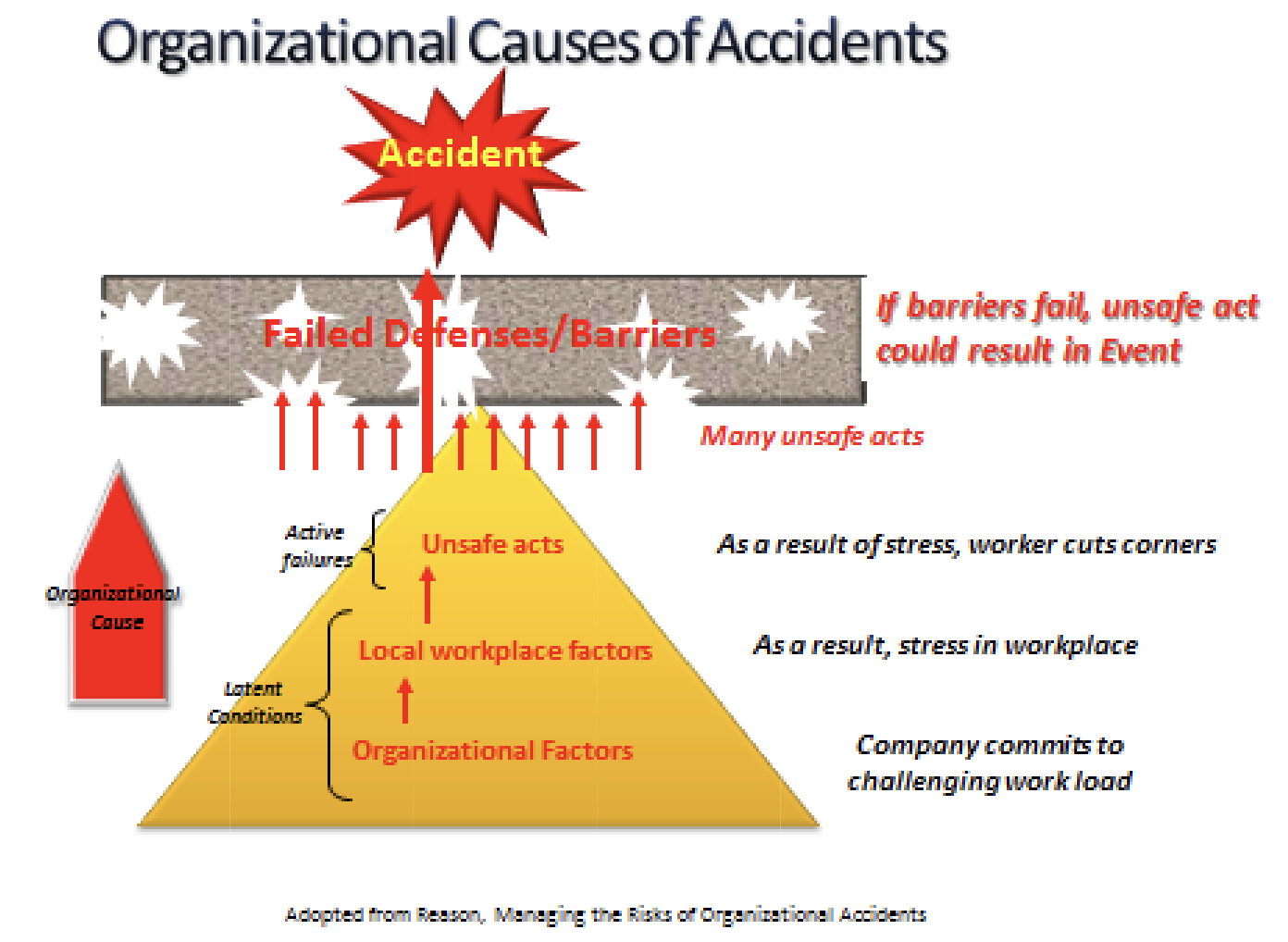
Here is a list of questions investigators may ask to determine whether line management deficiencies affected the accident. These questions are based on the seven (7) guiding principles of an SMS. These are not intended to be exhaustive. Investigator(s) should adapt these questions or develop new ones based on the specific characteristics of the accident. The answers to the questions may be used to determine the facts of the accident, which, along with causal analysis tools, will enable the investigation team to determine whether deficiencies found in management systems and line management oversight are causal factors for the accident.

Guiding Principle #1: Line management is directly responsible for protecting the public, workers, and the environment.
- Did line management establish documented safety policies and goals?
- Was the safety management policy fully implemented down to the activity level at the time of the accident?
- Was line management PROACTIVE in assuring timely implementation of safety management by line organizations, contractors, subcontractors, and workers?
- Were safety and health performance expectations for organizations communicated and understood?
- Did line managers elicit and empower active PARTICIPATION by workers in safety management?
Guiding Principle #2: Clear lines of authority and responsibility for ensuring safety shall be established and maintained at all organizational levels within the Department.
- Did line management define and maintain delineated roles and responsibilities for S&H to integrate safety into site‐wide operations effectively?
- Was a process established to ensure that safety responsibilities were assigned to each person (employees, subcontractors, temporary employees, etc.) performing work?
- Did line management establish communication systems to inform the organization of potential S&H impacts of specific work processes?
- Were managers and workers at all levels aware of their responsibilities and accountability for ensuring safe facility operations and work practices?
- Were individuals accountable for safety performance through performance objectives, appraisal systems, and visible and meaningful consequences?
- Did line management and oversight hold contractors accountable for S&H through appropriate contractual and appraisal mechanisms?
Guiding Principle #3: Personnel shall possess the experience, knowledge, skills, and abilities necessary to discharge their responsibilities.
- Did line managers demonstrate high technical competence and understanding of programs and facilities?
- Did line management have a documented process for ensuring personnel, contractors, and subcontractors were adequately trained and qualified on job tasks, hazards, and risks?
- Were mechanisms in place to assure that only qualified and competent personnel were assigned to specific work activities commensurate with the associated hazards?
- Were mechanisms in place to assure understanding, awareness, and competence in response to significant changes in procedures, hazards, system design, facility mission, or life cycle status?
- Did line management establish and implement processes to ensure that S&H training programs effectively measure and improve performance and identify training needs?
- Was a process established to ensure that
- (1) training program elements were kept current and relevant to program needs, and
- (2) was job proficiency maintained?
Guiding Principle #4: Resources shall be effectively allocated to address safety, programmatic, and operational considerations. Protecting the public, the workers, and the environment shall be a priority whenever activities are planned and performed.
- Did line management demonstrate a commitment to ensuring that ES&H programs had sufficient resources and priority within the line organization?
- Did line management establish that integrated safety management would be applied to all types of work and address all hazards?
- Did line management institute a safety management system to integrate safety management processes, procedures, and/or programs into the site, facility, and work activities?
- Were prioritization processes effectively balancing and reasonably limiting the negative impact of resource reductions and unanticipated events on safety funding?
Guiding Principle #5: Before work is performed, the associated hazards shall be evaluated, and an agreed-upon set of safety standards shall be established that, if properly implemented, will provide adequate assurance that the public, the workers, and the environment are protected from adverse consequences.
- Was there a process for managing requirements, including translating standards and requirements into policies, programs, and procedures and developing processes to tailor requirements to specific work activities?
- Were requirements established commensurate with the hazards, vulnerabilities, and risks encountered in the current life cycle stage of the site and/or facility?
- Were policies and procedures consistent with current policy, formally established, and approved by appropriate authorities?
- Did communication systems assure managers and staff know all standards and requirements applicable to their positions, work, and associated hazards?
Guiding Principle #6: Administrative and engineering controls to prevent and mitigate hazards shall be tailored to the work performed and associated hazards.
- Were the hazards associated with the work activity identified, analyzed, and categorized so that appropriate administrative and engineering controls could be implemented to prevent or mitigate the hazards?
- Were hazard controls established for all work stages (e.g., normal operations, surveillance, maintenance, facility modifications, decontamination, and decommissioning)?
- Were hazard controls established that were adequately protective and tailored to the type and magnitude of the work and hazards and related factors that impact the work environment?
- Were processes established to ensure contractors and subcontractors test, implement, manage, maintain, and revise controls as circumstances change?
- Were personnel qualified and knowledgeable of their responsibilities related to work controls and work performance for each activity?
Guiding Principle #7: The conditions and requirements to be satisfied for operations to be initiated and conducted shall be established and agreed upon.
- Were processes in place to ensure the availability of safety systems and equipment necessary to respond to hazards, vulnerabilities, and risks in the work environment?
- Did line management establish and agree upon conditions and requirements that must be satisfied for operations to be initiated?
- Was a management process established to confirm that the scope and authorization documentation are adequately defined and directly correspond to the scope and complexity of the operations being authorized?
- Was a change control process established to assess, approve, and reauthorize any changes to the scope of operations ongoing at the time of the accident