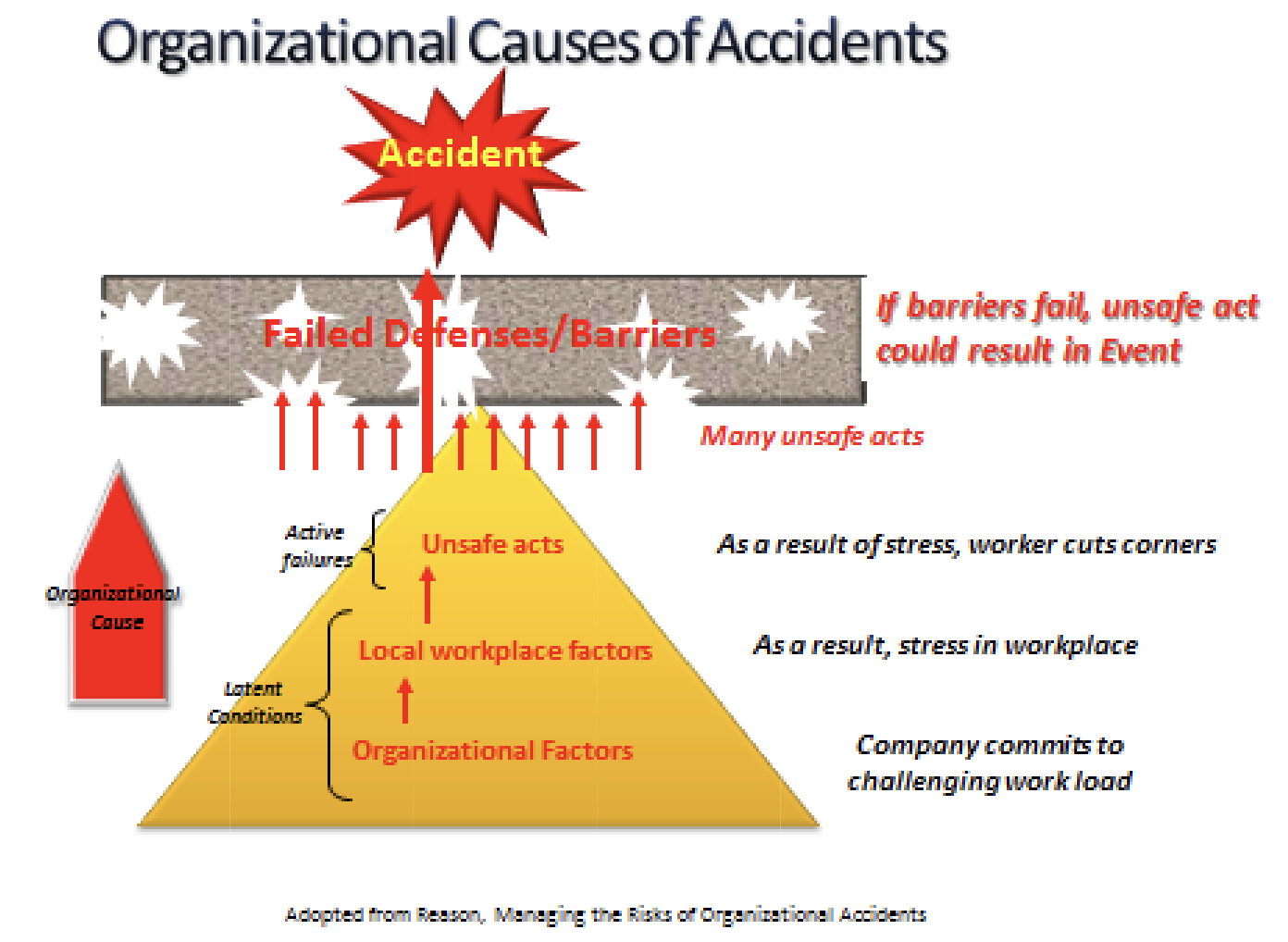
In his 1990 paper, The contribution of latent human failures to the breakdown of complex systems Jame Reason presented us with three classifications of organizations. As usual, his work and results were spot on! The three (3) categories are:
- Pathological organizations
- Calculative organizations
- Generative organizations
When we read these descriptions, as well as what Westrum (1988) provided us in how organizations differ in their responses to safety-related information, we can begin to understand our opportunities to improve our facility’s culture, if not the entire organization.
- Pathological organizations possess inadequate safety measures, even under normal circumstances. They habitually sacrifice safety for greater productivity, often under severe economic pressure, and they actively circumvent safety regulations.
- Calculative organizations try to do the best job they can by using “by-the-book” methods. These are usually adequate under normal operating circumstances but often fail to thwart the development of multiple-cause accidents.
- Generative organizations set safety targets for themselves beyond ordinary expectations, and fulfill them because they are willing to do unusual things in unconventional ways. They emphasize results more than methods, and value substance more than form.
Westrum (1988) has provided a useful classification of the ways in which organizations differ in their responses to safety-related information. These reactions fall into three (3) groups:
- denial,
- repair and
- reform actions
Denial actions
These may take one or both of the following forms: suppression, whistleblowers are punished or dismissed and their observations removed from the record; and encapsulation, the observers are retained, but the validity of their observation is disputed or denied.
Repair actions
Externally, these can take the form of a public relations exercise in which the observations are allowed to emerge, but in a reassuring and sugar-coated manner. Internally, the problem is admitted, but it is only addressed at a local level. ‘Offending’ operators are disciplined or relocated. Dangerous items of equipment are modified to prevent the recurrence of a specific kind of observed failure. The wider implications of the problem are denied.
Reform actions
These take two forms: dissemination, the problem is admitted to be global, and global action is taken upon it; reorganization, action on the problem leads to a fundamental reappraisal and reform of the system as a whole. The more effective the organization, the more likely it is to respond to safety data with reform actions. Less adequate organizations will confine themselves to either denial or repair actions.