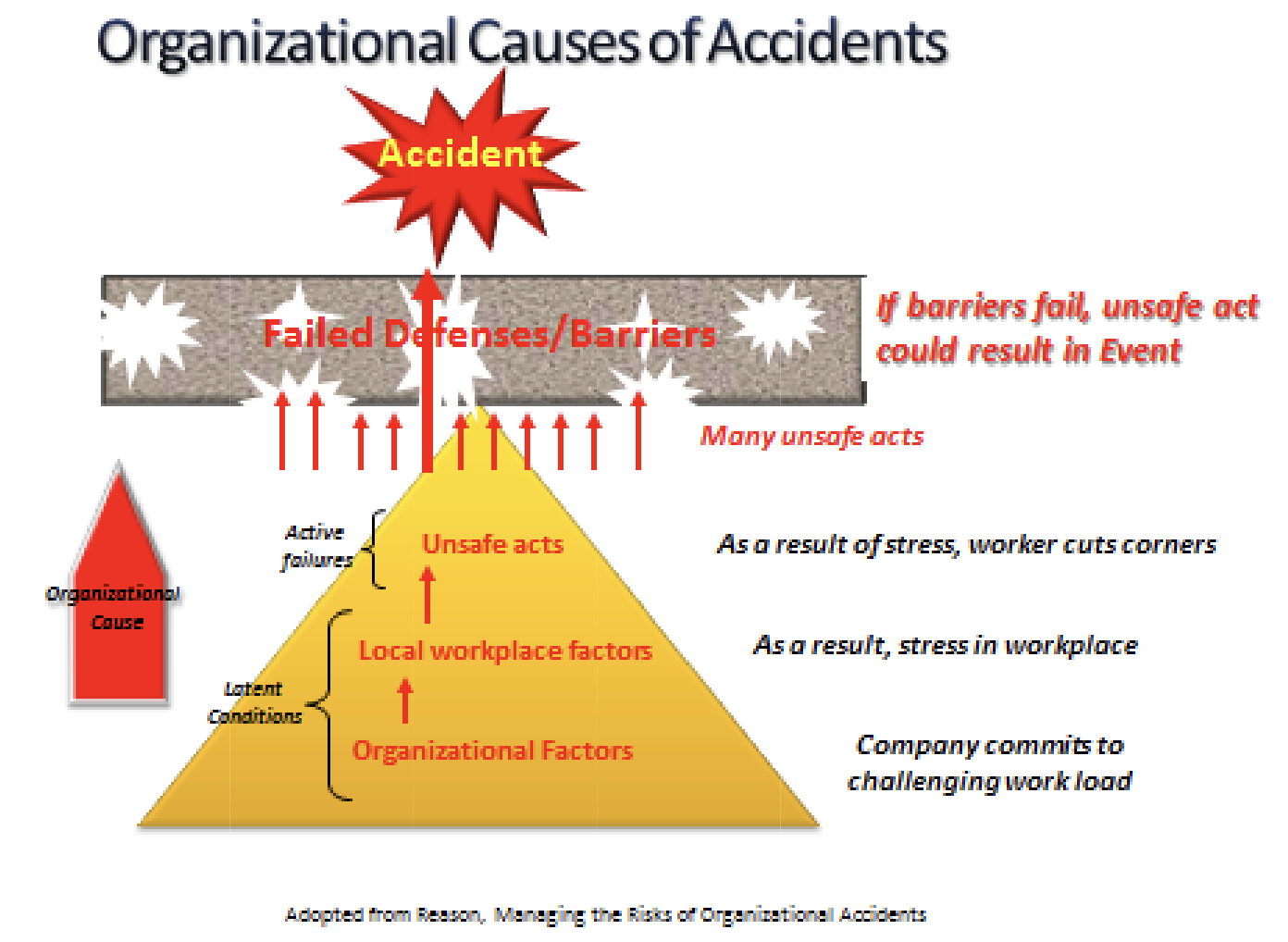
This approach will work in industrial workplaces as well! In fact, I would bet that DOT stole this approach from the industrial safety movement. Regardless of who gets credit, it is refreshing to see the transportation community embrace the Safe System Approach as an effective way to address and mitigate the risks inherent in our enormous and complex transportation system. It works by BUILDING AND REINFORCING MULTIPLE LAYERS OF PROTECTION to both PREVENT crashes from happening in the first place and MINIMIZE THE HARM caused to those involved when crashes do occur.
It is a holistic and comprehensive approach that provides a guiding framework to make places safer for people.
This is a shift from a conventional safety approach because it focuses on BOTH human mistakes AND human vulnerability and designs a system with MANY REDUNDANCIES in place to protect everyone.
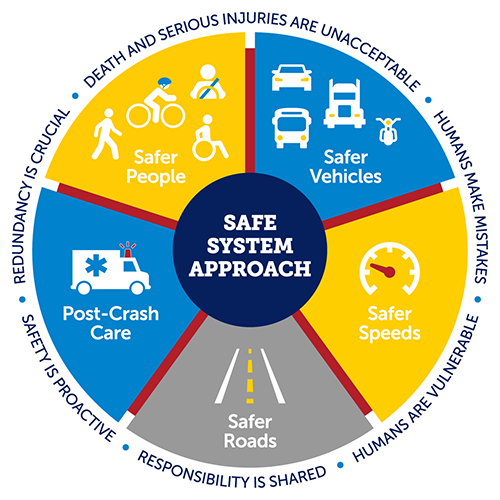
A Safe System Approach incorporates the following principles:
1) Death and Serious Injuries are Unacceptable
A Safe System Approach prioritizes the elimination of crashes that result in death and serious injuries.
2) Humans Make Mistakes
People will inevitably make mistakes and decisions that can lead to or contribute to crashes. Still, the transportation system can be designed and operated to accommodate certain types and levels of human mistakes and avoid death and serious injuries when a crash occurs.
3) Humans Are Vulnerable
Human bodies have physical limits for tolerating crash forces before death or serious injury occurs; therefore, it is critical to design and operates a transportation system that is human-centric and accommodates physical human vulnerabilities.
4) Responsibility is Shared
All stakeholders—including government at all levels, industry, non-profit/advocacy, researchers, and the general public—are vital to preventing fatalities and serious injuries on our roadways.
5) Safety is Proactive
Proactive tools should be used to identify and address safety issues in the transportation system rather than waiting for crashes to occur and reacting afterward.
6) Redundancy is Crucial
Reducing risks requires that all parts of the transportation system be strengthened so that if one part fails, the other parts still protect people.
Objectives of a Safe System Approach
Implementation of the National Roadway Safety Strategy (NRSS) will be arranged around five (5) complementary objectives corresponding to the Safe System Approach elements:

Safer People
Encourage safe, responsible driving and behavior by people who use our roads and create conditions that prioritize their ability to reach their destination unharmed.
Safer Roads
Design roadway environments to mitigate human mistakes and account for injury tolerances, to encourage safer behaviors, and to facilitate safe travel by the most vulnerable users.

Safer Vehicles
Expand the availability of vehicle systems and features that help to prevent crashes and minimize the impact of crashes on both occupants and non-occupants.

Safer Speeds
Promote safer speeds in all roadway environments through a combination of thoughtful, equitable, context-appropriate roadway design, appropriate speed-limit setting, targeted education, outreach campaigns, and enforcement.

Post-Crash Care
Enhance the survivability of crashes through expedient access to emergency medical care, while creating a safe working environment for vital first responders and preventing secondary crashes through robust traffic incident management practices.